Energy-saving glass

A window is the thinnest part of your wall. Even a brand-new double-glazed unit loses heat about five times faster than the brickwork around it. The good news is that a few cheap upgrades — a metal-oxide coating on one of the panes, argon gas in the chamber, a plastic spacer instead of an aluminium one — fix most of the problem without adding visible bulk. This page walks through what each layer does, in language anyone can use to push back on a sloppy quote.
Low-E coating: the silver lining

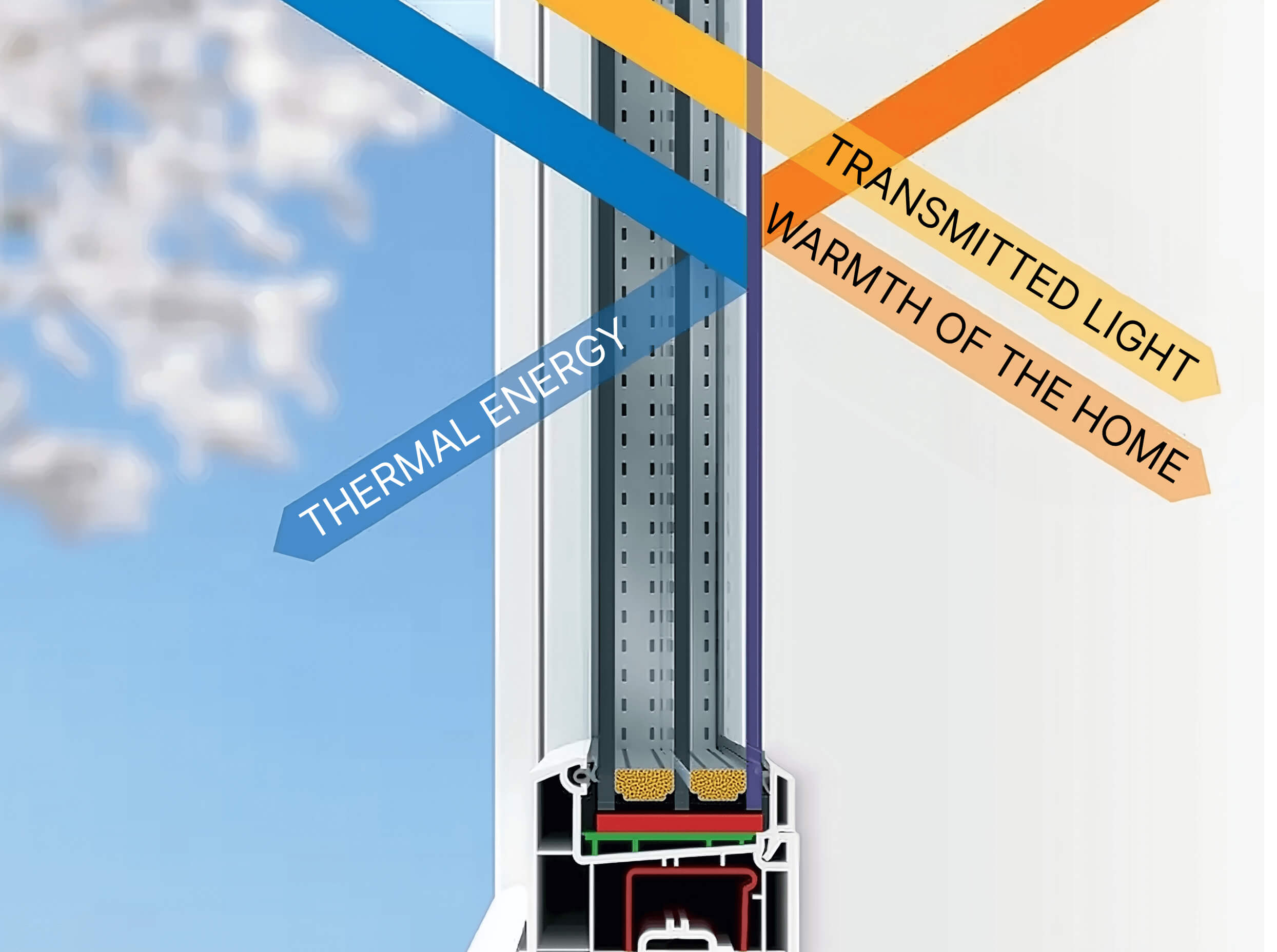
One face of the inner pane is sprayed with a coating thinner than a wavelength of light — a sandwich of silver oxide between two protective metallic layers. The eye sees nothing. Infrared heat, on the other hand, sees a mirror: when your radiator pushes warm air across the window, the warmth bounces back into the room instead of being absorbed by the glass and radiated to the street. A modern low-E unit keeps about half again as much heat indoors as the same unit without the coating.

Much less condensation in cold weather
No cold "phantom draft" by the window
10–20% off heating in a typical Spanish flat
52%
Warmer at the glass than a plain unit

Field measurement

See the difference with a thermal camera

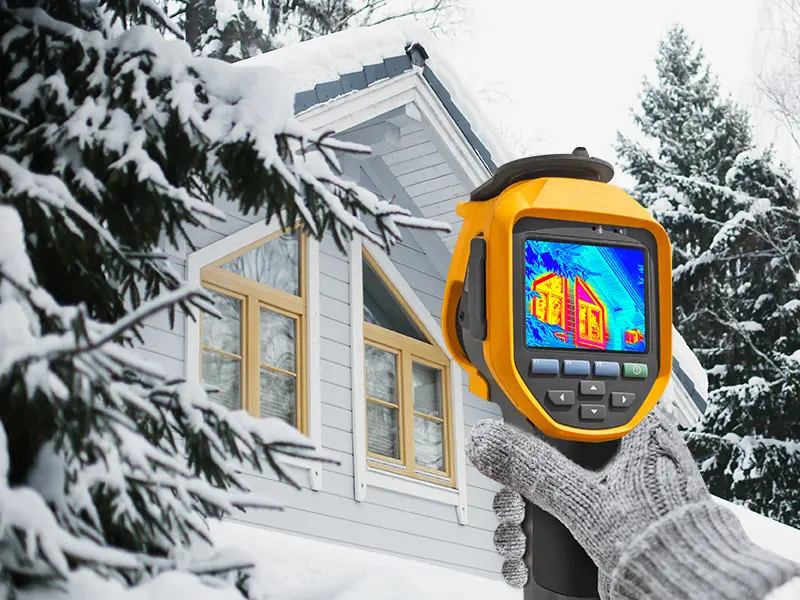
Pointed at a wall from outside on a cold night, an infrared camera turns warm surfaces yellow and orange. A plain double-glazed window glows brightly — that is your heating bill leaving the building. A low-E unit beside it stays dark blue, almost the same colour as the wall.

Standard double-glazed window — visible heat loss
Low-E energy-saving unit — almost no leakage

The Uw number on the spec sheet

Every quoted window comes with a Uw value — how many watts leak through one square metre for each degree of temperature difference. Lower is better. A worn-out aluminium window from the 90s sits around Uw 5.0. A basic modern PVC double-glazed window lands at Uw 1.3–1.5. Add low-E and argon and you reach Uw 1.0. Triple glazing with warm-edge spacers can go as low as Uw 0.7. For most of Spain anything below Uw 1.2 is a sensible target; in the north or in passive-house projects, aim for 0.8 or below.

Argon in the chamber

The space between the panes is not actually empty — it is filled with a heavy, inert gas. Argon conducts heat about a third slower than dry air, so for the same chamber width you get noticeably better insulation. Krypton works even better but costs ten times more and is reserved for very thin triple-glazed units. Argon is the default in every reputable installer's quote; if it is not mentioned, ask why.

Warm-edge spacers

The little spacer that holds the two panes apart used to be aluminium. Metal is a great conductor of heat, so the rim of an old window would freeze and condense even when the centre was fine. Modern "warm-edge" spacers are a plastic-and-stainless-steel composite that transmits much less heat. The difference is visible — no more black mould creeping along the bottom of the glass — and it adds about one decimal place to your Uw rating.

Triple glazing: when does it make sense?

Three panes are heavier, slightly darker and noticeably more expensive than two. They make sense for cold inland and mountain regions, for north-facing rooms where the sun never reaches, and for any project chasing a passive-house certificate. On the Mediterranean coast a high-spec double-glazed unit with low-E and argon usually wins on price-to-comfort.

FAQs

Frequently asked questions

How can I tell if a window already has low-E glass?

Hold a lit match a few centimetres from the glass and look at the reflection. You will see four little flames — one from each pane surface. With a low-E coating, one of the flames is a slightly different colour, usually a pinkish or amber tint. Most installers can also point to the marking on the spacer frame inside the unit.

Does low-E glass also help in summer?

It helps a little, by reducing the amount of heat the glass itself re-radiates into the room. If you want full summer protection, ask for a multifunctional (solar-control plus low-E) unit instead — it does both jobs in one coating.

How much can I actually save on heating?

In a 90 m² Spanish flat replacing tired single glazing with modern low-E argon-filled windows, expect 15–25% off the annual heating bill in mild regions and 30–40% in colder ones. Pay attention to the rest of the install too — drafty doors and uninsulated reveals can swallow most of the saving.

Do energy-saving windows fog up less?

Yes. Condensation forms when warm humid indoor air hits a cold surface. Because the inner pane of a low-E unit stays much warmer, the air around it never reaches the dew point. That alone reduces black mould around window reveals significantly.

Will I notice a draft from a cold window even if it is sealed?

You will. Even with no actual air leak, a cold glass surface chills the air right next to it; the chilled air sinks and slides across the floor as a "phantom draft". A low-E unit keeps the inner glass much warmer, so the effect disappears.

Is the argon gas dangerous if the unit breaks?

No. Argon is inert, non-toxic and makes up about one percent of the air you already breathe. A broken unit releases a few litres of it harmlessly into the room.

Ready to spec your windows?

Use the 3D configurator to size up your windows and see a fair market price. Or compare the leading PVC and aluminium brands side by side.