Multifunctional glass

Multifunctional glass is a clear pane with a microscopic coat of silver and metal oxides. It looks the same as ordinary glass to the eye, but to infrared light it behaves like a mirror. In summer it sends most of the sun's heat back outside before the room can warm up. In winter it does the opposite — it bounces the heat from your radiators back into the room instead of letting it leak through the window. One coating, two seasons.
In summer: keep the heat out

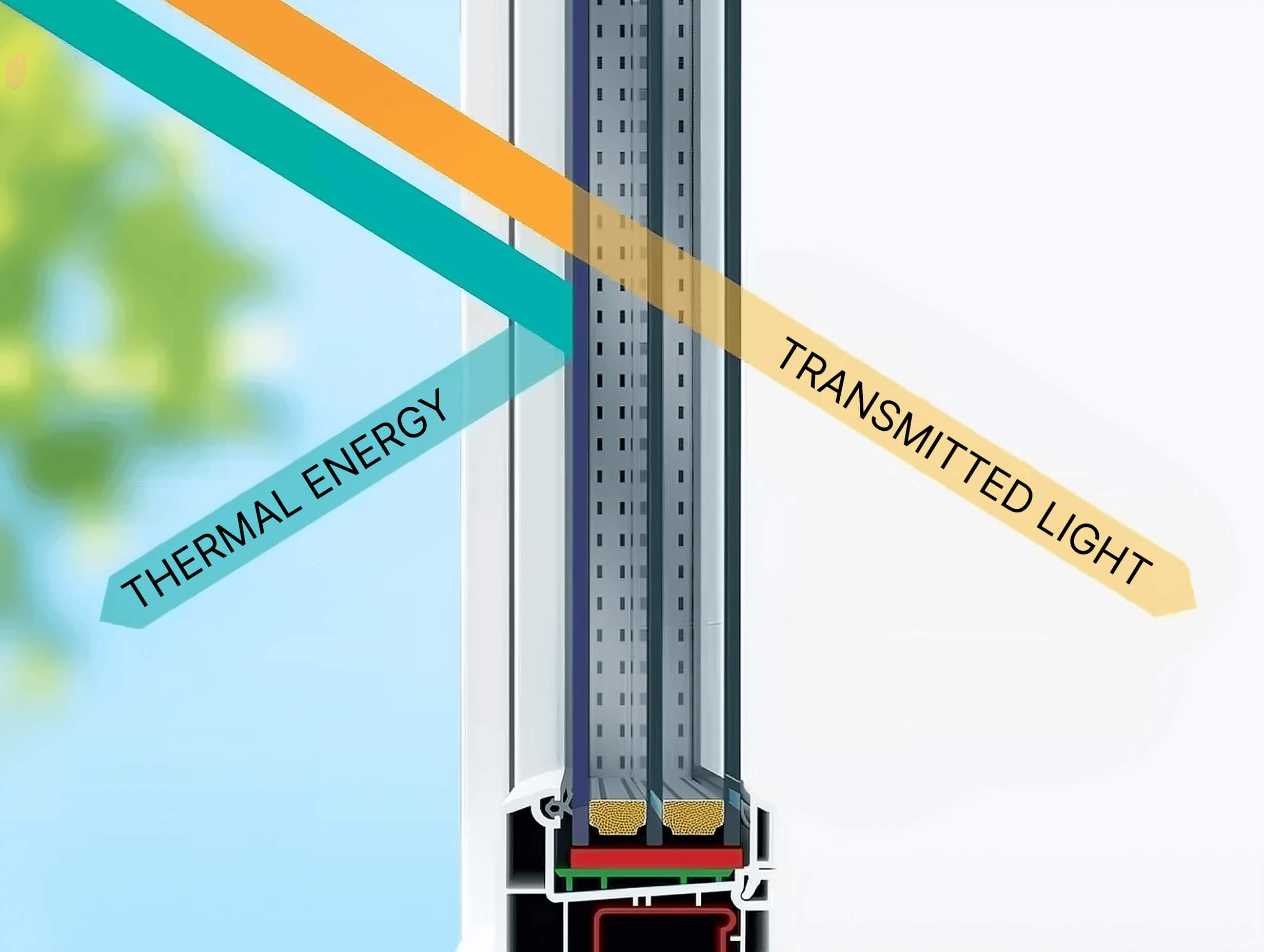
Stand by a south-facing window on a July afternoon and put a hand on the sill. The heat you feel is infrared radiation passing straight through the glass and warming everything it touches. With multifunctional glazing about six out of every ten of those infrared rays are reflected back outside, while ordinary visible light goes through normally. The room stays as bright as ever — it just stops feeling like a greenhouse.

Up to 3–5 °C cooler indoors during peak sun
Air-conditioning runs less and shorter
58%
Solar heat reflected
back outside

In winter: keep the warmth in

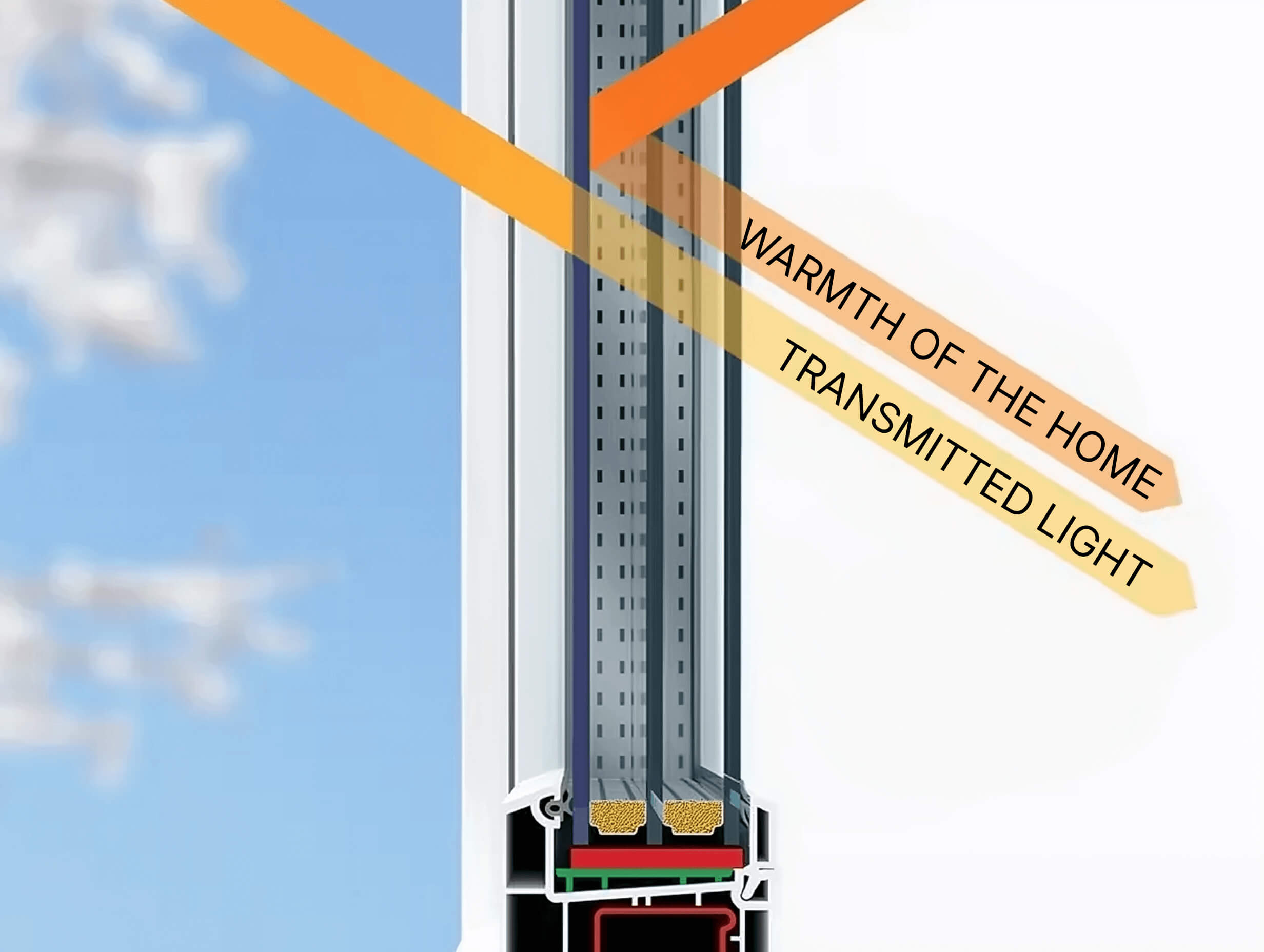
The same coating that blocks summer sun also reflects the long-wave heat from your radiators back into the room. Without it, that heat would travel through the glass and disappear into the cold night. A multifunctional unit keeps roughly four times more warmth inside than a plain double-glazed window — so the floor by the window stops feeling icy and the boiler cycles on less often.

Warmer surfaces, no cold draught off the window
Lower heating bill, especially in mountain regions
78%
Indoor heat kept
from escaping

When does it pay off?

Multifunctional glass costs roughly 15–25% more than a standard double-glazed unit. The honest payback depends on three things: how much sun your window actually catches, how aggressively you cool or heat the house, and the price of electricity where you live. As a rule of thumb the upgrade is worth it whenever a window looks south or west, in any flat above the second floor with a clear view, and in any house where the AC runs more than two months a year.

Will it darken the room?

No. Multifunctional coatings are designed to filter infrared and ultraviolet radiation, not visible light. You lose less than ten percent of brightness compared to a plain unit — about the difference between a clean window and one that needs a wipe. The neutral grey-blue tint is barely noticeable from inside and gives a slight reflective sheen from the street.

Is it the same as solar-control tint?

Not quite. Stick-on solar films cut heat by darkening the glass, which also dims the room. A factory-applied low-E plus solar-control coating does both jobs without the dimming. It is also sealed inside the glass unit, so it cannot peel, bubble or be scratched.

FAQs

Frequently asked questions

How is multifunctional glass different from regular double glazing?

A regular double-glazed unit is two clear panes with air between them. Multifunctional glass adds a metal-oxide coating to one of the panes. The coating reflects infrared heat — outside in summer, back into the room in winter. The unit is the same thickness and fits the same frames.

Does it really cut my energy bill?

In a typical Spanish flat with two or three windows facing the sun, owners report 10–20% off the cooling bill and a similar drop in winter heating in cooler regions. Savings are largest in homes with a lot of glass, large terraces or floor-to-ceiling sliders.

Does it also reduce noise?

A little — any thicker, sealed unit muffles sound somewhat. But if street noise is the main problem you want acoustic glazing instead, or a combination: an acoustic-plus-multifunctional unit is a common upgrade for city flats facing busy streets.

Can I replace only the glass, not the whole window?

Yes. If your frames are sound and reasonably airtight, a glazier can swap the sealed unit in 20–30 minutes per window. It usually costs about a third of a full window replacement and gives you most of the comfort benefit.

Which rooms benefit most?

South and west-facing living rooms and bedrooms, any room with a big glazed door, and top-floor apartments where the sun hits the wall directly. North-facing rooms gain less in summer but still benefit in winter.

How long does the coating last?

The coating is sealed between two panes and never touches the air, so it does not age. Manufacturers guarantee the optical properties for 10 years; in practice units installed in the early 2000s are still performing within spec today.

Ready to spec your windows?

Use the 3D configurator to size up your windows and see a fair market price. Or compare the leading PVC and aluminium brands side by side.