Warm-edge spacers

A spacer is the thin bar that runs around the perimeter of every double or triple-glazed unit. It holds the panes the right distance apart, seals the cavity, and quietly does about 10% of the window's insulation work. For decades that bar was made of aluminium — cheap, strong, and unfortunately a near-perfect conductor of heat. A warm-edge spacer replaces the aluminium with a plastic-composite profile wrapped in a thin gas-barrier foil. The unit looks identical from the room. At the rim, where the glass meets the frame, the difference shows up as a warmer surface, a drier window in the morning, and a Uw value that is a tenth of a point lower for the same glass.

What the spacer actually does

The spacer keeps the two or three glass panes parallel, defines the gap that holds the insulating argon or krypton, and carries the seal that keeps that gas inside for the next twenty years. It also has to absorb thermal expansion as the panes warm and cool, and it has to stop water vapour from creeping into the cavity — the moment it does, the unit fogs from the inside and the only fix is a replacement. A warm-edge spacer does all of that with a plastic-composite body and a high-tech foil barrier instead of a bent aluminium tube.

100% gas-tight foil keeps argon in, moisture out
Rigid enough for triple glazing without sag
0.14
W/m·K thermal conductivity
vs. ~160 for aluminium

No more black mould along the glass

On a cold morning the coldest spot in any window is the strip of glass closest to the frame — the so-called sightline. With an aluminium spacer that strip drops several degrees below the rest of the pane, water vapour from the room condenses on it, and over a winter or two the silicone gasket grows a dark line of mould. A warm-edge spacer raises the sightline temperature by about 3–4 °C in typical Spanish weather. The droplets stop forming, the gasket stays clean, and the warmer rim feels less like a cold draught when you sit beside it.

No condensation strip at the bottom of the glass
Warmer, healthier room with less mould risk
+4 °C
Warmer glass edge
vs. an aluminium spacer

How a warm-edge spacer is built

Take a thin rectangular tube of glass-fibre-reinforced plastic, wrap it in a microscopic stainless-steel and polymer foil, and fill the inside with a desiccant that pulls any stray moisture out of the air gap. That is essentially what every modern warm-edge spacer is — a low-conductivity skeleton with a gas-tight skin. The leading product on the European market, SWISSPACER Ultimate, hits a thermal conductivity of 0.14 W/m·K, which is roughly a thousand times less than the aluminium bar it replaces. The unit's central U-value barely changes, but the window's overall Uw improves by 0.1–0.2 W/m²K — enough to bump a standard frame one efficiency class up.

When is it worth specifying?

For a passive house or anything chasing a Uw below 1.0, a warm-edge spacer is mandatory — the standard cannot be met with an aluminium one. For an ordinary home in coastal Spain the calculation is comfort, not energy: the same window with a warm-edge spacer simply doesn't fog up in the cool, humid mornings, and the sealant lasts longer because it's not constantly wet. The extra cost is small, usually 20–40 € per window, and it's invisible from inside.

Does it work with my frames?

Yes — warm-edge spacers have the same external dimensions as aluminium ones, so any glazier can bend, cut and seal them on existing equipment. There is no special frame, no different gasket, no extra step at installation. If you order a replacement sealed unit today, just ask the supplier to fit a warm-edge spacer instead of the default aluminium and the rest of the chain is unchanged.
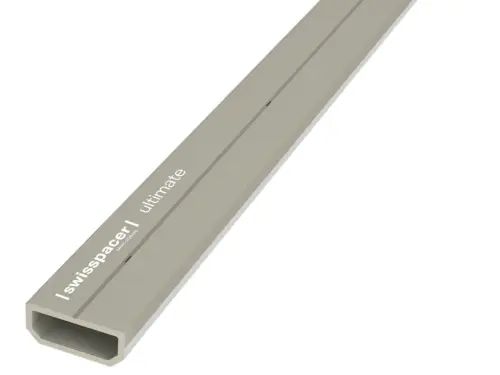
Colour range

A swatch for every gasket and frame

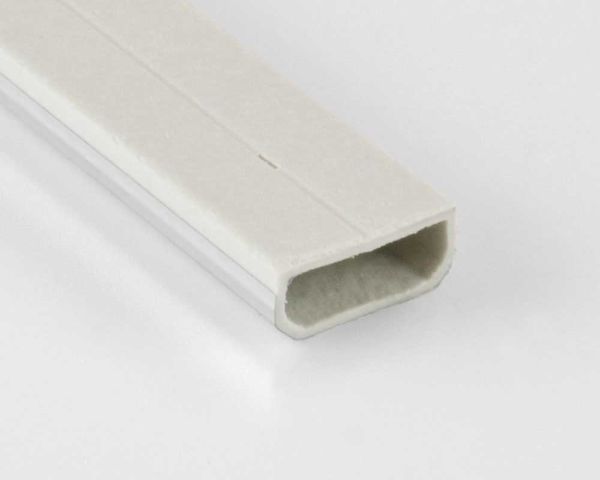
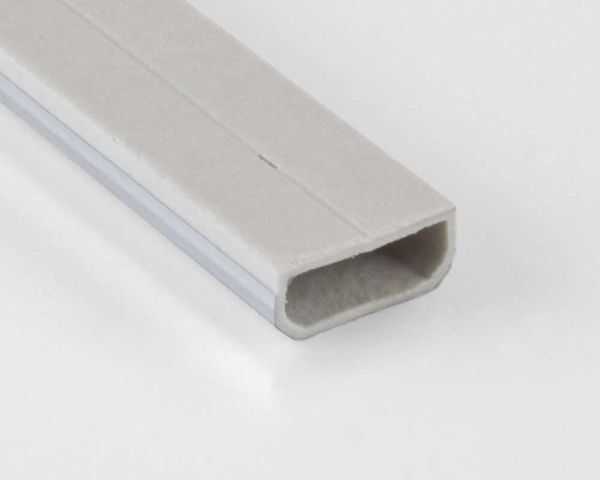
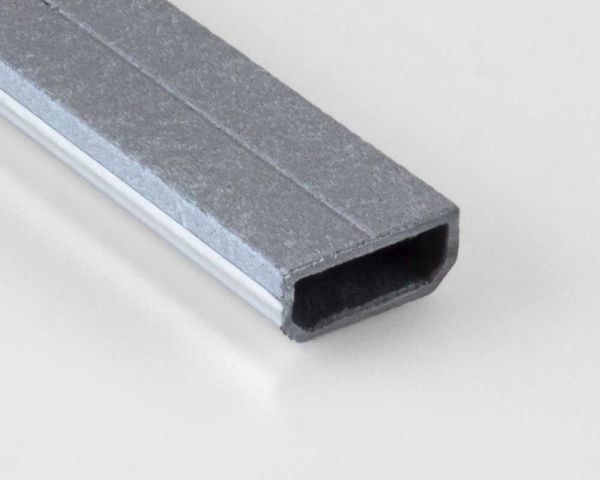
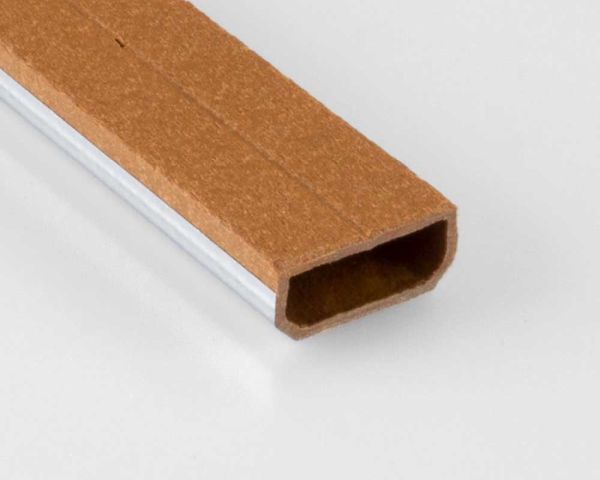
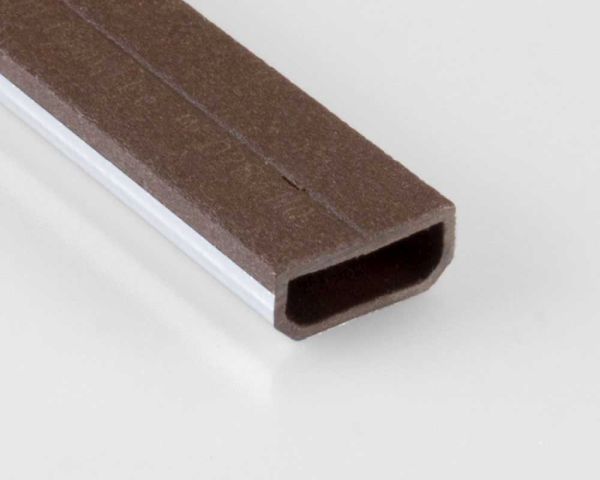
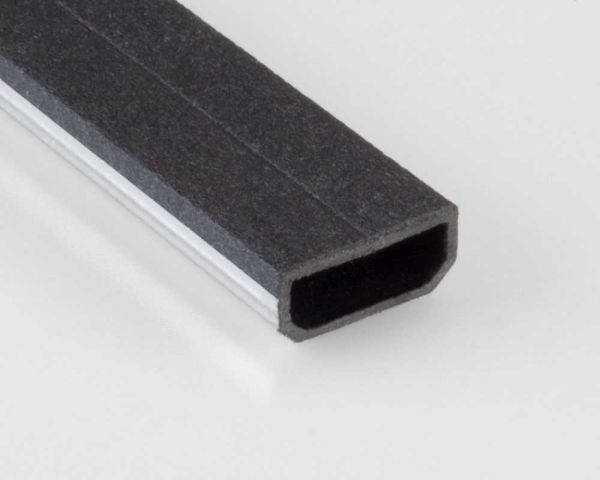
The plastic-composite body is dyed all the way through, so the colour you see is the colour you get for the life of the unit. These six are the most common stock options — the full SWISSPACER Ultimate range covers 17.

SWISSPACER Ultimate warm-edge spacer, Traffic White (RAL 9016)
Traffic White
RAL 9016
SWISSPACER Ultimate warm-edge spacer, Light Grey (RAL 7035)
Light Grey
RAL 7035
SWISSPACER Ultimate warm-edge spacer, Window Grey (RAL 7040)
Window Grey
RAL 7040
SWISSPACER Ultimate warm-edge spacer, Clay Brown (RAL 8003)
Clay Brown
RAL 8003
SWISSPACER Ultimate warm-edge spacer, Mahogany Brown (RAL 8016)
Mahogany Brown
RAL 8016
SWISSPACER Ultimate warm-edge spacer, Jet Black (RAL 9005)
Jet Black
RAL 9005
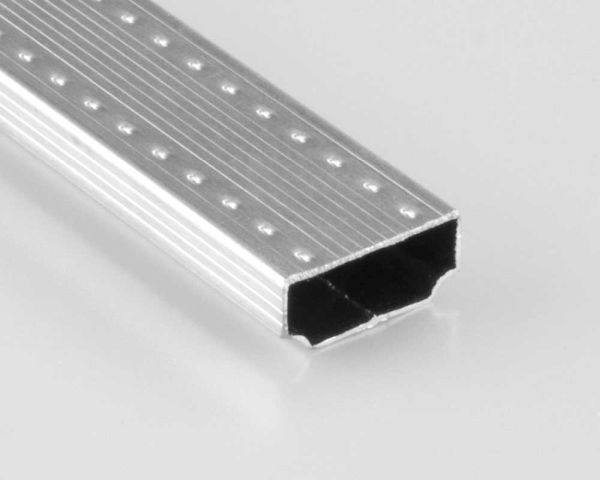
Conventional aluminium spacer bar for comparison
For comparison
The aluminium spacer it replaces

One colour, one finish, and a thermal conductivity roughly a thousand times higher than the warm-edge version. Still the default in budget glass units sold in Spain — worth checking before you buy.

FAQs

Frequently asked questions

Is a warm-edge spacer really worth the extra cost?

For a single window in a mild climate the energy saving alone takes years to pay back. The real reason to specify one is comfort and durability: the glass edge stays warm enough that condensation rarely forms, the sealant around the unit does not sit in water every morning, and the rim of the window feels less cold to sit beside. In a triple-glazed unit or anything chasing a Uw below 1.0, it is no longer optional — the standard cannot be met with an aluminium spacer.

Will it actually stop my windows from steaming up in winter?

It dramatically reduces the dark, wet strip that forms along the bottom edge of the glass. That edge is the coldest spot of any window, and on an aluminium-spaced unit it drops several degrees below the rest of the pane. A warm-edge spacer keeps the sightline 3–4 °C warmer, which in most homes is enough to push it above the dew point. Heavy condensation in the middle of the pane is a different problem — it usually means too much indoor humidity or too little ventilation.

How long does a warm-edge spacer last?

The spacer itself is sealed inside the glass unit, never touches the weather and never gets handled, so its life is the life of the sealed unit — typically 20–25 years, often longer. The gas-barrier foil prevents the argon from escaping at any meaningful rate, so the unit keeps its rated U-value for decades, not just the first few years.

Can I get a warm-edge spacer just by replacing the glass unit?

Yes. If the frame is sound, a glazier can remove the old sealed unit and install a new one with a warm-edge spacer in 20–30 minutes per window. The external dimensions are identical to an aluminium spacer, so the new unit drops straight into the existing rebate without any modification to the sash.

Does the colour of the spacer matter?

Only visually. The spacer is the thin line you see around the perimeter of the glass between the panes. A black or grey spacer reads as a continuous part of the gasket and almost disappears; a white one stands out. Premium warm-edge brands offer 15–20 colours so the spacer can be matched to either the gasket or the frame. Performance is identical across colours.

How much does it improve the overall Uw of the window?

Roughly 0.1–0.2 W/m²K compared to the same window with an aluminium spacer. That sounds small, but on a 1.0 Uw triple-glazed window it represents about 15% of the heat-loss path you would otherwise have to chase through thicker glass or a better frame. It is the cheapest tenth of a point you can buy.

Is it suitable for very large or sliding glass doors?

Yes, and increasingly recommended for them. Large triple-glazed units are heavy, and a rigid plastic-composite warm-edge spacer copes with the weight of a third pane without deforming. For floor-to-ceiling sliders facing the sun it also helps prevent the localised heating-cooling cycles that, over the years, can fatigue an aluminium spacer at the corners.

Ready to spec your windows?

Use the 3D configurator to size up your windows and see a fair market price. Or compare the leading PVC and aluminium brands side by side.