“Ten-year guarantee” is one of the most misleading phrases in the Spanish window trade. It almost always refers to the PVC profile, not to the finished, installed window in your home. A window is an assembly of separate parts made by different manufacturers and then fitted by a fourth party — and each of those parts carries its own warranty, with its own duration and its own small print. The piece most likely to fail, and the one buyers ask about least, is the installation.
This guide breaks a window warranty into its real components so you can read a quote honestly: what the profile, glass, hardware and installation warranties each cover, how long they typically last in Spain in 2026, what quietly voids them, what genuinely good after-sales looks like, and the questions to ask before signing.
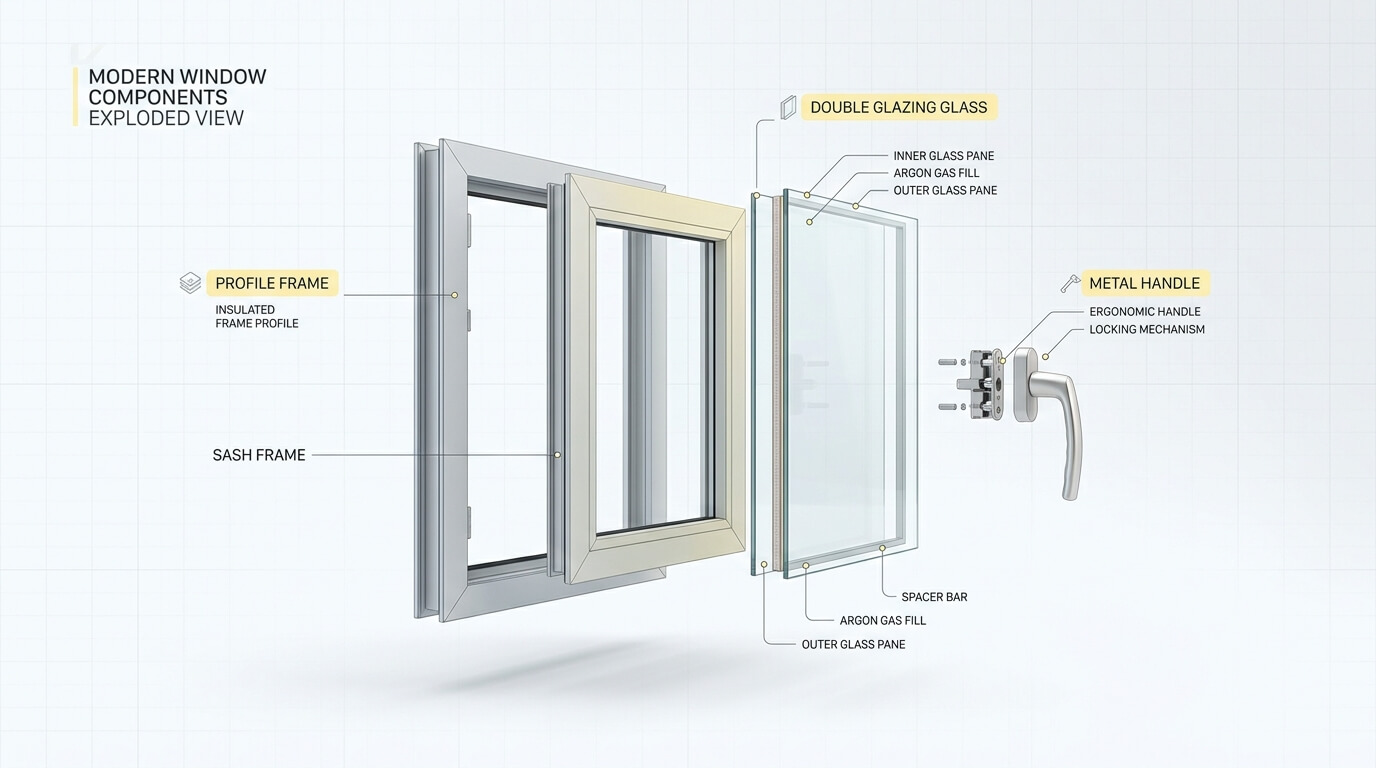
A window has four warranties, not one
When something goes wrong, the first question is always whose warranty covers this? Here is who is responsible for what.
| Warranty | Covers | Typical duration (Spain) | Who backs it |
|---|---|---|---|
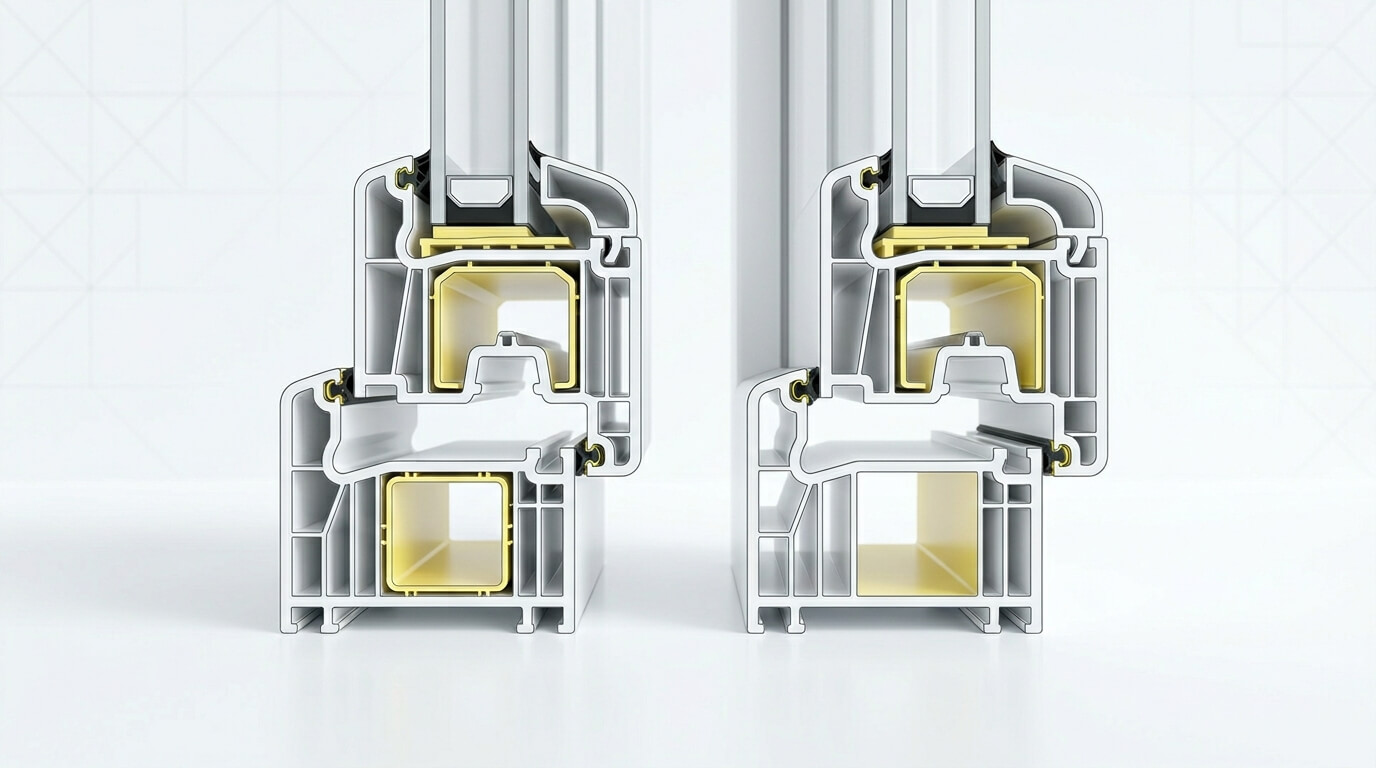
| Profile (PVC/alu) | Frame material: warping, discolouration, structural failure of the profile | 10 years (often) | Profile maker (Kömmerling, Veka, Rehau, etc.) |
| Glazing (IGU) | Sealed unit: fogging / condensation between the panes, seal failure | 5–10 years | Glass manufacturer |
| Hardware (herrajes) | Hinges, locking mechanism, handles — operation and mechanical failure | 2–10 years (varies widely) | Hardware maker (Roto, Maco, GU…) |
| Installation | Workmanship: sealing, fixing, levelling, water-tightness, perimeter insulation | 1–10 years (often the shortest, and most negotiable) | The company that fitted them |
Notice the mismatch. The profile may be guaranteed for a decade, but if the installation warranty is only 12 months, the very faults that are most common — draughts, leaks, dropped sashes — fall outside cover after a year unless you push on your legal rights. The headline number protects the part least likely to fail.
Profile warranty
Covers the frame material itself: that the PVC won’t crack, yellow badly or distort under normal use. Genuinely useful, but profile failures are rare. For how the major systems compare on quality and reinforcement, see our independent comparison of PVC window brands.
Glazing warranty
The most clearly defined of the four. If the sealed unit fails and you get permanent misting or condensation inside the two panes, that is a seal failure and the glass is replaced under warranty. (Condensation on the room-side surface is not a fault — it’s humidity — and condensation on the frame or reveal usually points to a poor install, not the glass.)
Hardware warranty
The widest range, from a token 2 years to 10+ on premium German hardware. This covers hinges, the multipoint locking gear and handles failing mechanically. It almost never covers wear from lack of the basic annual lubrication and adjustment — which is why the maintenance clause matters (see below).
Installation warranty — the one that counts
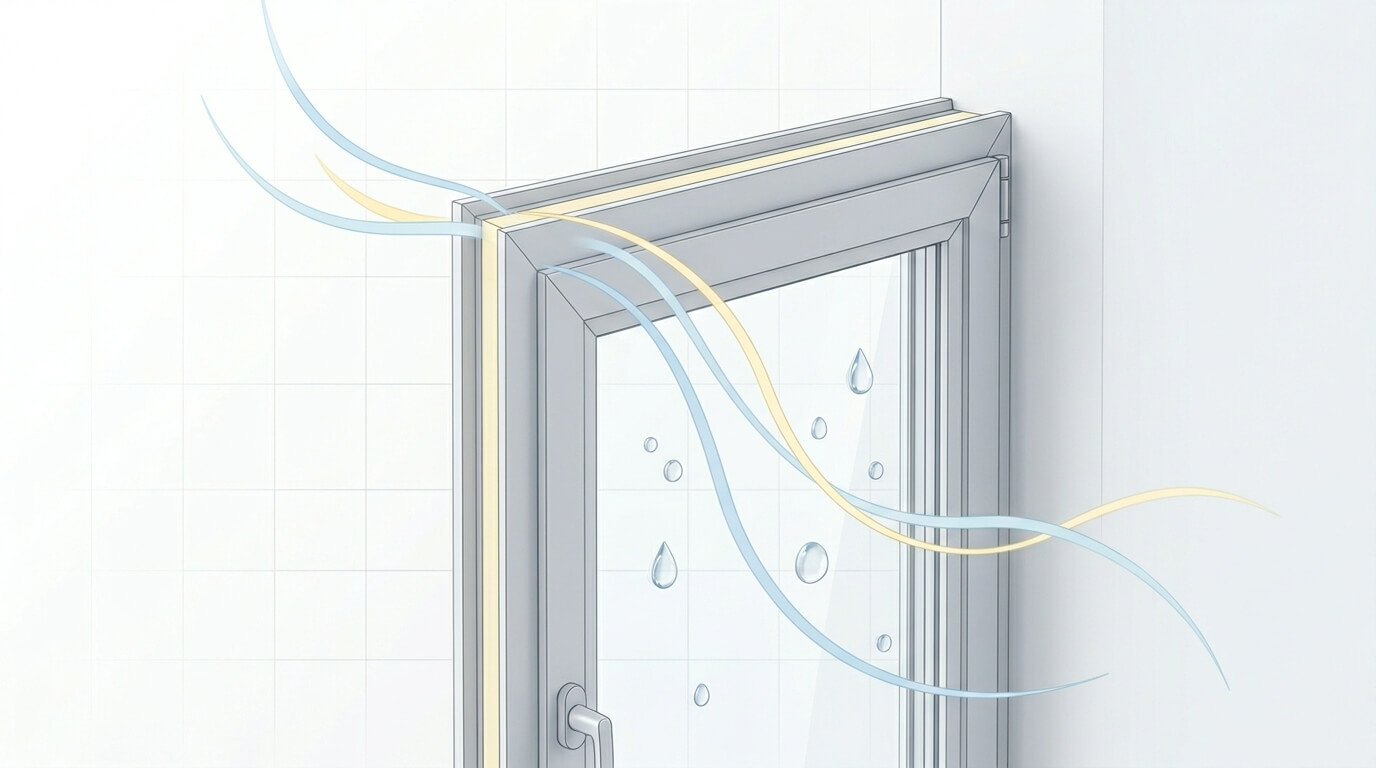
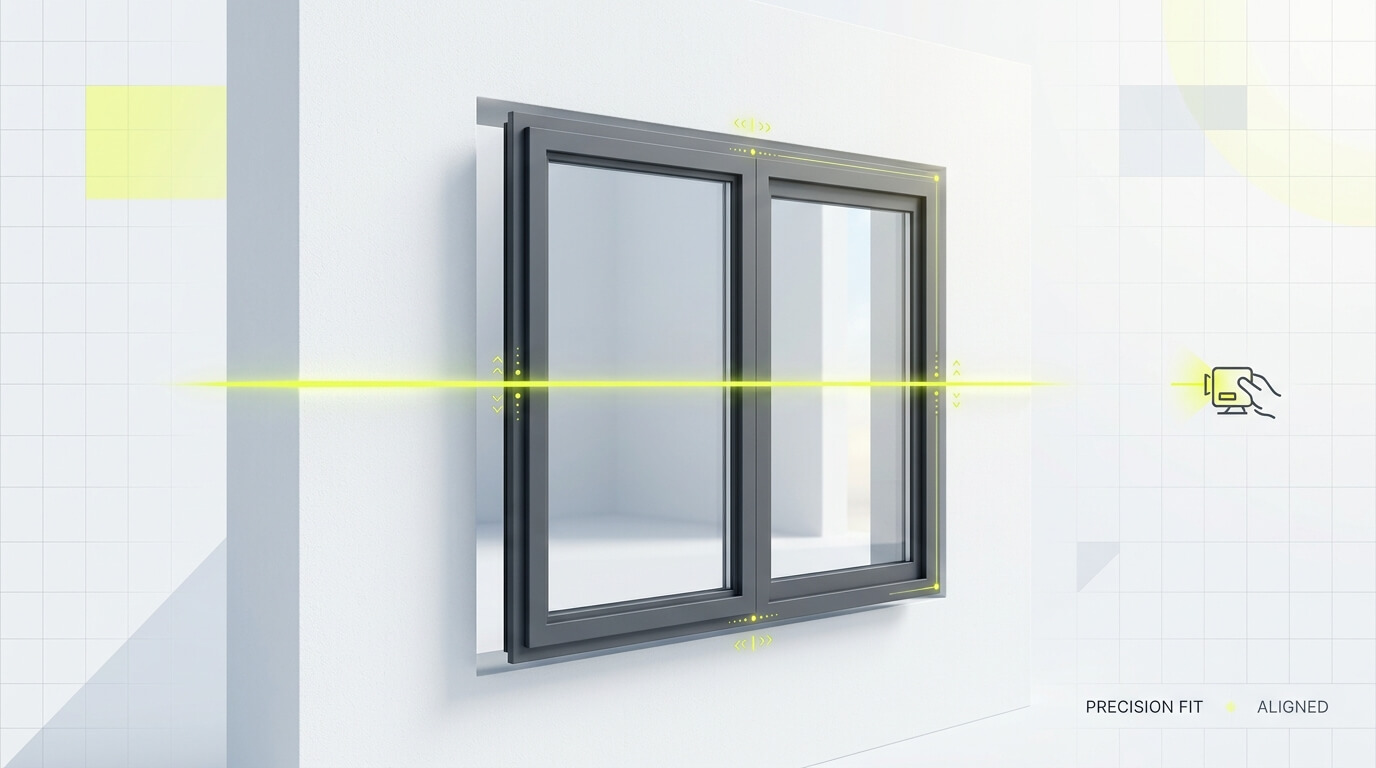
This is the company’s guarantee on its own work: that the windows were fitted level, mechanically fixed, properly sealed and insulated around the perimeter, and made watertight. Because most real-world problems are installation faults, this is the warranty you should scrutinise hardest. A reputable installer will commit to it in writing for several years; a cut-price one will keep it short or vague. If a bad fit has already happened to you, our guide on badly installed windows and how to claim sets out the steps.
What the law guarantees regardless
Even if a company offered no commercial warranty at all, Spanish consumer law gives you a baseline. Under the consumer code (Real Decreto Legislativo 1/2007, as amended by Real Decreto-ley 7/2021), goods bought from November 2021 carry a three-year legal guarantee of conformity (up from two). Installation by the seller is part of that conformity, so a bad fit makes the job non-conforming and entitles you to free repair or replacement. Where windows form part of building works, the LOE adds longer terms — around 3 years for habitability defects such as water-tightness, up to 10 for structural ones.
So a commercial installation warranty of “1 year” does not override your three-year legal floor — but the longer written warranty is still worth having, because it sets clear obligations and often covers more than the legal minimum, with less argument about who proves what.
What voids a window warranty
Warranties are routinely refused for reasons buyers never saw coming. The common voiders:
- No maintenance. Most hardware and many installation warranties require periodic lubrication, cleaning of drainage channels and seal checks. Skip the annual service and a claim can be rejected.
- Unauthorised modifications — fitting blinds, bars, security film or AC brackets that load or pierce the frame after the fact.
- Self-repair or a third party touching the windows.
- Misuse / forcing stiff sashes instead of having them adjusted.
- No proof of purchase. Lose the factura and you weaken every claim. Keep it.
- Condensation blamed on the home, not the window — high indoor humidity and poor ventilation are excluded, which is why distinguishing surface condensation from sealed-unit failure matters.
- Buyer-supplied glass or hardware voiding the installer’s cover on those items.
What good after-sales actually looks like
A warranty is only as good as the company that honours it. Strong after-sales service in Spain looks like:
- A single point of contact who takes responsibility for the whole window, rather than bouncing you between the glass, profile and hardware makers.
- A written warranty document that states each duration explicitly — including installation — not a verbal “ten years”.
- A response within days, not weeks, for leaks or security faults.
- Free adjustment visits in the first year as the building and seals settle (sashes commonly need a tweak after a season).
- Clear maintenance instructions so you know exactly what keeps cover valid.
- A traceable, established business that will still exist when you call in year four.
That last point is decisive. A ten-year warranty from a company that closes after two years is worthless.
Questions to ask before you sign
Put these to every company you quote, and compare the answers:
- What is the installation warranty, in years, in writing? (The single most important question.)
- What are the separate durations for profile, glazing and hardware?
- Who do I call for a problem — you, or the manufacturer?
- What maintenance must I do to keep each warranty valid?
- What is excluded, and what would void it?
- Do you provide a dated warranty certificate with the invoice?
- How quickly do you respond to a leak or a security fault?
If a company hesitates on question 1, treat it as a red flag.
The Estimia angle
Estimia is a marketplace, not an installer — and that independence is exactly why warranties matter to it. Every company listed on Estimia is verified before it can receive enquiries, and verified companies commit to proper, written warranties including the installation cover that cheap operators leave vague. When you request quotes through Estimia, you can compare not just price and product but what each company actually guarantees and how it handles after-sales — side by side, before you commit. Compare that across a few vetted companies and the difference between a real warranty and a marketing slogan becomes obvious.
Bottom line
A window carries four warranties — profile, glazing, hardware and installation — and the installation one, the most important, is often the shortest unless you insist otherwise. Spanish law guarantees you at least three years of conformity on top, but the company you choose decides whether a claim is painless or a fight. Get every duration in writing, understand what voids cover, and pick an established installer with genuine after-sales.
Compare verified window companies on Estimia and get several quotes side by side — vetted installers who back their work with written, honoured warranties.