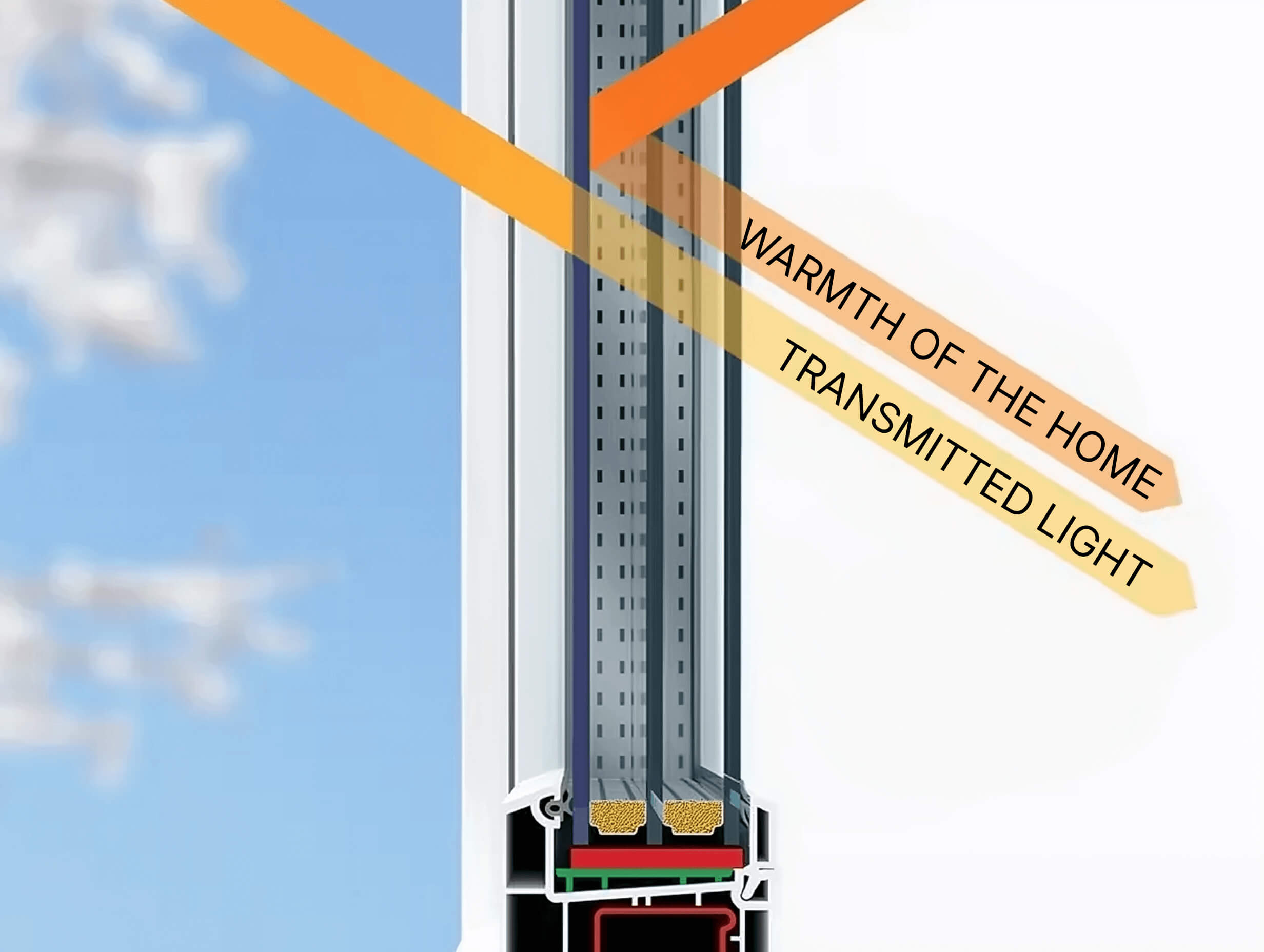
Most homeowners think of new windows as a shopping decision — frame material, colour, glazing, price. In Spain it is also a regulatory decision. The country has a national building code, the Código Técnico de la Edificación (CTE), and several of its sections set hard minimums for how well a window must insulate against heat, how much street noise it must block, and how it must protect the people behind it from falls and broken glass. Replace your windows without knowing those numbers and you can end up with a beautiful unit that is technically non-compliant, underperforms for your climate, or — worst case — has to be redone.
The good news is that the rules are knowable, and once you understand them they become a buying advantage: they tell you the minimum spec a quote must hit, which makes wildly different prices comparable. This guide walks through the parts of the CTE that affect windows, the targets that change depending on where in Spain you live, when a simple replacement actually triggers compliance, and a clear set of dos and don’ts. On Estimia you can then compare quotes from verified window companies that already build to these standards — rather than discovering the code the hard way after installation.
The CTE in one minute
The CTE is the framework that governs building quality in Spain. It is organised into Documentos Básicos (DB), each covering one area. Three of them matter for windows:
- DB-HE — Ahorro de Energía (energy saving): thermal performance, the U-value of your windows, solar control.
- DB-HR — Protección frente al Ruido (noise protection): acoustic insulation against outdoor and indoor noise.
- DB-SUA — Seguridad de Utilización y Accesibilidad (safety in use): fall protection, safety glazing, impact resistance.
A fourth, DB-SI (fire safety), occasionally touches windows in shared buildings, but for a normal home replacement the three above are what you live and die by.
A crucial point that surprises people: the CTE was written primarily for new build and major renovation, but it explicitly applies to reforma work too, “in the parts affected”, as far as is technically and economically reasonable. In practice, replacing your windows is the moment the energy and acoustic clauses bite — you are touching the thermal envelope, so the new units are expected to meet current standards, not the 1980s standard of the ones you are removing.
DB-HE: the thermal rules (and your U-value targets)
DB-HE limits how much heat a building’s envelope is allowed to lose or gain. For windows the headline number is the U-value (transmitancia térmica), measured in W/m²K — lower means better insulation. You will see two versions:
- Ug — the glass alone.
- Uw (or U_H in Spanish texts) — the whole window, glass plus frame. This is the number that counts for compliance and for comparing quotes.
Spain is divided into climate zones combining a winter letter (A–E, A mildest, E coldest) and a summer number. The colder the zone, the stricter the maximum U-value your windows may have. Realistic 2026 targets for window U-values look roughly like this:
| Climate zone (examples) | Typical region | Window Uw target (W/m²K) |
|---|---|---|
| A | Canary Islands, coastal Cádiz/Málaga | ≈ 2.7 or better |
| B | Valencia, Seville, Alicante, Mediterranean coast | ≈ 2.3 or better |
| C | Barcelona inland, Galicia coast, parts of the meseta | ≈ 2.0 or better |
| D | Madrid, Zaragoza, central meseta | ≈ 1.8 or better |
| E | Burgos, Ávila, high-altitude interior | ≈ 1.6 or better |
These are indicative — the exact limit depends on the specific zone code and orientation — but they tell the real story: a modern double-glazed PVC or thermal-break aluminium window (Uw ≈ 1.0–1.5) comfortably clears the code everywhere, while old aluminium without a thermal break (Uw 5+) fails in every zone in Spain. DB-HE also pushes on solar control in hot zones: south- and west-facing glass in Andalusia or the Levante is expected to limit summer solar gain, which in practice means low-emissivity and solar-control coatings, not plain glass.
If you want the deeper explanation of how Uw is calculated and why it matters more than the glass figure alone, see our dedicated guide on the Uw value.
DB-HR: the acoustic rules
DB-HR sets minimum airborne sound insulation for the building envelope against outdoor noise. For a façade the requirement is expressed as a global index (in dBA) and depends on the noise level of your street or area — a flat on a quiet residential road has a lower target than one facing a main avenue or near an airport.
In window terms, the spec that satisfies DB-HR ranges from roughly:
- Quiet location: standard double glazing, ~30–33 dB reduction, is usually enough.
- Busy urban street: you need asymmetric laminated acoustic glass (e.g. panes of different thickness with an acoustic interlayer), reaching ~38–42 dB.
- Very high noise (main arteries, flight paths): premium acoustic units, 42 dB+, sometimes with thicker laminated panes and improved frame sealing.
The frequent mistake is treating acoustics as an afterthought. The frame seal and installation matter as much as the glass — a 42 dB pane fitted with air gaps around a poorly sealed frame will leak noise and miss the target. Acoustic performance is also where cheap quotes quietly downgrade: the brochure says “double glazing”, but it is symmetric standard glass that meets DB-HR only in quiet zones.
DB-SUA: safety glazing and fall protection
This is the section people forget — and the one that most often forces a redo. DB-SUA protects users from impact and falls. Two consequences for windows:
Safety glass (impact resistance)
Glazing in risk-of-impact areas must be laminated or toughened safety glass so it does not shatter into dangerous shards. This includes large low-level panes, full-height glazing, glass doors, and glazed areas you could walk into. A floor-to-ceiling fixed pane in a living room is a classic case where ordinary annealed glass is not compliant.
Fall protection (low windows and French balconies)
Where a window sill is below a minimum height above the floor and there is a drop on the other side (anything above ground floor essentially), DB-SUA requires protection against falling. That means either a sill at the regulated height, a railing/barandilla, or glazing strong enough to act as the barrier. A full-height window with a sheer drop and no railing or laminated barrier glass is one of the most common non-compliances in older flats — and replacing the window is the moment to fix it.
When does replacing windows trigger compliance?
Not every job invokes the full code, but the line is clearer than people hope:
- Simple like-for-like swap of one or two units in a private dwelling: light-touch — but the new units should still meet current thermal/acoustic spec, and any safety-glass or fall-protection issue you uncover must be brought up to standard.
- Replacing all the windows / changing the façade openings: you are working on the thermal envelope, so DB-HE and DB-HR apply to the new windows.
- Part of a wider reform with a building permit / project: the architect’s project will hold the windows to current CTE limits, full stop.
- Energy-improvement works claiming grants or IRPF deductions: to qualify you must document a real U-value improvement — the code’s logic becomes the eligibility test.
In short: the moment money changes hands for new windows, the sensible assumption is that current CTE minimums are the floor, not the ceiling.
The dos
- Do ask for the Uw value in writing, not just “double glazing”. It is the one number that proves thermal compliance.
- Do match the spec to your climate zone — solar-control glass in Andalusia and the Levante, low U-value in Madrid and the cold interior.
- Do specify acoustic laminated glass if you face a busy street; check the dB figure against your location.
- Do insist on safety glass for large, low or full-height panes, and resolve fall protection on any window above the ground floor.
- Do treat compliance as the baseline for comparing quotes — when every quote must hit the same Uw and dB, prices become genuinely comparable.
- Do keep the documentation (marcado CE, declaration of performance, U-value): you’ll need it for grants, IRPF deductions and any future sale.
The don’ts
- Don’t buy on price alone — the cheapest quote often hits compliance only in the mildest zone, or skips safety glass entirely.
- Don’t fit aluminium without a thermal break in a habitable room; it fails DB-HE everywhere in Spain and will condense.
- Don’t ignore the frame seal and installation — a code-compliant pane badly fitted is a non-compliant window in practice.
- Don’t assume “the same as before” is legal. Replacing single glazing with single glazing, or putting ordinary glass in a full-height opening, can leave you non-compliant.
- Don’t forget the community and the façade. Code compliance is separate from your comunidad de vecinos rules and any historic-zone restrictions — see our guides on replacing windows in an apartment building and on protected buildings.
How to make sure your quotes are compliant
The cleanest way to avoid a compliance surprise is to make the code part of your brief from the start, then compare like with like. When you request quotes through Estimia, you can specify your climate zone, the U-value and acoustic targets your home needs, and any safety-glass requirements — and receive several comparable quotes from verified window companies that already work to CTE standards. Because every company on the platform is vetted before it can receive an enquiry, you are choosing between installers who understand DB-HE, DB-HR and DB-SUA, not gambling on whoever quotes lowest.
Conclusion
Replacing windows in Spain is governed by the CTE: DB-HE sets your U-value and solar-control targets by climate zone, DB-HR sets the acoustic minimum for your location, and DB-SUA demands safety glass and fall protection for large, low or high-level openings. Treat those minimums as the floor for any quote, document the figures, and remember that compliance is separate from your community and heritage obligations.
Compare verified window companies on Estimia and get several quotes built to the same CTE spec side by side — it is the simplest way to be sure your new windows are legal, efficient and right for your part of Spain.
One last point on timing: the same U-value the code sets here is what the EU’s energy rules are pushing every home toward — and the tax deduction that pays back up to 40% of a compliant upgrade closes at the end of 2026. See what the new EU energy law actually requires and the region-by-region cost picture.