The revised Energy Performance of Buildings Directive — Directive (EU) 2024/1275, the EPBD, entered into force in May 2024, and Spain’s deadline to transpose it into national law passed on 29 May 2026. The directive doesn’t reach a homeowner directly: it arrives through Spanish instruments — the National Building Renovation Plan, the building code (CTE), the energy certificate (CEE) and subsidy programmes. That’s where to look for what it changes for your flat or house.
Below: what the directive says about residential buildings, how that works in practice, and where windows fit in.
What the directive requires of the housing stock
For residential buildings, the final text sets targets at country level, not at the level of an individual dwelling:
- Spain must cut the average primary energy use of its entire housing stock by 16% by 2030 and 20–22% by 2035.
- At least 55% of that reduction must come from renovating the worst-performing buildings.
- The directive sets no minimum energy class for an individual home. There is no rule in the final residential text saying a given dwelling must be class E, D or B by any date.
The frequently quoted “class F by 2030, E by 2033” thresholds apply to the worst-performing non-residential buildings — offices, shops and other commercial premises. They do not extend to homes.
The EPBD requirements a homeowner is most likely to notice directly are elsewhere: solar energy on buildings, EV charging infrastructure, the phase-out of fossil-fuel boilers, and the quality of the energy certificates themselves.
The dates worth knowing
- 2024EPBD in force
- 2025Boiler subsidies end
- 2026Spain transposes
- 2026Tax deduction
40% deduction ends
Last day works qualify for the IRPF deductions on dwellings — up to 40% back. This is the real deadline.
Act before this - 2030EU directive
Stock −16%
Spain must cut the average primary energy use of its housing stock by 16%, mostly by renovating the worst-performing homes.
- 2035EU directive
Stock −20–22%
The required cut in average primary energy use rises to 20–22%.
The 2030 and 2035 targets are trajectories for the housing stock as a whole: the state delivers them, not the individual owner, and they carry no personal penalty for a “wrong” energy class. What matters practically to an owner isn’t the trajectory but how the directive is implemented at the Spanish level.
How a national target reaches an individual home
The directive reaches a specific flat or house through four channels:
- The National Building Renovation Plan. Spain has to find its energy savings somewhere, and at least 55% of them must come from the worst-rated housing. That’s why subsidies, renovation programmes and administrative attention keep concentrating on poorly rated homes.
- The building code (CTE DB-HE). It caps the U-value for your climate zone. The moment you replace windows, the new ones must meet the current limit — regardless of what was there before.
- The energy certificate (CEE). It remains the common unit of measurement: it’s how savings are counted for the directive’s purposes, and how eligibility for the tax deduction and most subsidies is determined.
- The market. Buyers and tenants see the class on the certificate; the owner sees the heating and cooling bills. That’s not a regulation, but it is measurable money.
Where windows fit in
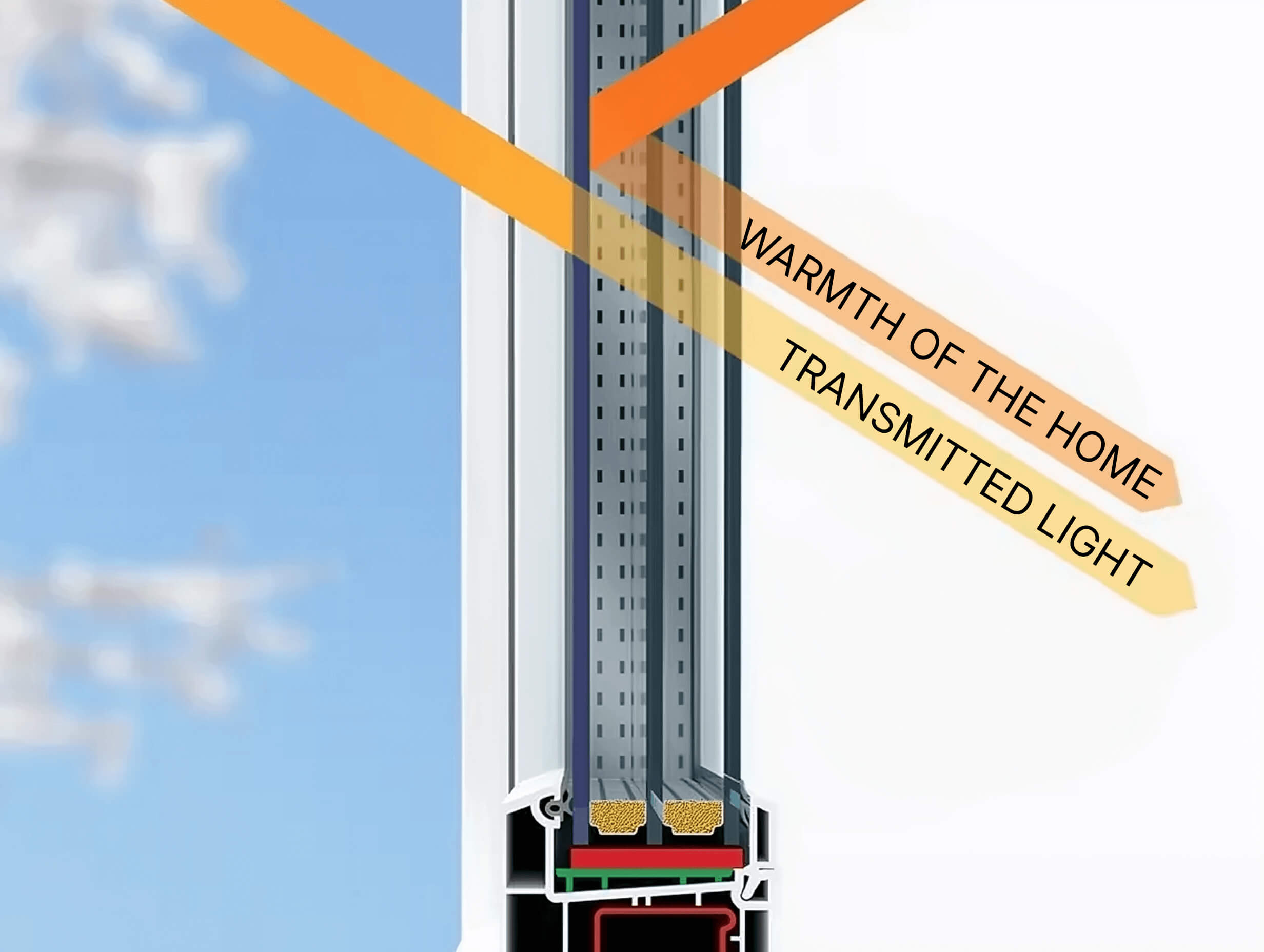
Windows are usually the cheapest single way to lift a poor rating. A significant share of a home’s heat loss goes through the glazing, and — unlike insulating a façade or changing the heating system — replacing windows needs no agreement from neighbours and takes days rather than weeks.
Two practical consequences:
- If you’re replacing windows as a step toward a better class, it’s worth checking in advance what U-value your climate zone requires and what that does to the price — covered in Window Costs by Region.
- If the works are tied to a tax deduction or subsidy, the order matters: energy certificate before, works, energy certificate after. That’s covered separately in Get Up to 40% Back.
When replacement is worth planning now
Replacing your windows makes sense if any of these is true:
- Your home has a low CEE rating and you plan to sell, rent or cut bills.
- You have single glazing or old double glazing that doesn’t meet your climate zone’s current U-value.
- You intend to claim the tax deduction for energy-efficiency works — it has its own deadlines and its own certification sequence.
- You’re already renovating and it’s the convenient moment to deal with it.
If none of these applies to you, there’s no need to rush: no law requires you to replace your windows by any date.
In short
- The EPBD sets a target for the country: −16% primary energy across the housing stock by 2030 and −20–22% by 2035, with at least 55% coming from the worst housing.
- It introduces no mandatory energy class for individual homes; the F/E thresholds apply to non-residential buildings.
- Spain’s deadline to transpose the directive passed on 29 May 2026; in practice it operates through the renovation plan, the CTE, the CEE and subsidies.
- Windows are usually the cheapest single way to lift a home’s rating, and when replaced they must meet your climate zone’s U-value.
The complete picture — the directive, the deadlines, the deduction and regional costs — is on our EPBD page.