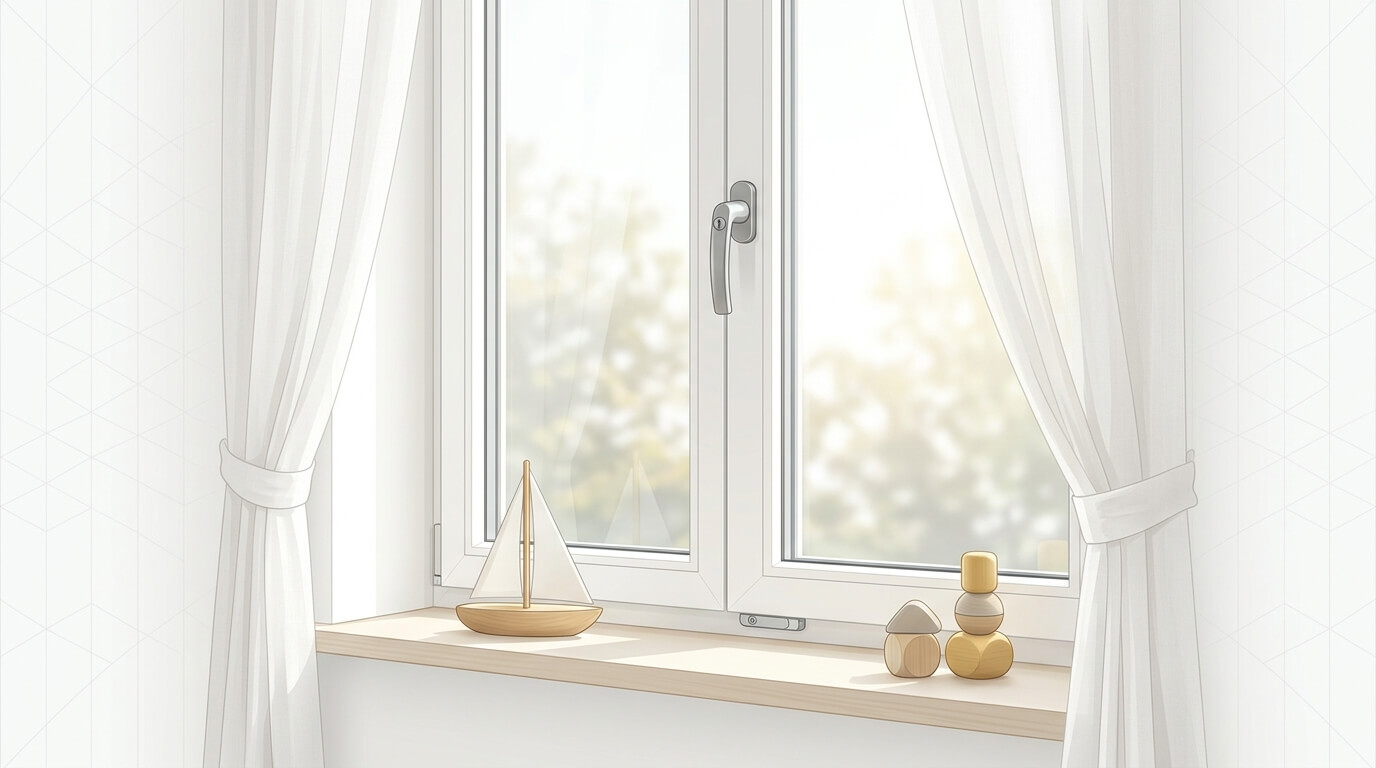
A toddler can climb higher than most parents expect, and a window that feels perfectly safe to an adult can be an open invitation to a curious two-year-old. Window and balcony falls are a recurring and largely preventable cause of serious childhood injury in Spain, and they spike in the warm months when windows stay open for ventilation and families move out onto terraces. The reassuring part is that almost every risk has a simple, affordable countermeasure — and most can be retrofitted to the windows you already own.
This guide walks through the three things that actually hurt children at a window — falls, finger traps and broken glass — and the proven solutions for each, from cheap plastic restrictors to laminated safety glass and the fall-protection rules in Spain’s building code. It is written from a neutral standpoint: the goal is to help you specify the right protection and then compare it across several quotes, rather than to sell you any one product.
The three real risks
It helps to separate the hazards, because the fixes are different:
- Falls from height. A window low enough to climb to, or a balcony with a low or climbable railing, is the most serious risk by far. Children are top-heavy, fascinated by height and have no fear of it.
- Finger and hand traps. Hinged sashes, doors and the gap on the hinge side crush small fingers. This is rarely life-threatening but extremely common.
- Glass breakage and cuts. A child running into, or falling against, ordinary annealed glass can break it into sharp shards. Low-level glazing, full-height balcony glass and glass doors are the usual culprits.
A good child-safe window strategy addresses all three, but fall prevention comes first — it is the difference between a scare and a tragedy.
Solution 1: Window restrictors and limiters
The single most cost-effective safety device is a window restrictor (limitador de apertura): a small mechanism that stops a window opening more than a set amount — typically around 10 cm, narrow enough that a child cannot pass through but wide enough to ventilate.
- Cable or chain restrictors screw to frame and sash and allow a limited opening; better ones have a release catch an adult can operate (and that doubles as an escape route in a fire).
- Folding/locking stays built into the hinge hardware do the same job more discreetly on casement windows.
- On tilt-and-turn windows, you can fit hardware that disables the full inward “turn” and only permits the tilt position (see micro-ventilation below).
Restrictors cost very little per window and are the first thing to specify in any home with young children, especially on upper floors.
Solution 2: Lockable and key-locking handles
A standard window handle can be opened by a determined toddler. Lockable handles (manillas con llave or push-button handles) require a key or a button press to open, so the window stays shut — or stays in a restricted position — until an adult intervenes.
- Key-locking handles are ideal for windows children should not open at all. Keep the key nearby but out of reach for fire egress.
- Push-button handles are a lighter-touch option: harder for small hands, easy for adults.
- Combined with a restrictor, a lockable handle gives you two layers: the window can only open a little, and only an adult can release it fully.
For sliding terrace doors, the equivalent is a sliding-door lock or limiter that prevents the leaf sliding far enough for a child to squeeze through.
Solution 3: Tilt-only / oscilobatiente micro-ventilation
The oscilobatiente (tilt-and-turn) window is genuinely child-friendly when used correctly. Set to tilt only, the sash opens inward a few centimetres at the top — you get airflow with no climbable opening and no fall route. Many systems offer a micro-ventilation notch that cracks the seal for a slow, continuous air exchange without any real opening at all.
The key is to make the turn (full swing) function unavailable to children — via a key-locking handle, a restrictor, or hardware configured for tilt-first operation. A tilt-only window with a locked turn is one of the safest ventilation setups you can have in a child’s bedroom.
Solution 4: Laminated safety glass
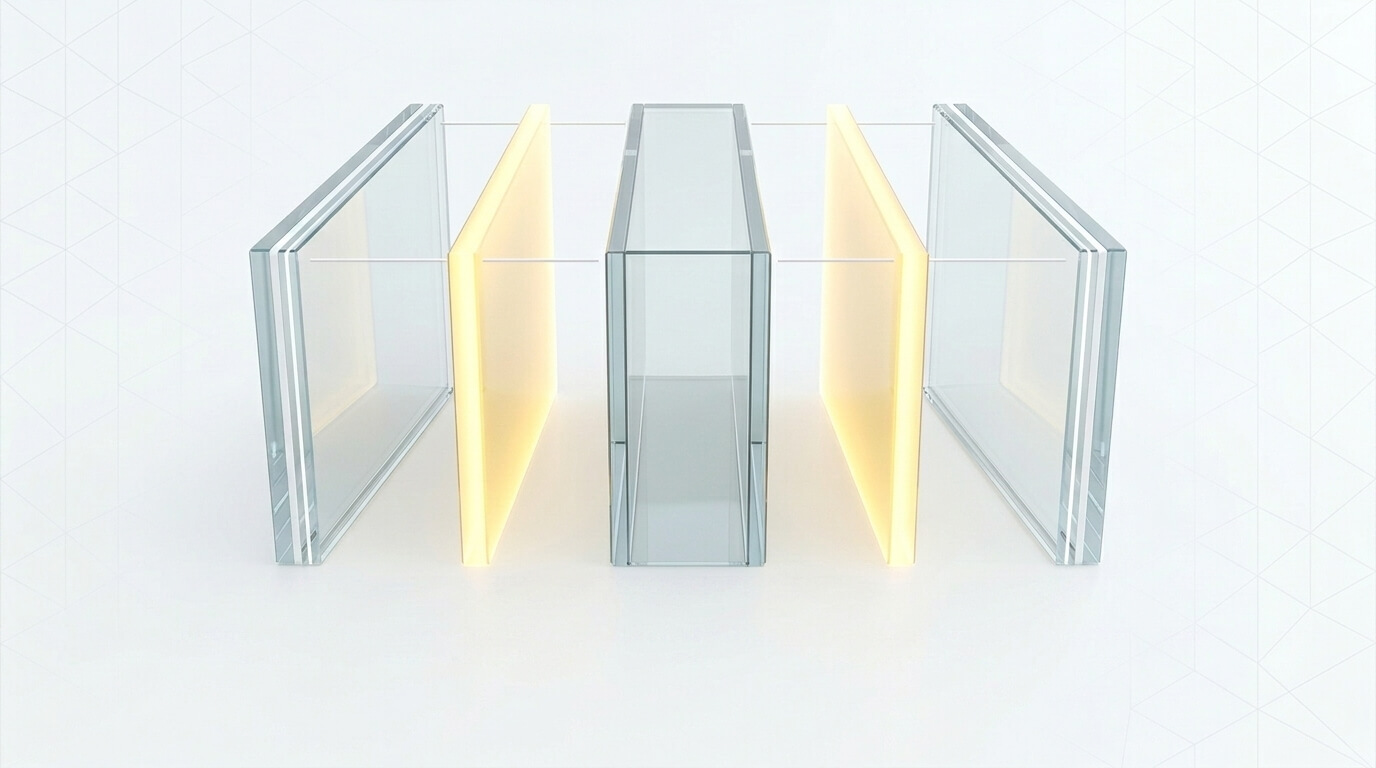
When the worry is breakage and cuts — or a child leaning on glass at height — the answer is **laminated safety glass ** (vidrio laminado de seguridad, e.g. 3+3 or 4+4 with a PVB interlayer). Unlike ordinary glass, when laminated glass breaks the fragments stay stuck to the plastic interlayer instead of falling as shards, and the pane resists being pushed through.
| Glass type | Behaviour on impact | Best use with children |
|---|---|---|
| Annealed (ordinary float) | Breaks into large sharp shards | Avoid at low level / high level |
| Tempered (templado) | Shatters into small blunt cubes | Doors, shower screens |
| Laminated (laminado) | Holds together, resists penetration | Balcony glazing, low windows, full-height glass |
For child safety, laminated is usually the better choice at height because it keeps acting as a barrier even after it cracks. Spain’s building code already requires safety glazing in many at-risk locations (low-level glass, glass doors, glazing next to floors and changes of level) — when you replace windows it is worth confirming the glass spec meets those requirements.
Solution 5: Fall-protection bars and railings (CTE DB-SUA)
Spain’s building regulation CTE DB-SUA (Seguridad de Utilización y Accesibilidad) sets out protection against falls. The practical points relevant to families:
- Protective barriers/railings are required where there is a drop, generally above roughly 55 cm of fall height; the minimum railing height is about 90 cm, rising to 110 cm for larger drops.
- Railings must be non-climbable: no horizontal rungs that act as a ladder, and gaps no wider than ~10 cm so a child’s head cannot pass through.
- For windows whose sill is low and where there is a fall behind, you can fit a fall-protection bar (barra de protección / barandilla) across the lower part of the opening, or interior window guards, to create that barrier.
These rules are written into the code for a reason; if your home is older and predates them, retrofitting a compliant railing or guard on balconies and low windows is one of the highest-value safety upgrades you can make.
Solution 6: Balcony and terrace glazing
Balconies are where many serious incidents happen, because children play there and the drop is real. Options:
- Glass balustrades in laminated glass give an unobstructed view while forming a solid, non-climbable barrier — provided the fixings and glass grade meet DB-SUA loading and the laminated requirement.
- Terrace enclosures (cortinas de cristal / acristalamiento) turn an open balcony into a glazed room. Done in laminated glass with proper rails, they remove the open-edge risk entirely while adding usable space — but verify the system is rated for the barrier role, not just weather screening.
- Avoid balustrades with horizontal bars or wide gaps, and never place climbable furniture (planters, chests, chairs) against a railing.
Solution 7: Anti-finger-trap and anti-slam details
To address the everyday crush injuries:
- Hinge-side finger guards on doors and casements cover the dangerous gap.
- Soft-close / anti-slam dampers stop windows and doors snapping shut on hands in a gust.
- Restrictor stays prevent a window swinging wide and slamming.
- Keep cords from blinds and shutters short, tied up or cordless — looped cords are a strangulation hazard separate from the window itself.
Retrofit vs new windows
You do not need new windows to make a home much safer. Most of the high-impact measures are retrofits:
- Quick, cheap retrofits: restrictors, key-locking handles, finger guards, securing blind cords.
- Moderate retrofits: interior window guards/bars, balcony railing upgrades to meet DB-SUA, swapping a sliding-door latch for a lockable limiter.
- When replacing anyway: that is the moment to specify laminated safety glass at low and high level, * *tilt-and-turn with key-locking handles** in children’s rooms, and **DB-SUA-compliant balcony glazing** — adding these during a planned window change costs far less than doing them later.
If you live in a flat, remember that anything touching the building façade or communal balcony railings may need approval from the comunidad de vecinos; interior restrictors and handles do not.
Room-by-room checklist
- Children’s bedrooms: tilt-only oscilobatiente with key-locking handle; keep beds and furniture away from the window.
- Living room / playroom: restrictors on opening windows, laminated glass on any full-height or low glazing, no climbable furniture near windows.
- Balcony / terrace: DB-SUA-compliant railing (≥90 cm, non-climbable, ≤10 cm gaps) or laminated glass enclosure; nothing climbable against the edge.
- Kitchen: lockable handles on accessible windows; tilt for ventilation while cooking.
- Stairwells and landings: safety glass on any glazing, guards on low windows over a drop.
- Throughout: cordless or tied-up blind/shutter cords, finger guards on swinging doors.
The bottom line
Protecting children at the window is mostly about layers: limit how far a window can open, control who can open it, make the glass fail safely, and put a proper barrier between a child and any drop. None of it is expensive relative to the risk, and most can be added to existing windows in an afternoon — with the bigger items (laminated glass, compliant balcony glazing) folded into your next window replacement.
When those bigger items are on the table, it pays to compare. On Estimia you can request and compare quotes from verified window and glazing companies near you — every listed company is vetted before it can receive enquiries — so you can check that restrictors, key-locking handles, laminated safety glass and DB-SUA-compliant balcony protection are actually specified, not just promised.
Compare verified child-safety glazing companies on Estimia and get several quotes side by side before you decide.