A new set of windows is one of the larger investments a Spanish home will make in a decade, yet almost nobody maintains them. People clean the glass, ignore everything else, and then wonder why a five-year-old window squeaks, sticks, lets in a draught or fails to close flush. The frustrating part is that the vast majority of “window problems” are not faults at all — they are missed maintenance. A window is a mechanical assembly with moving steel parts, rubber seals and friction points, and like any mechanism it drifts out of adjustment, dries out and clogs up if left alone.
This is the pillar guide to keeping windows working for their full design life — realistically 25 to 40 years for quality PVC and aluminium, longer still for well-kept wood. It walks through routine cleaning, lubrication, seasonal adjustment, drainage, gasket care and the specifics for each frame material, then shows you how to fix the common minor faults yourself and how to recognise the few situations that genuinely need a professional. None of this requires special skill; it requires knowing what to do and doing it twice a year.
Why maintenance matters more than people think
Three things degrade a window over time, and all three are reversible with maintenance:
- The hardware drifts. Hinges and the locking gear (the herrajes) carry the full weight of the sash through thousands of open-close cycles. Over the years the sash sags a fraction of a millimetre, enough to scrape the frame or stop sealing.
- The seals dry and compress. The rubber gaskets (juntas or burletes) that make the window airtight lose elasticity, especially under the Spanish sun. A flattened gasket is the number-one cause of draughts and whistling.
- Dirt and salt accumulate. Sand, pollen, urban grime and — on the coast — airborne salt build up in tracks, drainage channels and around fittings, jamming mechanisms and corroding metal.
Catch these early and a cloth, a drop of oil and a screwdriver fix them. Leave them and you are eventually paying for new hardware, new sashes or, in the worst case, a window that has to be replaced years before its time.
Routine cleaning (the right way)
Glass
Clean glass with a soft cloth or squeegee and a mild solution — water with a little washing-up liquid, or glass cleaner. Avoid abrasive pads, scouring powders and bladed scrapers, which scratch the surface and can damage low-emissivity coatings. Never clean glass in full midday sun, common on south-facing Andalusian façades, as the cleaner dries before you can wipe it and leaves streaks.
Frames
- PVC: soapy water and a soft cloth. Avoid solvents, acetone and abrasive cleaners — they dull and can permanently mark the surface.
- Aluminium: soapy water; for lacquered or anodised finishes avoid anything abrasive. On the coast, rinse off salt regularly.
- Wood: a barely damp cloth, never soaking. Wood and standing water are enemies.
Gaskets and tracks
This is the step almost everyone skips and the one that matters most. Wipe the rubber gaskets with a damp cloth to clear grit, then vacuum or brush out the tracks and rebates where dust collects. Grit trapped against a gasket grinds it down every time the window closes.
Lubricating hardware and hinges
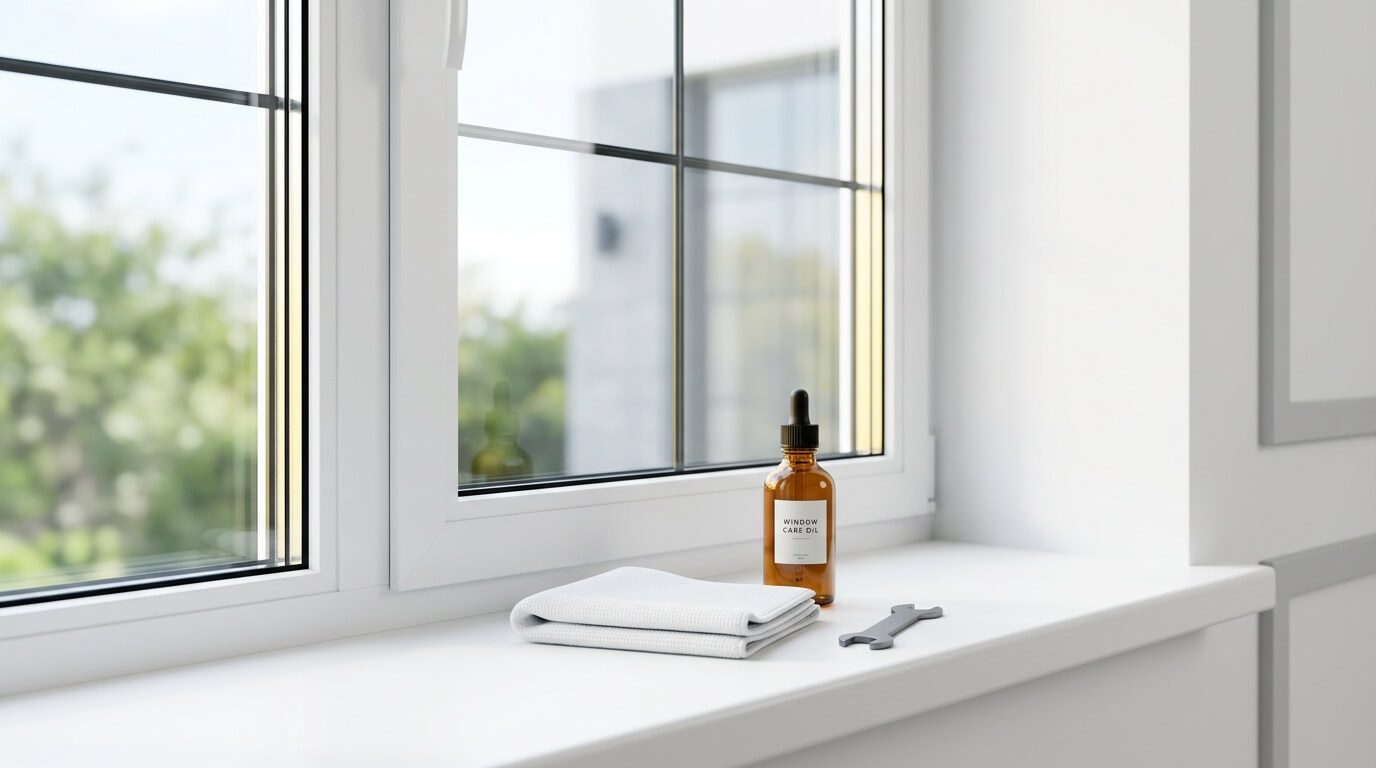
Moving metal needs lubrication, roughly once a year. Neglected hardware is what makes a handle stiffen and a hinge squeal.
- Hinges and pivots: a drop of light machine oil or, better, a PTFE/silicone spray made for window hardware. Open and close the sash a few times to work it in, then wipe the excess.
- Locking points (the cams and keeps along the frame edge): a thin smear of grease or PTFE spray on each metal cam. These are the mushroom-shaped studs that rotate when you turn the handle.
- What not to use: avoid heavy grease on visible tracks (it traps dust) and never use WD-40 as a lubricant on gaskets or as a long-term hardware lube — it is a solvent/penetrant that washes out proper lubrication and dries rubber out. Use it only to free a seized part, then re-lubricate properly.
A correctly lubricated tilt-and-turn window should open, tilt and lock with light, smooth effort and no noise.
Adjusting and regulating sashes
Modern tilt-and-turn (oscilobatiente) windows are adjustable in three planes using the screws built into the hinges and keeps — usually reachable with a single Allen key (typically 4 mm). This is how you cure a sash that has dropped, rubs the frame, or no longer seals evenly.
- Height (vertical): a screw at the bottom hinge raises or lowers the whole sash.
- Lateral (side-to-side): adjusts the sash left or right to centre it in the frame and stop it catching on one side.
- Compression (pressure against the gasket): the locking keeps and the eccentric cams can be turned to press the sash harder or softer against the seal.
Winter and summer setting
That compression adjustment is the basis of the winter/summer setting many people have never heard of. The eccentric cams (the oval studs the handle rotates) can usually be turned with a small spanner or by hand:
- Winter setting: rotate the cams so they press the sash tighter against the gasket — maximum airtightness, no draughts.
- Summer setting: loosen slightly for a touch of ventilation and to relieve pressure on the gaskets so they last longer.
Switching to a looser setting for the hot months is one of the simplest ways to extend gasket life in a warm climate. If you are unsure which way the cams turn, change one, test the seal with a sheet of paper (see troubleshooting below) and adjust from there.
Drainage holes — the silent essential
Every framed window has drainage slots (orificios de desagüe) along the bottom of the frame to channel out rainwater and condensation. On PVC and aluminium they are usually hidden behind small clip-on covers on the outer face of the sill.
If these clog with dust, leaves, dead insects or sand, water backs up inside the frame, pools, and eventually finds its way indoors — which homeowners often misdiagnose as a “leaking window” when the window is fine and the drains are simply blocked. Twice a year, find the slots, lift any covers, and clear them with a thin brush, a cocktail stick or a quick puff of compressed air. Pour a little water along the sill to confirm it runs out the front.
Gasket (seal) replacement
Gaskets are wear parts — expect to replace them at some point in a window’s life, typically after 10–15 years, sooner on a sun-blasted south façade. Signs they need doing: visible flattening or cracking, a gasket that no longer springs back when pressed, draughts, whistling, or water getting past.
Replacement is genuinely DIY on most systems:
- Identify the profile type — gaskets push into a groove and come in standard profiles. Take a 10 cm offcut to a supplier or order the matching profile online.
- Pull the old gasket out of its groove (it is friction-fit, not glued, on most modern windows).
- Clean the empty groove.
- Press the new gasket in, working around the sash, and leave it slightly long, butting the ends together at a top corner rather than stretching it tight — stretched gasket shrinks back and leaves a gap.
If your window uses a fully bonded or fused-corner gasket system, that is a job for the installer.
Seasonal maintenance checklist
A twice-a-year rhythm keeps everything in order. Do it at the change of seasons.
Spring (after winter, before the heat)
- Deep-clean glass, frames, gaskets and tracks.
- Clear all drainage holes of winter debris.
- Inspect gaskets for cracking after the cold.
- Switch tilt-and-turn windows toward the summer setting.
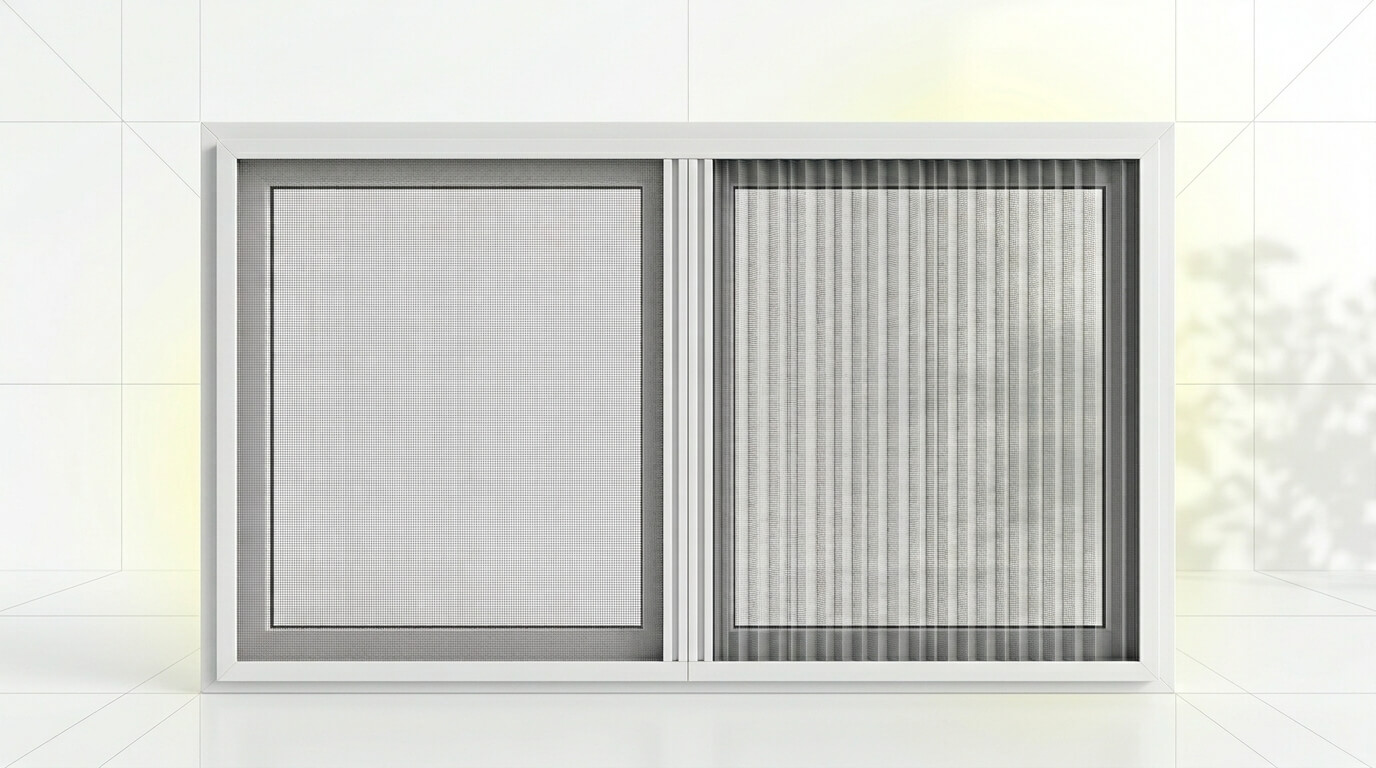
- Check and clean mosquiteras (insect screens) before insect season.
Autumn (before the rain and cold)
- Clean and lubricate all hardware, hinges and locking points.
- Switch to the winter setting for maximum airtightness.
- Test every sash for draughts and adjust compression.
- Re-clear drainage holes before the rainy season.
- Check that handles, locks and any persiana mechanisms operate smoothly.
Material-specific care
PVC
The lowest-maintenance material: it does not rot, rust or need repainting. Just clean with soapy water and keep the hardware and gaskets serviced. Avoid abrasives and solvents. White PVC can yellow slightly over decades in intense UV, but quality profiles resist this well.
Aluminium
Durable and stable, but on the Mediterranean and Atlantic coasts the enemy is salt corrosion. Rinse coastal aluminium frames more often, keep the drainage clear, and watch for white powdery oxidation or bubbling lacquer near the sea. Lacquered and anodised finishes are robust but not abrasion-proof.
Wood
The most demanding material and the one most often killed by neglect. Wood needs its protective finish (varnish, lasur or paint) renewed periodically — typically every few years on exposed faces, sooner on a sun- or rain-battered elevation. Watch for flaking finish, greying timber, soft spots or dark damp patches. Catch a failing finish early and you re-coat; ignore it and water gets into the timber, and rot is far more expensive to put right.
Troubleshooting common minor problems
| Symptom | Likely cause | DIY fix |
|---|---|---|
| Stiff, hard-to-turn handle | Dry/dirty locking gear | Clean and lubricate the cams and locking points; work the handle |
| Squeaking on opening | Dry hinges | Light oil or PTFE spray on hinges and pivots |
| Draught / whistling | Flattened gasket or summer setting left on | Switch to winter setting; if no help, replace the gasket |
| Sash rubs the frame | Sash has dropped | Adjust the hinge height/lateral screws with an Allen key |
| Won’t close flush / gap at one corner | Sash misaligned | Adjust lateral and compression at the keeps |
| Water on the inner sill after rain | Blocked drainage holes | Clear the drainage slots |
| Condensation between the panes | Failed glazing seal | Not a DIY fix — the sealed unit needs replacing |
The paper test for draughts
Close a sheet of paper in the window and try to pull it out. If it slides out easily, the seal at that point is weak — tighten the compression (winter setting) or replace the gasket there. Do this at several points around the sash to find exactly where it leaks.
When to call a professional
Most maintenance is DIY, but call a verified specialist when:
- Condensation forms between the panes — the sealed glazing unit has failed and must be replaced.
- The frame is cracked, warped, or rotten (wood) or showing serious corrosion (aluminium).
- Hardware is broken or worn out rather than just stiff — a snapped cam, a failed hinge, a stripped gear.
- Adjustment no longer fixes a sash that won’t seal or close, suggesting the frame itself has moved or was poorly fitted.
- You have water ingress that persists after the drains are clear and gaskets are sound.
A failed sealed unit or a worn-out gear set is a routine, affordable repair when caught early — and far cheaper than the new window that results from leaving it. The difficulty is finding a fitter who will do a small repair honestly rather than pushing a full replacement. That is exactly the kind of company Estimia is built to surface: every installer on the platform is vetted before it can receive an enquiry, so you can ask several verified window companies near you for a repair quote and compare them side by side rather than gambling on whoever shows up.
Conclusion
Windows do not need much — a proper clean, a once-a-year lubrication, a seasonal adjustment between summer and winter settings, clear drainage holes, and a gasket change once a decade. Do that and quality PVC or aluminium will run quietly and airtight for 25 to 40 years; ignore it and you will be paying for repairs, or a replacement, long before that. The small problems — stiff handles, draughts, dropped sashes — are almost all fixable in minutes once you know where to look.
When a job does cross into professional territory, compare verified window companies on Estimia and get several quotes side by side, so you know a small repair stays a small repair. For the bigger picture, see our related guides on the Uw value and how to compare window quotes.