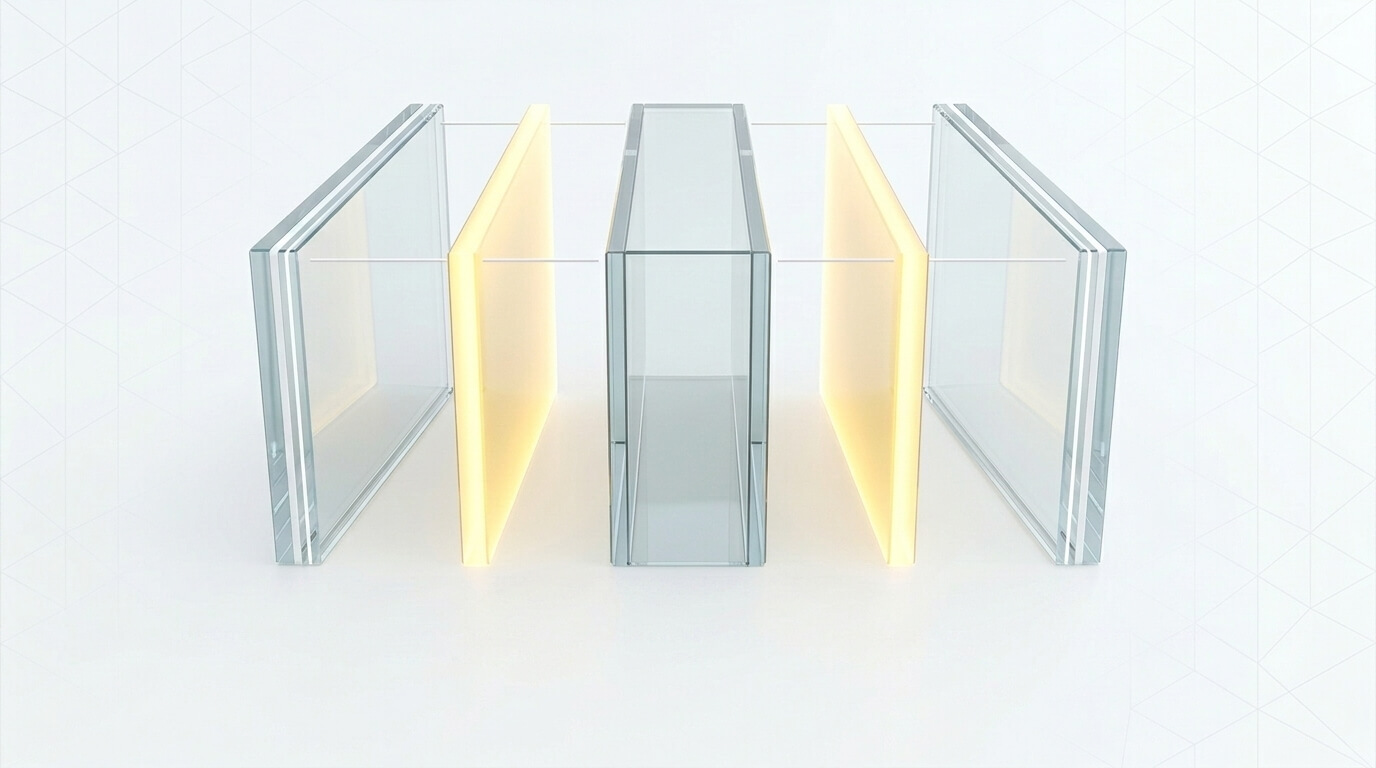
Most break-ins do not start with a picked lock — they start with a broken pane. A window is only as secure as its glass, and ordinary float glass gives way to a single sharp blow. Security glass changes that equation: instead of shattering and granting instant access, it holds together, resists repeated impacts, and buys the minutes that send an intruder looking for an easier target. For ground-floor flats, shops, accessible windows and holiday homes left empty for months, that difference is the whole point.
This guide explains how anti-vandal and security glass works, what the EN 356 resistance grades (P1A–P5A) actually mean, where the upgrade earns its cost in Spain, and how glass fits into a complete security picture alongside multipoint locks and reinforced profiles. The aim is to help you specify the right grade and then compare it across verified suppliers — not to oversell armour you do not need.
How security glass actually works
There are three building blocks, and the strongest products combine them.
- Laminated glass (vidrio laminado). Two or more panes bonded with one or more plastic PVB interlayers. When struck, the glass cracks but the fragments stay glued to the interlayer, and the laminate resists being pushed or cut through. This is the core of all anti-intrusion glazing — the more and thicker the interlayers, the higher the resistance.
- Tempered glass (vidrio templado). Heat-treated to be several times stronger than ordinary glass; when it does break, it crumbles into small blunt cubes. Tempering improves impact and safety (no shards) but on its own it is not anti-intrusion — once broken, the hole is open. It is excellent combined with laminate.
- Reinforced / thick laminated build-ups. Multiple glass plies and multiple PVB layers (and sometimes polycarbonate) stacked to defeat sustained attack, all the way up to ballistic grades.
The key insight: tempered = safe breakage; laminated = stays a barrier after breaking. For security you want laminated as the foundation, optionally with a tempered outer ply.
The EN 356 grades (P1A–P5A) explained
Anti-intrusion glass in Europe is rated to EN 356, which measures resistance to manual attack. The lower “A” band simulates a dropped/thrown impact (a steel ball dropped from increasing heights); the higher “B” band simulates repeated axe/hammer blows.
| Grade | Test (simplified) | Real-world meaning |
|---|---|---|
| P1A | Ball dropped from ~1.5 m | Basic resistance; deters casual impact, anti-shatter |
| P2A | ~3 m drop | Stronger deterrent for accessible windows |
| P3A | ~6 m drop | Solid anti-intrusion for ground floors |
| P4A | ~9 m drop | High resistance; shops, exposed premises |
| P5A | 3 impacts from ~9 m | Top of the “A” band; serious deterrence |
| P6B–P8B | Repeated axe/hammer strikes | Forced-entry resistant (banks, jewellers) |
Above EN 356 sit EN 1063 (bullet-resistant, BR1–BR7) and EN 13541 (blast-resistant) — relevant to banks, embassies and high-risk commercial sites, far beyond a normal home. At a high level: bullet- and blast-resistant glass exists and works, but for residential security the sweet spot is EN 356 P2A–P4A laminated — strong, still reasonably priced, and enough to defeat the smash-and-grab that 95% of break-ins rely on.
A common, sensible residential choice is a laminated unit such as 44.1 or 44.2 (the digits indicate glass thickness and number of PVB layers), often reaching around P2A–P4A depending on build-up.
Where it is genuinely worth it
Security glass is not needed everywhere — a third-floor bedroom window over a sheer façade is a poor target. Spend the money where the risk concentrates:
- Ground-floor and bajo windows. The classic entry point. Laminated P2A–P4A here is the highest-value security upgrade in most Spanish homes.
- Accessible windows generally — anything reachable from a flat roof, garage, patio wall, terrace, downpipe or street furniture.
- Patio and terrace sliding doors. Large, often poorly locked, and a favourite entry route; combine laminated glass with a proper multipoint slider lock.
- Shops and commercial premises (locales). Shopfronts take both burglary and vandalism; higher grades (P4A–P5A and up) plus shutters pay for themselves.
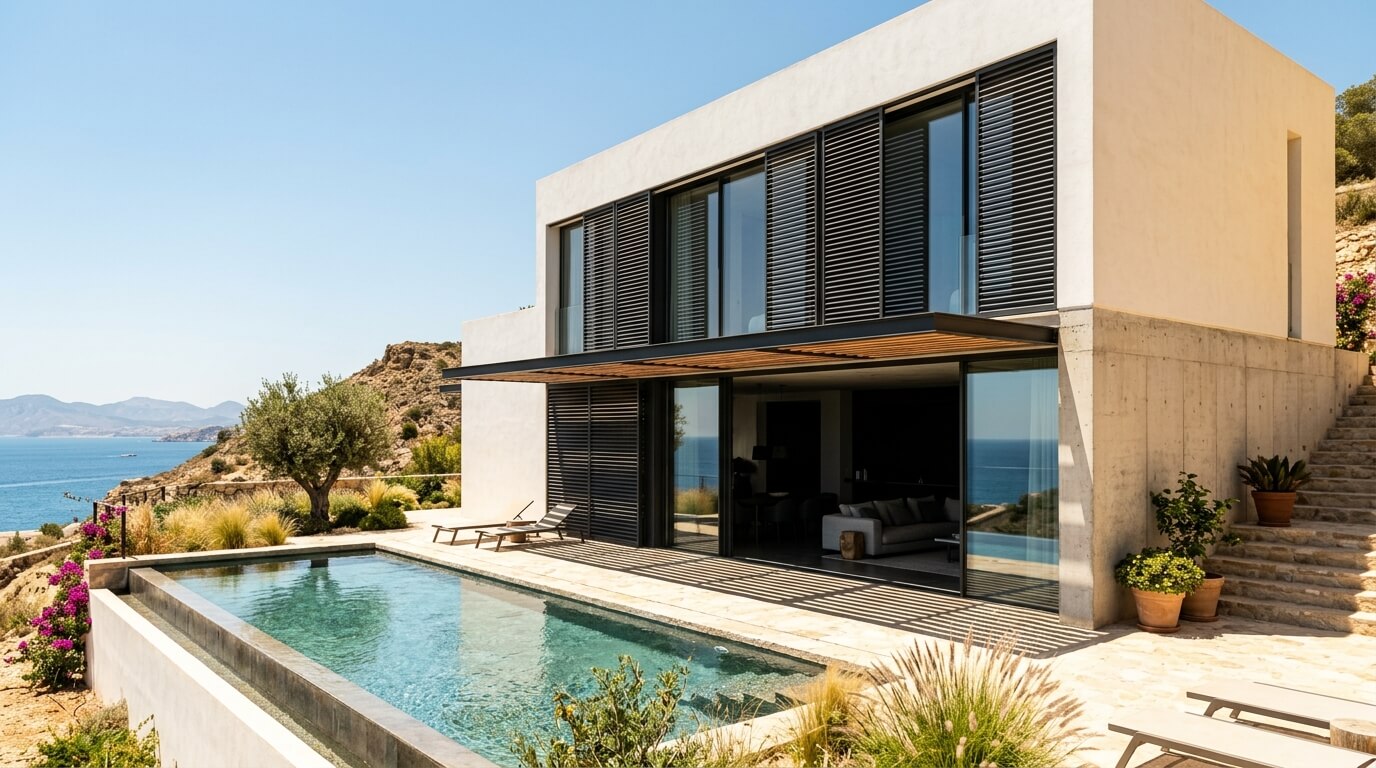
- Holiday and second homes. Long empty stretches on the coast and in rural Spain make these prime targets; laminated glass plus an alarm dramatically reduces opportunistic entry.
- Ground-floor flats in cities where a comunidad’s perimeter is weak.
For a typical primary residence, a reasonable strategy is laminated security glass on all accessible openings and standard (but still safety-rated) glass higher up.
Glass is only half the system
Strong glass in a weak window is wasted money. An intruder who cannot break the pane will simply attack the frame, the lock or the hinge. Pair the glass with:
- Multipoint locking (cierre multipunto). Instead of one central catch, the sash locks at several points around its perimeter — top, bottom and sides — so it cannot be levered open at a corner. Look for anti-lever mushroom cams and security keeps.
- Reinforced profiles. Steel-reinforced PVC or robust thermal-break aluminium resists prying. The frame must be fixed securely into the structure, not just foamed in.
- Anti-drill / anti-bump cylinders on door locks, and lockable or key handles on windows.
- Security shutters (persianas de seguridad) and rejas where appropriate, plus an alarm — the combination of delay (glass + locks) and detection (alarm) is what actually deters.
Think of it as a chain: the security level of the window equals its weakest link, so balance glass grade, locking and profile rather than over-investing in one.
The insurance angle
In Spain, your seguro de hogar is directly relevant in two ways:
- Premiums and conditions. Insurers favour homes with certified security measures. Specifying anti-intrusion glazing, multipoint locks and an alarm can improve terms, and some policies require reasonable security for theft cover to apply — especially on ground-floor and holiday properties.
- Claims. Many policies cover glass breakage (rotura de cristales) as standard, but a claim is far less likely in the first place if the glass holds. Keep invoices and the EN 356 certificate for your glazing — proof of grade can matter both for premiums and for any dispute.
Before buying, it is worth a quick call to your insurer: occasionally a documented security upgrade reduces the premium enough to offset part of the cost.
What it costs in Spain (2026)
Security glazing is priced as a supplement over standard glass, by the unit and the grade. Rough installed ranges:
| Glass / grade | Indicative installed price (€/m²) | Notes |
|---|---|---|
| Standard laminated 3+3 (basic anti-shatter) | €60–110 | Entry point, also safety |
| Laminated security ~P2A (e.g. 44.1) | €110–180 | Good residential ground-floor choice |
| Laminated security P3A–P4A | €160–300 | Strong deterrent, shops |
| Forced-entry P5A+/B-grade | €300–600+ | Commercial, high-risk |
| Bullet-resistant (EN 1063) | €700–1,500+ | Specialist only |
These are glass-only ranges; a full window also carries frame, locking and fitting costs. Adding security laminate to a new window order is far cheaper than retrofitting later, because the frame and sealed unit are being made anyway. As always, the figures vary by region, size and supplier — the reliable way to know is to compare several itemised quotes that state the exact grade.
How to specify it with confidence
When you ask for quotes, insist that each one names:
- The glass build-up (e.g. 44.2 laminated) and its EN 356 grade.
- The locking — confirm multipoint and anti-lever cams.
- The profile and fixing — reinforced, mechanically anchored.
- A certificate for the glazing grade for your insurer.
A vague “reinforced glass” with no grade is a red flag. The grade is the product.
The bottom line
For Spanish homes, security glass is rarely about exotic bullet-resistant panels — it is about putting laminated EN 356 P2A–P4A glass on the windows a burglar can actually reach, then backing it with multipoint locks, a reinforced frame and an alarm so the whole window resists, not just the pane. Get that combination right on ground floors, terraces, shops and holiday homes, and you remove the easy break-in that most intrusions depend on.
On Estimia you can request and compare quotes from verified window and glazing companies near you — every listed company is vetted before it can receive enquiries — so you can line up different EN 356 grades and locking specs side by side, confirm each quote names the actual glass build-up, and choose on certified performance rather than a sales claim.
Compare verified security-glazing companies on Estimia and get several quotes to weigh up grade, locking and price together.