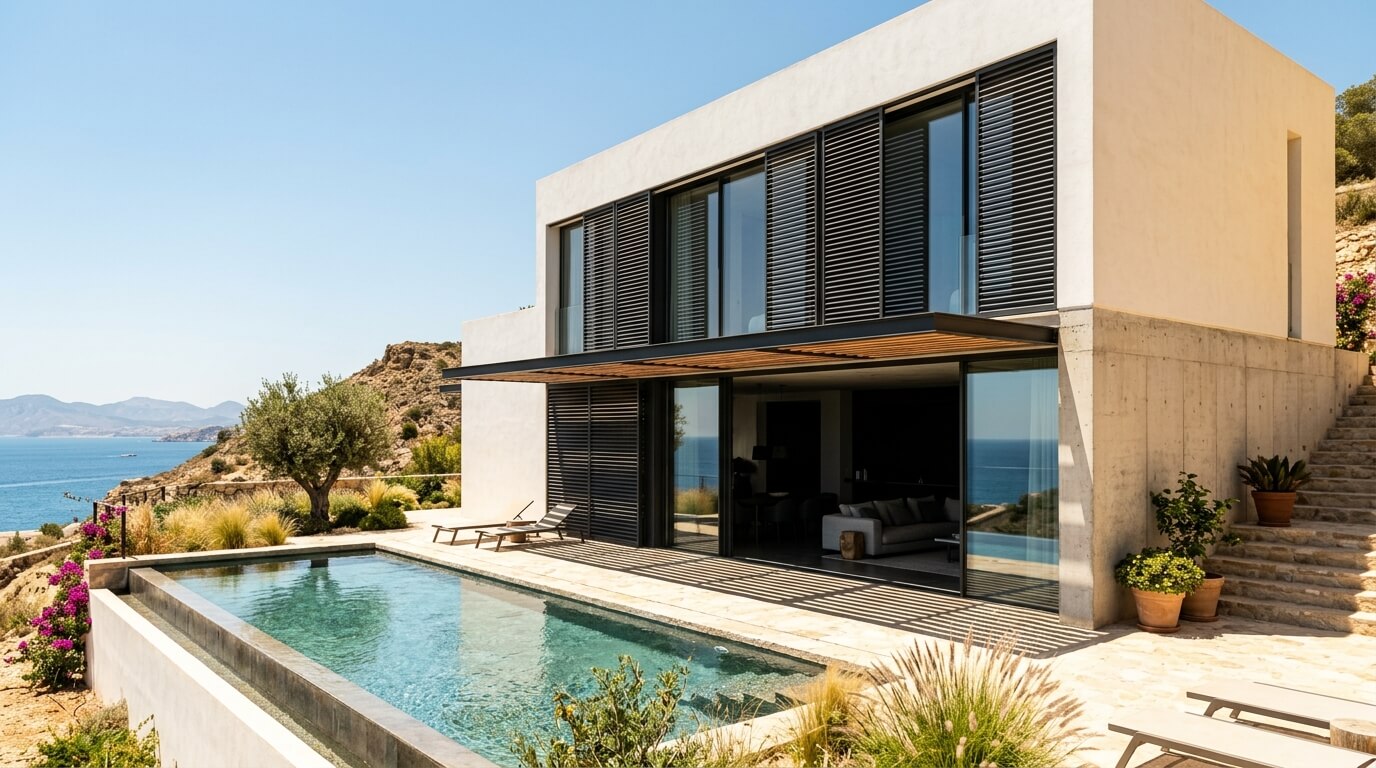
Across most of Spain, the real thermal challenge is not the winter — it is the summer. From the Mediterranean coast to the southern interior and the Canary Islands, the question that decides whether a home is comfortable in July and August, and how brutal the air-conditioning bill is, is simple: how much of the sun’s heat gets in through the glass? Walls and roofs heat up slowly; an unshaded window lets solar heat flood a room in minutes. This guide explains why homes overheat through their windows and exactly what to do about it.
Because the right fix depends on your climate and which way each room faces, Estimia lets you request and compare quotes from verified window companies in your province — so you can weigh solar-control glazing and shading options against price with installers who deal with the Spanish sun every day.
Why homes overheat through their windows
A window is a hole in the insulation that lets light — and heat — straight in. On a hot, sunny day a single south- or west-facing pane of ordinary clear glass can admit enough solar energy to turn a room into a greenhouse by mid-afternoon. The heat that gets in then has to be removed by air conditioning, at your expense. There are two ways to stop it:
- Stop the heat at the glass — with solar-control glazing that reflects or absorbs a large fraction of the sun’s energy.
- Stop the heat before the glass — with external shading, which is the single most effective measure of all.
The best results combine both.
The g-value: the number that decides summer comfort
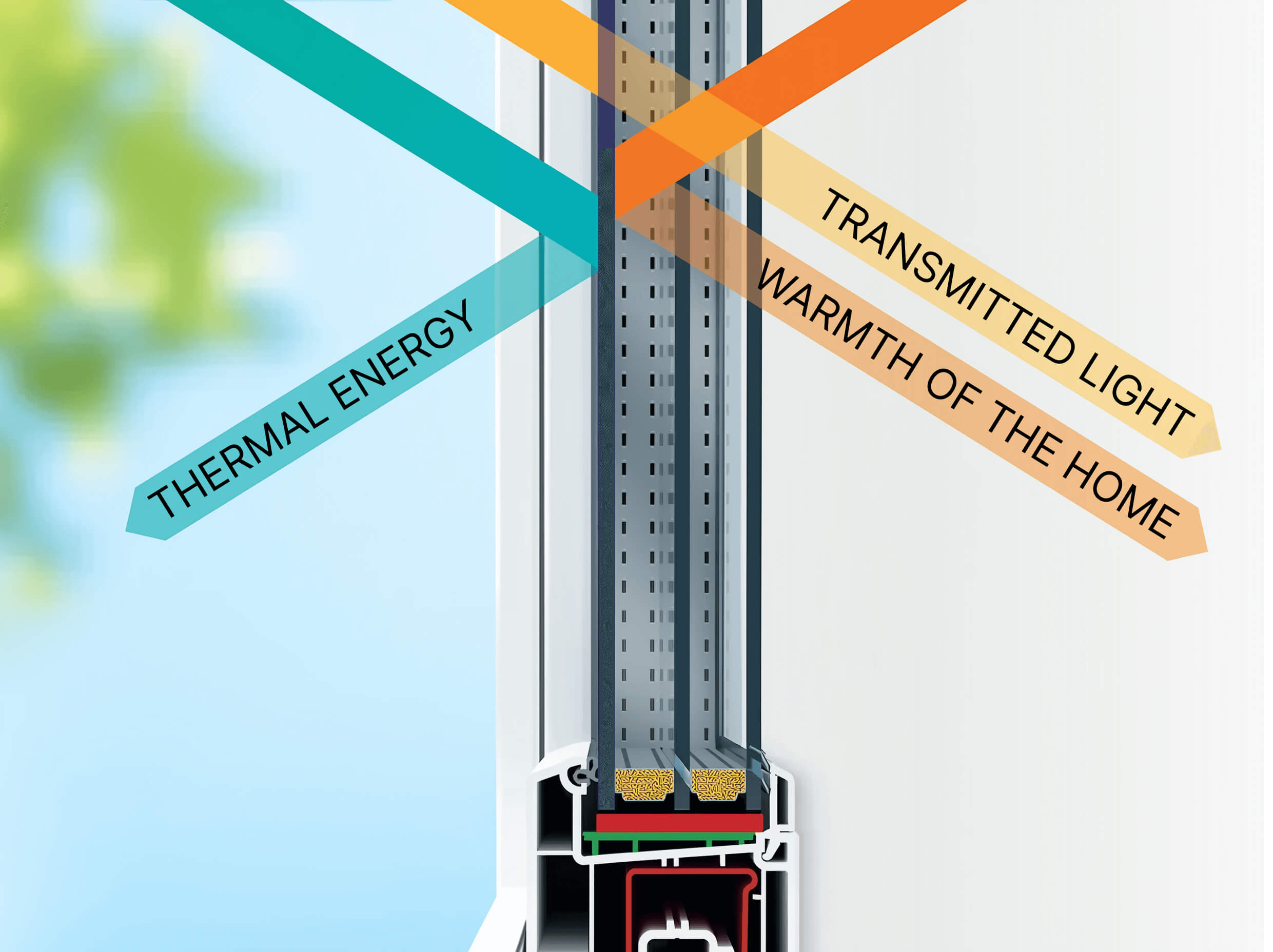
In winter you care about the Uw value (insulation). In summer the figure that matters is the g-value, also called the solar factor — the fraction of the sun’s heat that passes through the glazing. Lower is cooler:
- g ≈ 0.6–0.7 — standard clear double glazing. Lets in most of the solar heat. A mistake on any sunny façade.
- g ≈ 0.35–0.45 — solar-control glazing. Blocks roughly half to two-thirds of the incoming heat while keeping the room bright.
- g ≈ 0.25–0.35 — high-performance selective coatings for very exposed, west-facing or large glazed openings.
The key insight: solar-control glass blocks heat without making the room dark. Modern selective coatings let visible light through while rejecting the infrared (heat) part of the spectrum — so you keep the daylight and the view, and lose the oven effect. Our companion guide Sun-Protection Technologies for Windows covers the coating types in depth.
Orientation changes everything
You do not need the same glass on every window. Heat gain depends heavily on which way the glass faces:
- West-facing glass is the worst offender — the low afternoon sun strikes it almost head-on, exactly when the day is hottest. Prioritise the lowest g-value here.
- South-facing glass gets strong, high sun; solar control is important, but external shading (the sun is high) is very effective.
- East-facing glass takes the morning sun — less critical, but still worth solar control in hot regions.
- North-facing glass gets almost no direct sun; you can use a higher g-value here and even capture a little winter warmth.
Specifying the right glass per orientation is one of the things worth making explicit on a quote — and one that distinguishes a thoughtful installer from a one-spec-fits-all one.
External shading beats everything
The single most effective anti-overheating measure is to stop the sun before it reaches the glass. Once solar heat is through the pane, it is in the room. External devices intercept it first:
- Persianas (external roller shutters) — the Spanish classic, and superb. Lowered on a hot afternoon they block almost all solar gain.
- Toldos (awnings) and exterior blinds over terraces and large openings.
- Brise-soleil / louvres and fixed overhangs sized to block high summer sun but admit low winter sun.
- Deep reveals and shutters on traditional façades.
A solar-control glazing unit behind good external shading is the gold standard for a hot climate.
The role of ventilation
Glass and shading keep heat out by day; ventilation clears it at night. Windows that let you air the house securely after dark — tilt-and-turn (oscilobatiente) units left in the tilt position, or secure sliding configurations — flush out the day’s accumulated heat using cool night air, reducing how hard the air conditioning has to work. In insect season, pair night airing with mosquito nets so you can leave windows open. Our guides Tilt-and-Turn Windows and Mosquito Nets for Windows and Doors cover the options.
Frames and dark colours in the sun
A practical warning for hot, sunny regions: dark frames absorb heat. Dark-coloured PVC in full southern sun can warp or fade unless it is a premium, UV-stabilised, foiled profile rated for high-insolation climates. Powder-coated aluminium holds dark colours far better under intense sun. If you want dark frames on a blazing façade, aluminium is the safer choice — see PVC or Aluminium Windows.
A summer-comfort checklist
- Low g-value solar-control glazing on every south- and especially west-facing opening.
- Glass specified per orientation — you don’t need the same unit everywhere.
- External shading wherever the architecture allows — persianas, toldos, brise-soleil.
- Secure night ventilation (tilt-and-turn or secure sliders) plus mosquito nets.
- UV-stable frames — white PVC or aluminium for dark colours in full sun.
- On the coast, corrosion-resistant hardware too — see Windows for the Mediterranean Coast.
What it does to your bill
Cutting solar gain directly cuts the cooling load — the air conditioning runs less and for shorter periods. There is no single national figure (it depends on orientation, exposure and how much glass you have), but on a sunny west-facing room the difference between clear glass and good solar control is the difference between a comfortable space and one the AC can never quite win. For the full bill mechanics, see How Your Windows Affect Your Electricity Bill, and for the regions where this matters most, Windows for the Mediterranean Coast, Windows for Inland Spain and Windows for the Canary Islands.
Conclusion
In Spain’s hot regions the brief is to keep the sun’s heat out: lead with a low g-value, specify the right glass for each orientation, add external shading wherever you can, and use secure night ventilation to flush out the day’s heat. Get the spec right and the house stays liveable in August while the air-conditioning bill stays sane. Compare several like-for-like quotes from verified companies on Estimia — every one is vetted before it can contact you — so you are dealing with installers who understand the Spanish sun, not just the cheapest pane on the shelf.