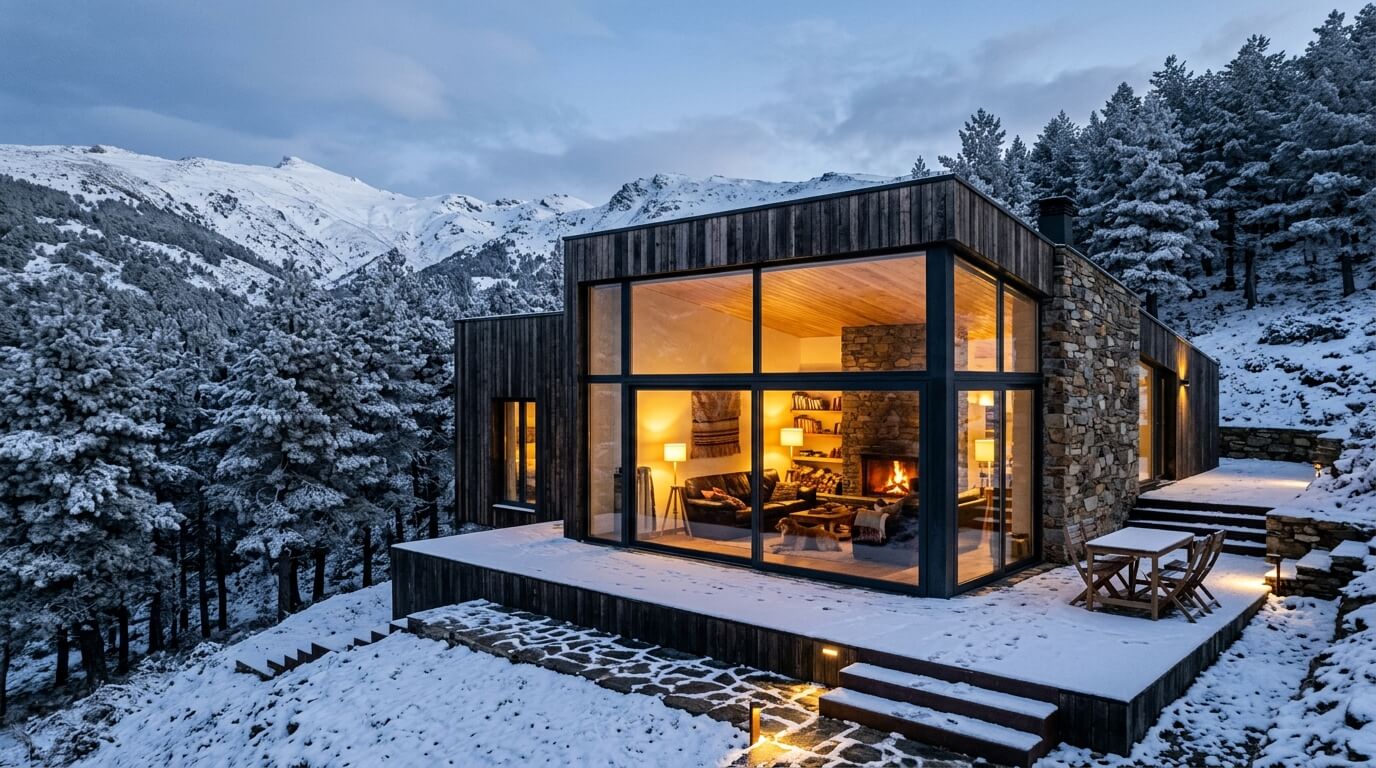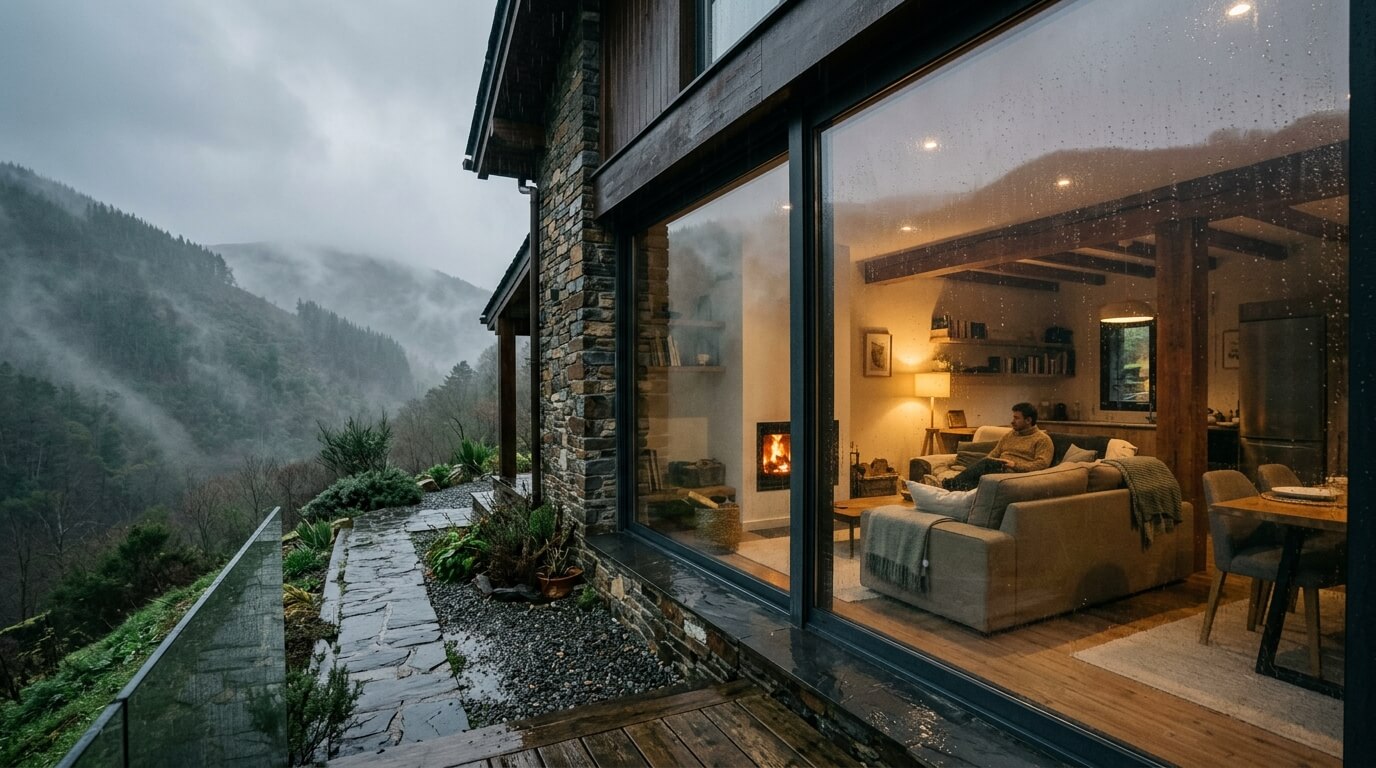
For anyone living through a real Spanish winter — the long, cold months of the interior meseta, the mountains, or the damp chill of the north — windows are usually the single biggest weak point in the home’s thermal envelope. Walls and roofs are insulated; old windows are not. They are where the heat you pay for leaks out, where draughts come in, and where condensation forms on cold mornings. This guide explains, in plain terms, how to make windows work for you in winter instead of against you, and what to put on a quote so you are comparing genuinely efficient options.
Because the right balance of glazing, frame and sealing depends on how cold your province actually gets, Estimia lets you request and compare quotes from verified window companies in your area — so you can weigh efficiency against price with installers who understand a real heating season, not a mild coastal one.
How a window loses heat in winter
Three mechanisms, and a good window has to address all three:
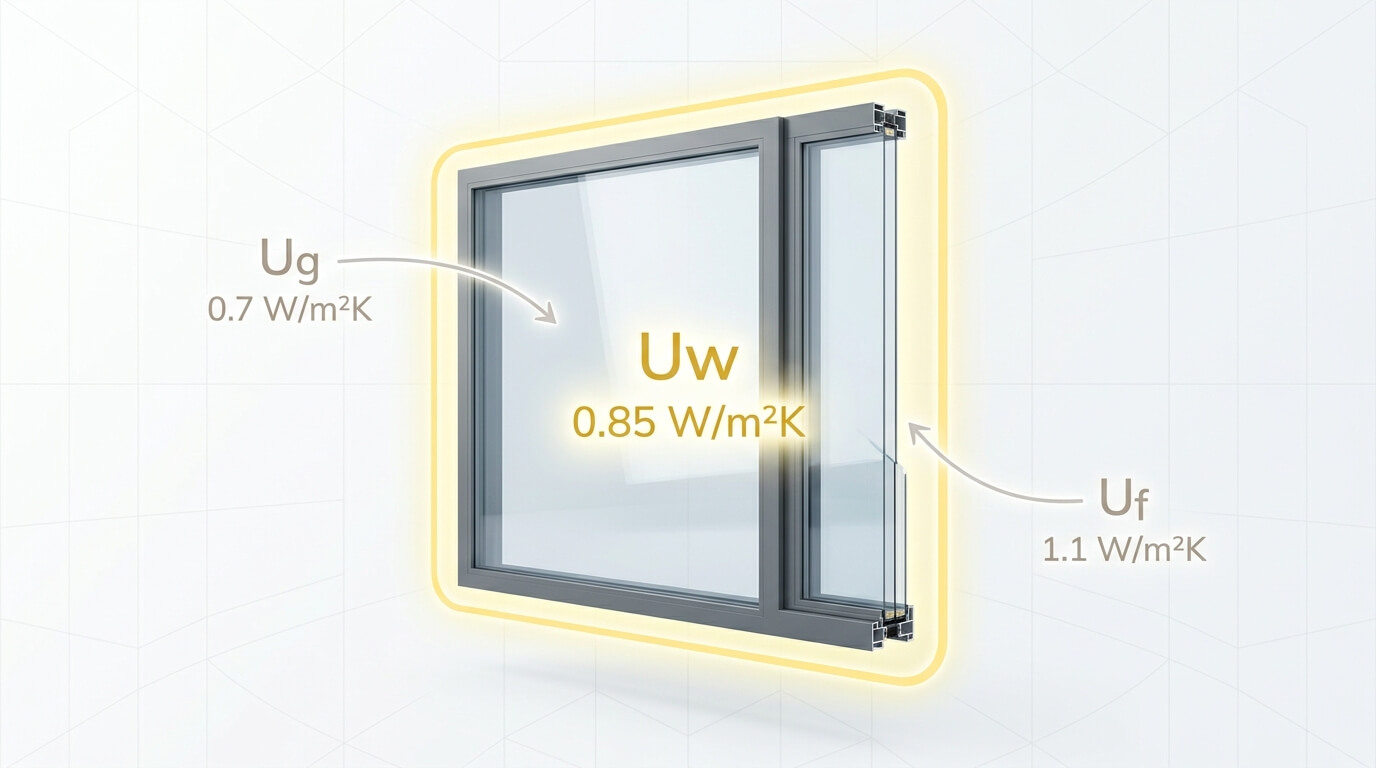
- Conduction through the glass and frame — heat passing straight through the materials. Controlled by the Uw value.
- Radiation — warmth radiating out through the glass. Controlled by low-emissivity (low-e) coatings.
- Air leakage — warm air escaping (and cold draughts entering) through gaps in the frame, seals and installation. Controlled by air permeability and the quality of the fit.
Most homeowners obsess over the glass and ignore the third — yet a beautifully specified window badly installed, with air whistling around the frame, will never perform. Efficiency is a system, not a pane.
The three numbers that matter
1. Uw value (whole-window insulation). Measured in W/m²·K; lower is better. It is the headline figure for winter performance. In Spain the building code (CTE DB-HE) sets a maximum Uw by climate zone:
| Winter climate zone | Typical regions | Max window Uw (CTE) |
|---|---|---|
| α / A | Canaries, far south coast | 3.2 / 2.7 |
| B | Mediterranean coast, Seville | 2.3 |
| C | Atlantic north, mild interior | 2.1 |
| D | Madrid, much of the interior | 1.8 |
| E | Burgos, Soria, mountains | 1.8 |
In the colder zones (C, D, E) you should aim well below the legal maximum — a Uw around 1.1–1.4 for good double glazing, or 0.8–1.0 with triple glazing where the climate justifies it. Our companion guide What Is the Uw Value of a Window breaks the number down in detail, and How to Choose Triple-Glazed Windows covers when the third pane pays back.
2. g-value (solar gain). The fraction of the sun’s heat let through the glass. In winter this is free heating: a higher g-value on south-facing glass captures the low winter sun. The trick in much of inland Spain — hot summers, cold winters — is to balance it: capture winter sun without cooking in August. See Windows for Inland Spain for that balancing act.
3. Air permeability (Class 1–4). How airtight the closed window is, tested to EN 12207. Class 4 is the best. In a cold or windy region this matters as much as the glass: a Class 4 window with good seals stops the draughts that make a room feel cold even when the heating is on.
The role of the frame
The glass is only part of the window. The frame can be the weak link:
- PVC is an excellent insulator for the money. Multi-chamber profiles (5–7 chambers, 70–82 mm) give very low frame U-values and are the value choice for cold climates.
- Thermal-break aluminium is essential if you choose aluminium — without the polyamide thermal break, an aluminium frame is a cold bridge that will stream with condensation.
- Warm-edge spacers at the glass perimeter (instead of old aluminium spacers) cut heat loss and condensation right where the glass meets the frame.
Our guide PVC or Aluminium Windows weighs the two materials for a Spanish home.
Condensation: the visible symptom of poor efficiency
If your windows stream with water on cold mornings, that is the thermal envelope telling you something. Modern efficient windows have warm internal surfaces, so room moisture no longer condenses on them — but they are also more airtight, so ventilation has to be managed deliberately (trickle vents, tilt-and-turn airing, or a humidity-controlled system). Replacing leaky old windows without a ventilation plan can simply move the condensation to the next-coldest surface. Our dedicated guide Condensation on Windows covers the causes and fixes.
Installation is half the performance
You can buy the best window in the catalogue and lose a third of its benefit to a poor fit. For winter efficiency, insist on:
- A properly sealed perimeter — expanding foam tape or a sealed joint, not just silicone over a gappy reveal.
- No thermal bridging at the installation joint — the gap between frame and wall fully insulated.
- A level, square fit so the seals compress evenly and the window actually reaches its rated Class 4 airtightness.
Our companion guides Window Installation: What to Watch For and The Most Common Window Installation Mistakes explain what a good installation looks like.
What to specify for a cold-climate home — checklist
- Whole-window Uw ≤ 1.4 (≤ 1.0 with triple glazing in zones D/E).
- Double glazing with argon + low-e as the minimum; triple glazing only where the climate justifies it.
- g-value tuned to orientation — higher on south glass for winter sun, lower where summer overheating is a risk.
- Air permeability Class 4 to EN 12207.
- Insulating frame: multi-chamber PVC or thermal-break aluminium, with warm-edge spacers.
- A sealed, thermally bridged-free installation — the spec is only as good as the fit.
- A ventilation plan so airtightness doesn’t cause condensation.
What efficient windows save you
There is no single national figure — savings depend on your climate, what you are replacing and how you heat — but in the cold interior and north, upgrading from old single or early double glazing to a modern efficient system typically cuts the heat lost through the windows substantially and noticeably steadies indoor temperature, removing cold spots and draughts. Spain also runs window-replacement grants that can cover part of the cost when you improve energy performance — see our Ultimate Guide to Window Replacement Grants. For the bill-impact mechanics, see How Your Windows Affect Your Electricity Bill.
Conclusion
Winter efficiency comes from the whole system: a low Uw, the right g-value for your orientation, Class 4 airtightness, a properly insulating frame, and an installation that doesn’t throw the performance away. Lead with those numbers when you compare offers. Request several like-for-like quotes from verified companies on Estimia — every one is vetted before it can contact you — so you are comparing installers who genuinely understand a cold Spanish winter, not just the cheapest window on the shelf.