If you only learn one piece of jargon before replacing your windows in Spain, make it Uw. It is the number that separates a window that quietly saves you money every month from one that leaks heat and inflates your bills — and it is the figure that regulators, energy assessors and grant programmes all care about. Yet it is also the number most likely to be glossed over or quoted loosely in a sales conversation.
This guide explains exactly what Uw means, how it differs from the related values Ug and Uf, what a “good” number looks like in each Spanish climate, and how it connects to the building code (CTE) and to the renovation grants running through 2026. Crucially for Spain, it also explains why a low Uw alone is not the full story in hot regions — you have to read it together with the solar factor.
What “Uw” actually measures
The U-value measures thermal transmittance: how much heat passes through a building element. The units are W/m²K — watts per square metre, per degree of temperature difference between inside and out.
The rule is simple and worth memorising: the lower the U-value, the better the insulation. A low number means little heat escapes in winter and little heat pours in during summer.
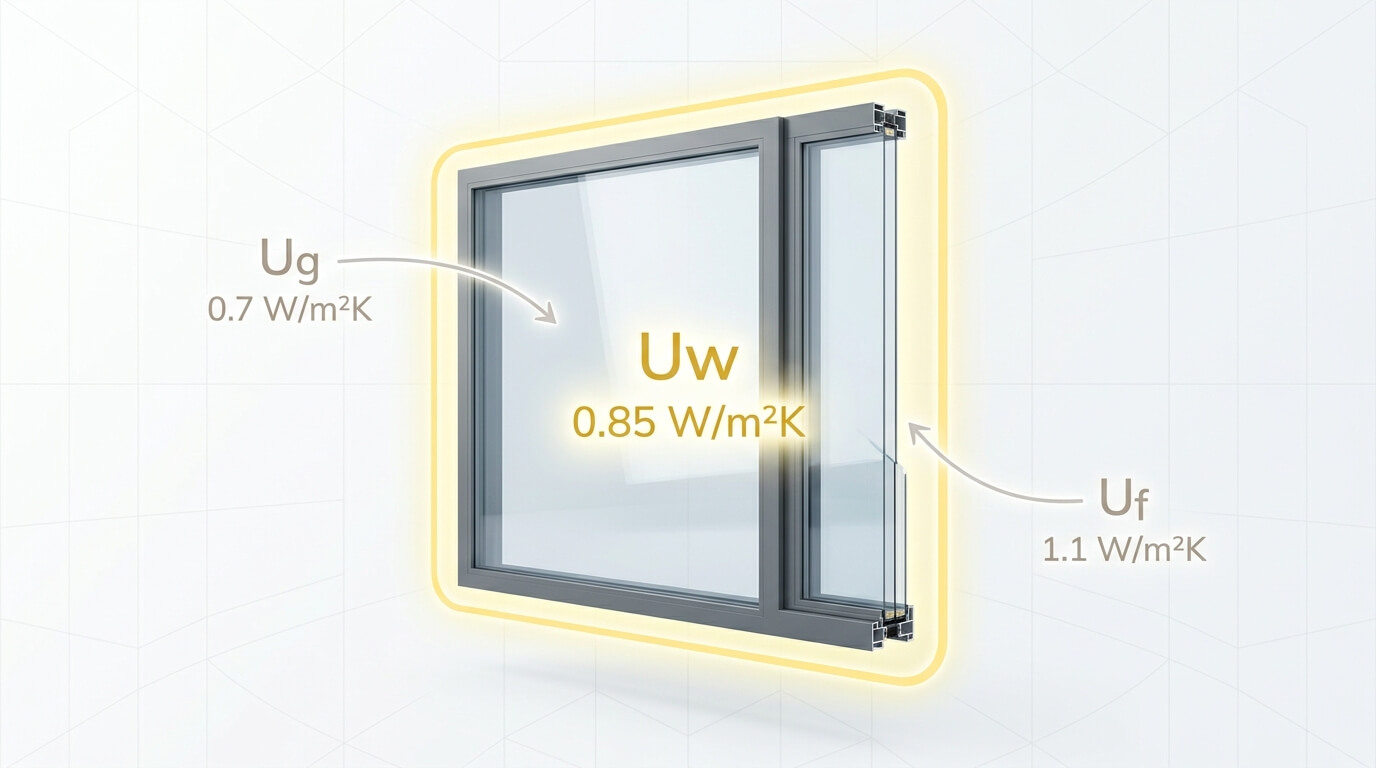
The little subscript tells you which part of the window is being described:
- Ug — the glass (acristalamiento). The transmittance of the glazed unit alone.
- Uf — the frame (marco/perfil). The transmittance of the frame alone — “f” for frame.
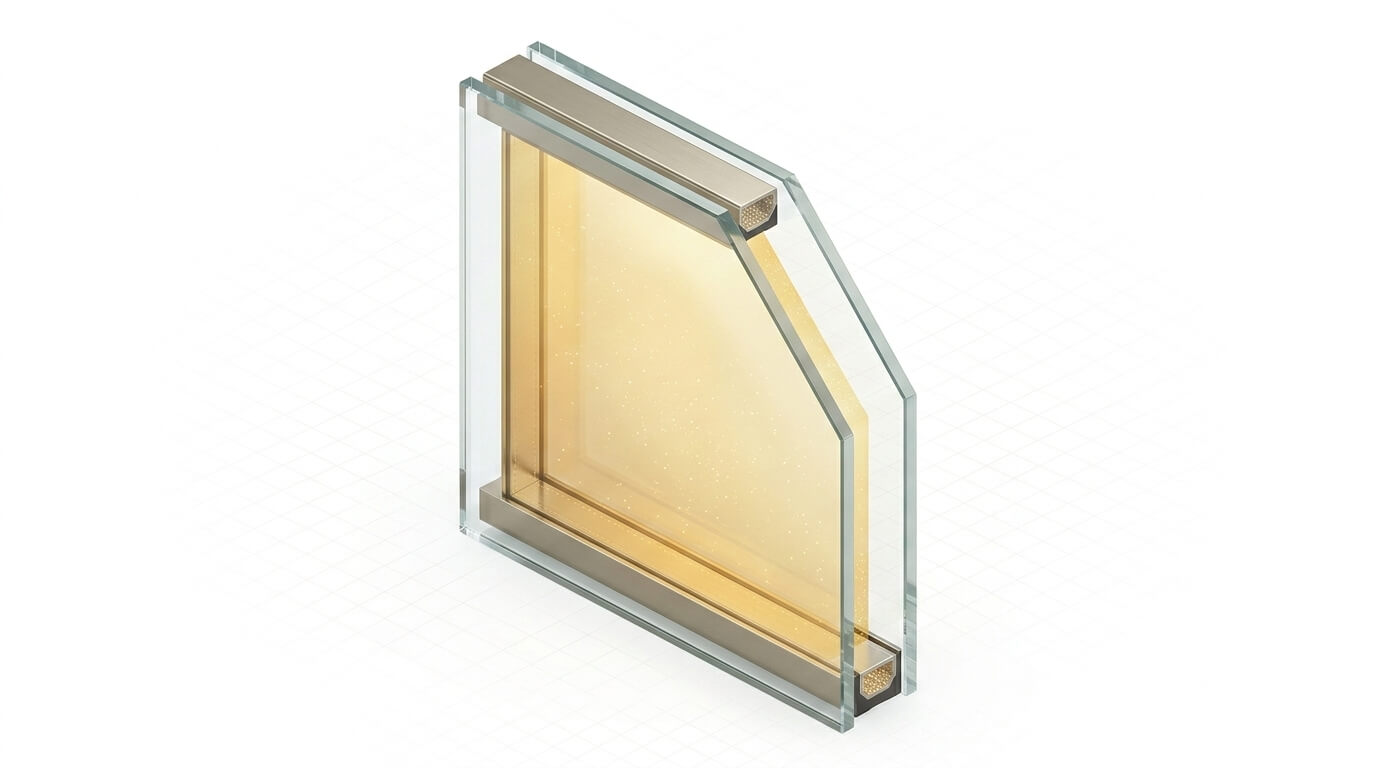
- Uw — the whole window. The combined performance of glass + frame + the spacer at the edge, weighted by area. “w” for window.
Uw is the one that matters to you, because it describes the real object going into your wall. A brochure boasting a brilliant Ug means little if it is bolted into a thermally weak frame with a high Uf — the Uw is what you actually live with.
How Ug, Uf and Uw fit together
Picture a window as a team. The glass and the frame each have their own score, and the spacer bar at the glass edge adds a small penalty. The Uw is essentially an area-weighted blend of all three:
- A big picture window is mostly glass, so its Uw sits close to its Ug.
- A small window with chunky framing is more frame-dominated, so a poor Uf drags the Uw up even with great glass.
This is why the material and argon choices interact (see our guides on PVC vs aluminium and why argon matters): argon improves the Ug, a PVC profile or a thermally broken RPT aluminium frame improves the Uf, and only when both are good does the Uw land where you want it.
Typical Uw ranges by material and glazing
Realistic whole-window Uw figures you will encounter in the Spanish market:
| Window type | Typical Uw (W/m²K) | Verdict |
|---|---|---|
| Old single glazing, no thermal break | 5.0–5.7 | What you are probably replacing |
| Plain aluminium, double glazing, no RPT | 3.5–4.5 | Avoid for habitable rooms |
| RPT aluminium + double glazing + argon + low-E | 1.6–2.2 | Good, especially for large openings |
| Standard PVC + double glazing + argon + low-E | 1.1–1.5 | Strong, best value insulation |
| Premium PVC / triple glazing | 0.8–1.1 | Excellent; overkill in warm zones |
As a practical benchmark, a modern replacement window in Spain should comfortably come in under ~2.0 W/m²K, and most homeowners should target the 1.1–1.6 range. Going far below that is worthwhile in genuinely cold zones and largely wasted money on the warm coast.
Target Uw by Spanish climate zone
Spain’s building code divides the country into climate zones (labelled with a letter for winter severity, A through E, and a number for summer). You do not need the full grid — here is the practical translation:
| Region / zone | Sensible Uw target | Priority |
|---|---|---|
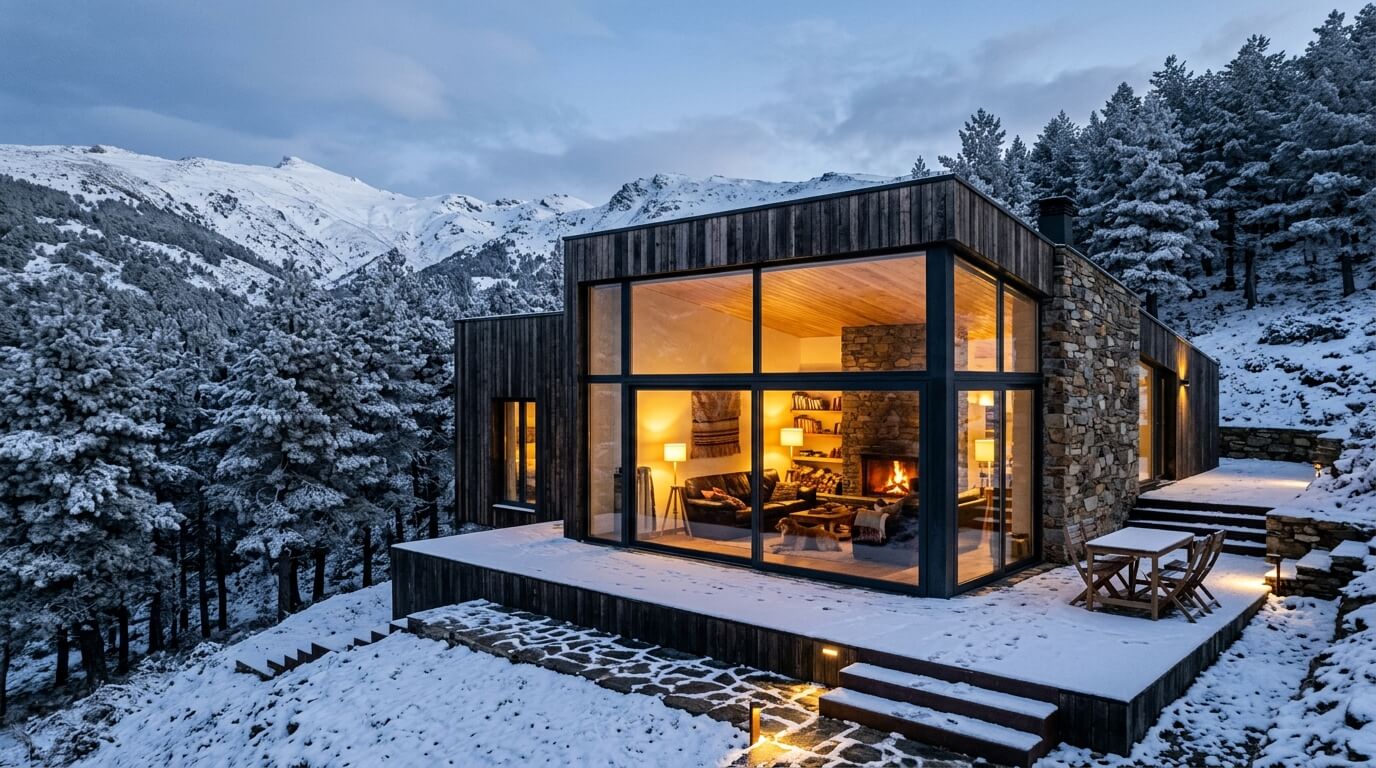
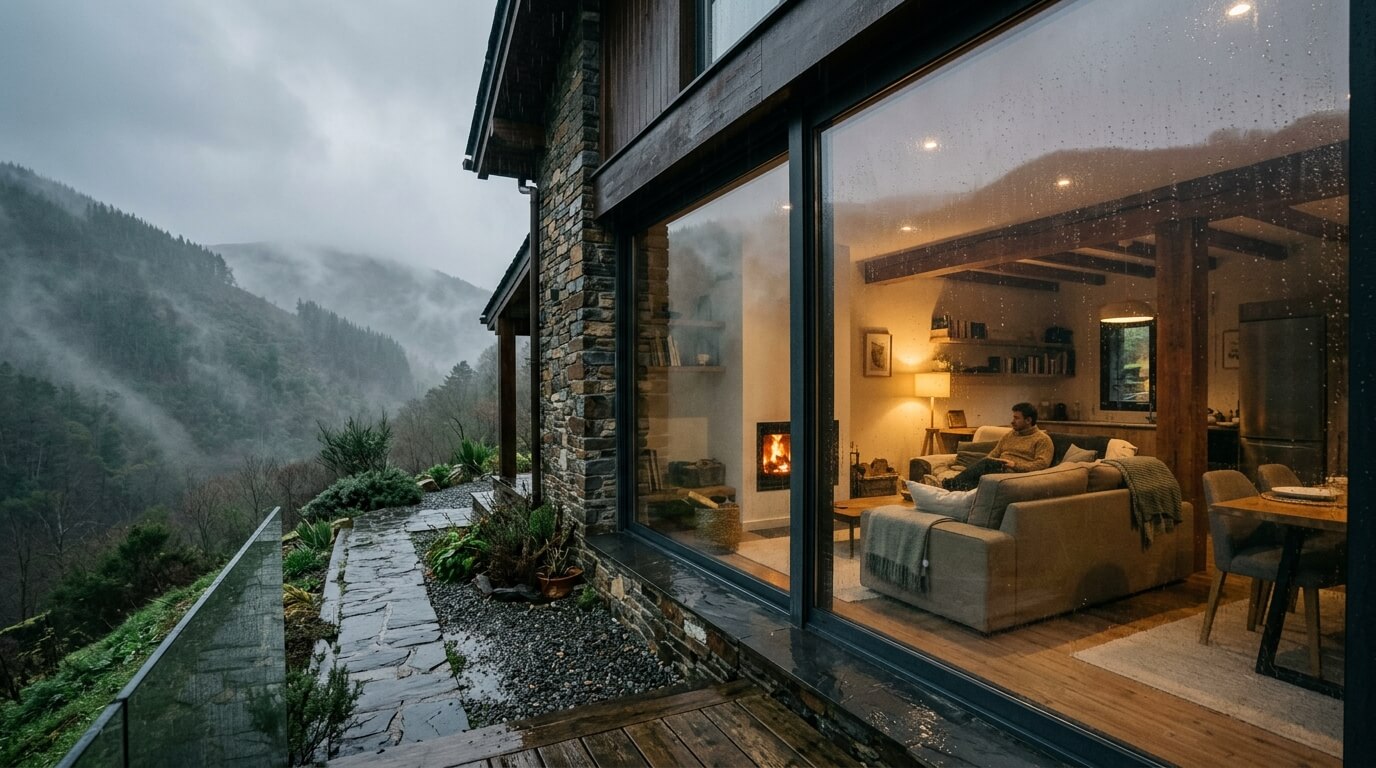
| Cold north & interior (Galicia interior, Castilla y León, mountains — zones D/E) | 1.0–1.4 | Keep heat in |
| Madrid & central plateau (zone D) | 1.2–1.6 | Balanced; cold winters, hot summers |
| Mediterranean coast (Valencia, Murcia, Catalonia coast — zones B/C) | 1.4–1.8 | Balanced, summer-leaning |
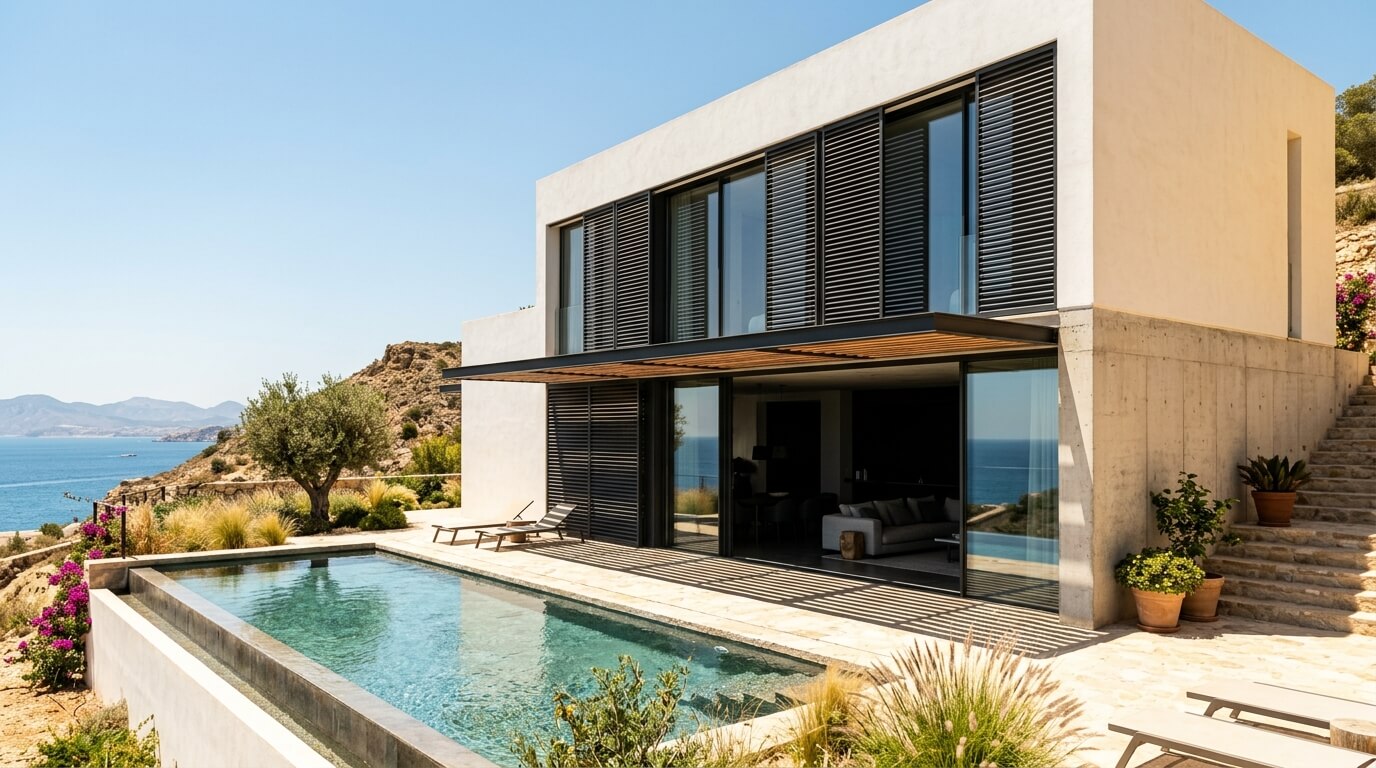
| Andalusia & hot south (zones B/A) | 1.6–2.0, but watch the solar factor | Keep heat out |
| Canary Islands (zone A) | ~1.8–2.2 acceptable | Solar control over raw Uw |
Notice the pattern: the colder the zone, the lower the Uw you should chase. In the hottest zones the Uw target relaxes, because the bigger summer problem is the sun’s radiation — which Uw does not capture.
CTE and grant eligibility
Two official reasons the Uw number is not optional:
- CTE (Código Técnico de la Edificación) sets maximum allowable transmittance for windows depending on the climate zone, especially for new builds and major renovations. Document HE1 is where window U-value limits live. A replacement that meets or beats the limit for your zone keeps you compliant; the technical sheet (ficha técnica) for the window proves it.
- Renovation grants and tax relief. Spain’s energy-rehabilitation aid — the NextGenerationEU-funded programmes running to the end of 2026 — and the associated IRPF deductions reward measurable improvements in the home’s energy performance. A window upgrade that demonstrably lowers Uw (and improves the home’s energy certificate) is what unlocks the subsidy or deduction. The energy assessor’s report leans directly on the Uw figures, so a vague or inflated quote can cost you the grant.
In short: a documented, honest Uw is both your compliance evidence and your ticket to public money. That is one more reason to insist it appears, in writing, on the quote.
The hot-climate twist: Uw vs the solar g-value
Here is the trap that catches people in Andalusia, the coast and the Canaries. Uw only measures heat driven by a temperature difference (conduction and convection). It says nothing about solar radiation streaming straight through the glass and roasting the room.
That is governed by a separate number, the solar factor or g-value (factor solar, g) — the fraction of the sun’s energy the glazing lets through, from 0 to 1. A low g-value glass blocks more solar heat.
The trade-off:
- In cold zones, you may want a higher g-value to capture free solar warmth in winter — so chase a low Uw and don’t over-restrict solar gain.
- In hot zones, a low Uw with a high g-value can still overheat badly: you have insulated the frame and glass beautifully, then let the sun pour energy through it. Here you want a low Uw and a low g-value (solar-control glass), plus external shading where possible.
So in the south, read both numbers. A window with a respectable Uw and the right solar-control glass will beat a window with a heroic Uw but no solar control on a 40 °C afternoon. Argon still helps in both cases, because it slows conducted heat in either direction.
How to use Uw when comparing quotes
A short checklist:
- Demand the Uw, not just the Ug. If a quote only shows the glass figure, ask for the whole-window number.
- Ask for the technical sheet. A reputable product has a ficha técnica stating Uw and g-value for the actual configuration.
- Match the target to your zone, using the table above — don’t overpay for a 0.8 Uw in Málaga, don’t accept a 2.5 in Burgos.
- In hot regions, check the g-value too.
- Keep the documentation for CTE compliance and any grant or IRPF claim.
Doing this across two or three offers is the only way to compare like with like. On Estimia you can request and compare quotes from verified window companies near you — every company is vetted before it can receive enquiries — so you can line up the Uw, the glazing spec, the argon and the solar factor side by side, in writing, and choose on real performance rather than a sales claim.
The bottom line
The Uw value is your window’s overall insulation score in W/m²K, blending glass (Ug), frame (Uf) and edge into one figure where lower is better. Aim for roughly 1.0–1.4 in cold Spain and 1.6–2.0 in the hot south — and in warm regions never read it without the solar g-value beside it. Get it documented, match it to your climate zone, and it becomes both your compliance proof and your route to the 2026 grants.
Compare verified window companies on Estimia and gather several quotes so you can check the Uw value, argon and solar factor of each, side by side, before you decide.