When you read a window quote in Spain, “argón” usually appears as a single line you skim past — a small upgrade with a small price. Yet that single inert gas is doing a surprising amount of work, and whether or not it is genuinely present can be the difference between a window that meets your energy target and one that merely looks like it does on paper.
This guide explains, in plain terms, what argon does inside double glazing, how it affects the Uw value of the whole window, how it changes comfort and condensation, how it compares to plain air and to krypton, and — the part installers rarely volunteer — how to check it was actually specified rather than quietly dropped to shave a few euros off the price. And because Spain is as much about keeping heat out as keeping it in, we look at both directions.
What is actually between the panes?
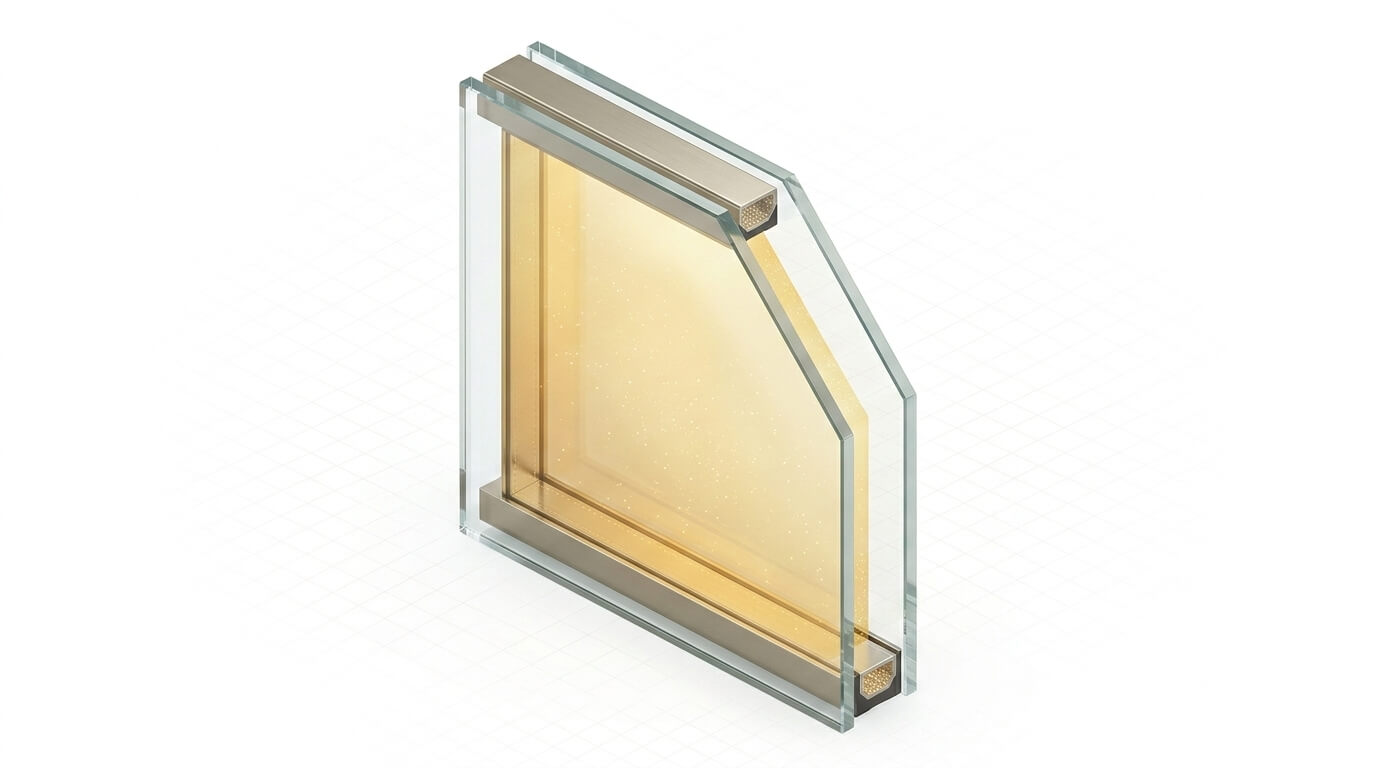
A modern double-glazed unit (in Spanish, a doble acristalamiento or unidad de vidrio aislante, UVA) is two sheets of glass separated by a sealed gap, typically 12–16 mm wide, held apart by a spacer bar around the edge. That gap is the insulating layer. The question is what fills it.
- Cheapest: dry air.
- Standard upgrade: argon, a colourless, odourless, non-toxic gas that makes up about 1% of the air we breathe.
- Premium / slim units: krypton, a rarer, denser cousin of argon.
The reason any gas works is simple: the gap stops heat far better than the glass does. The gas you choose just decides how well.
What argon actually does
Heat crosses the gap in a sealed unit mainly by convection — the gas warms on the hot pane, rises, cools on the cold pane, sinks, and circulates, ferrying heat across. Argon fights this in two ways:
- It is denser than air. Heavier molecules move more sluggishly, so convection currents are weaker and slower.
- It conducts heat more poorly than air — about a third less. Less conduction, less convection, less heat crossing the gap.
Fill the cavity with roughly 90% argon (the standard target) instead of air and you cut heat transfer through that gap by a meaningful margin, with no change to the look, weight or operation of the window. It is one of the rare upgrades that is pure benefit with no daily downside.
Argon also pairs with low-emissivity (low-E) coatings on the glass. The low-E coating is the bigger lever — it reflects radiant heat — and argon then suppresses the convection that the coating cannot touch. The two together are what make a modern unit genuinely high-performance; argon on its own is helpful, argon plus low-E is the real combination.
Effect on the Uw value
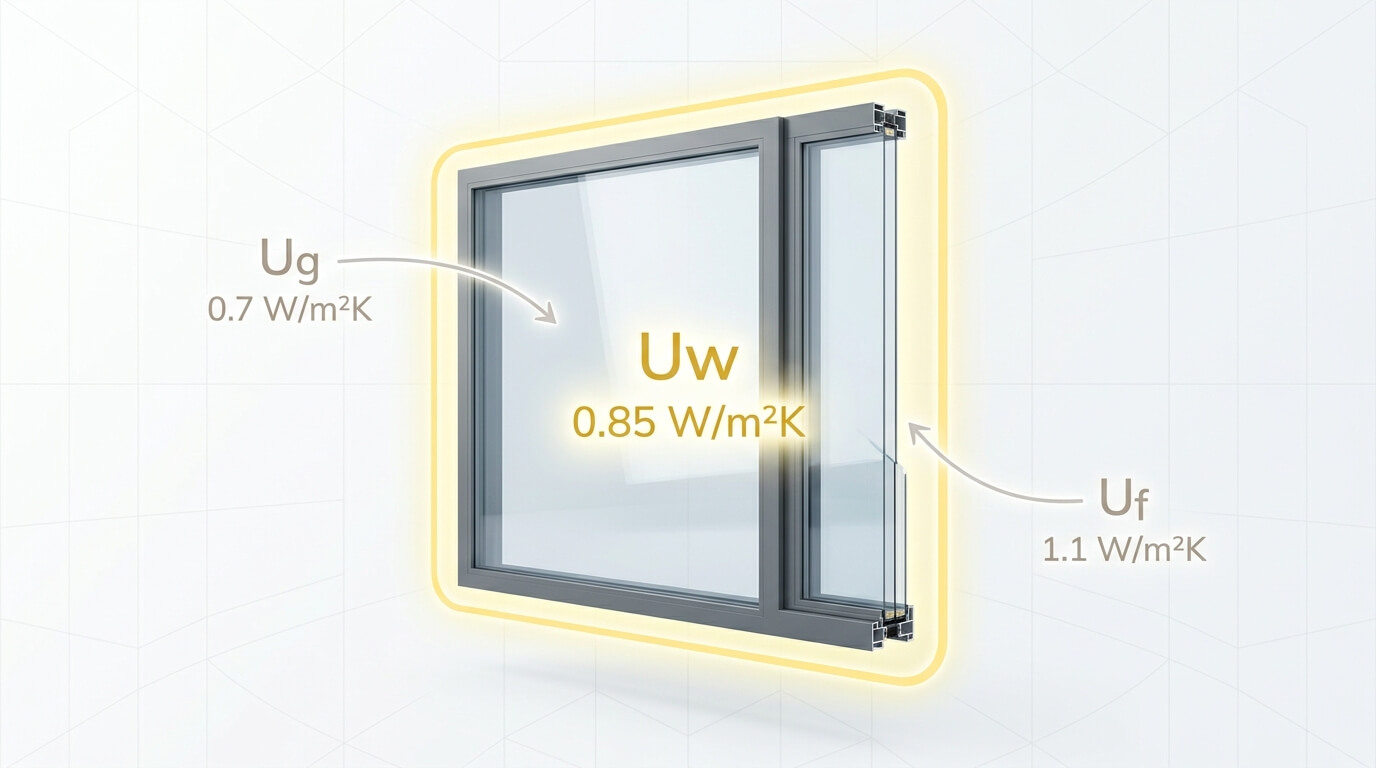
The number that matters on your quote is the whole-window Uw in W/m²K — lower means better insulation (our guide on the Uw value explains it fully). Argon improves the glass component (the Ug), which in turn pulls down the Uw.
Rough, realistic figures for a standard double-glazed window with a low-E coating:
| Cavity fill | Typical Ug (glass) | Effect on Uw |
|---|---|---|
| Air | ~2.7 W/m²K (no low-E) / ~1.6 with low-E | Baseline |
| Argon (~90%) | ~1.0–1.2 W/m²K with low-E | Improves Uw by roughly 0.2–0.3 |
| Krypton | ~1.0 or below, in thinner gaps | Marginal gain, much higher cost |
In practice, argon plus low-E moves a typical window from a mediocre Ug toward the ~1.1 W/m²K range that good double glazing aims for. That step is often what gets a window over the line for CTE compliance or for grant eligibility under Spain’s energy-rehabilitation schemes (the NextGenerationEU-funded programmes running to the end of 2026 reward genuinely low Uw figures).
Condensation and comfort
Argon’s benefit is felt as much as it is measured:
- Warmer inner pane. Better insulation keeps the room-side glass closer to room temperature. A cold inner pane is what produces that winter film of condensation in bedrooms and kitchens, and over time the damp and mould around the reveal. A warmer pane stays drier.
- No cold radiant draught. Sit beside a poorly insulated window in winter and you feel a chill even with the window shut — your body radiates heat to the cold glass. Argon reduces that, so the space near the window becomes usable.
- Quieter, by a hair. A denser gas damps sound very slightly, though glass thickness and lamination matter far more for acoustics.
The Spain angle: heat out, not just cold in
It is tempting to file argon under “winter” — but most of Spain spends more of the year fighting heat than cold. Argon insulates in both directions. The same gap that keeps warmth indoors in a Burgos January keeps the brutal afternoon heat outdoors in a Seville or Alicante July, easing the load on the air-conditioning and the electricity bill.
Two regional notes:
- In the hot south, coast and Canary Islands, pair argon with a low solar-factor glass (low g-value / control solar) so you also block incoming solar heat — not just slow its conduction. Argon manages conduction/convection; the solar-control coating manages the sun’s radiation. You want both.
- In the cooler, damper north (Galicia, Asturias, Basque Country), argon’s condensation and warmth benefits are the headline win.
Either way, argon earns its keep across the whole peninsula — this is not a cold-climate-only feature.
Argon vs air vs krypton
- Air is free and fine for non-habitable or budget jobs, but you forfeit a real, cheap performance gain.
- Argon is the sweet spot: a small surcharge (often only a few euros per m²) for a solid Ug/Uw improvement. It is the sensible default for any window you care about.
- Krypton is denser still and performs better in very narrow gaps — useful in slim triple glazing or heritage-style thin units — but it is markedly more expensive and, in a normal 12–16 mm cavity, argon already captures most of the benefit. For the vast majority of Spanish homes, krypton is not worth the premium.
”How long does it last?” — the leakage myth
The most common objection is that the gas “leaks out and the window becomes useless.” The reality:
- A quality sealed unit loses argon very slowly. The relevant standard (EN 1279) allows a maximum 1% leakage per year, so a good unit holds the bulk of its argon for 15–20+ years — comfortably within the unit’s service life.
- The real enemy is a failed edge seal, which lets in moisture (you see fogging or misting between the panes). When that happens you have lost the gas and the unit has failed regardless — the fix is replacing the glazed unit, not topping up the gas.
- Argon is harmless and abundant, so even gradual loss is no health or safety issue — just a slow, minor drift back toward air-level performance over decades.
The takeaway: from a reputable manufacturer with a proper warranty, argon retention is a solved problem. The risk is not the gas — it is a cheaply made unit with a poor seal.
How to verify argon is actually in your quote
Because argon is invisible and adds cost, it is occasionally promised verbally and omitted in the build. Protect yourself:
- Get it in writing. The quote should state the glass make-up explicitly, e.g. 4/16/4 con argón, bajo emisivo (pane / gap / pane, with argon, low-E). A glazing spec with no gas mentioned usually means air.
- Check the stated Ug and Uw. A low-E double unit claiming a Ug near 1.0–1.1 W/m²K but no argon is inconsistent — ask why.
- Look for the spacer marking and certification. Quality units reference EN 1279; the spacer bar is often laser-etched with the unit spec.
- Match it to the energy report. If you are claiming a grant or IRPF deduction for an energy upgrade, the technical documentation must reflect the real specification — another reason it pays to have comparable, written quotes.
The clean way to do all of this is to put several offers side by side. On Estimia you can compare quotes from verified window companies — every company is vetted before it can receive enquiries — so you can check, line by line, that the glazing, the argon and the Uw value are genuinely specified, not just implied.
The bottom line
Argon is a small line item doing real work: better insulation in both heat and cold, a warmer and drier inner pane, fewer condensation problems, and an easier path to CTE and grant thresholds — all for a modest surcharge that lasts the life of the glass. Skip krypton for normal windows, insist on argon, and make sure it is written down.
Compare verified window companies on Estimia, request several quotes, and confirm argon and the Uw value are specified before you sign.