Every Spanish winter the same complaint arrives in millions of homes: you wake up, walk into the bedroom, and the windows are running with water. Sometimes it is a light mist that clears by mid-morning; sometimes it is enough to pool on the sill and stain the wall below it. Condensation on windows is one of the most misunderstood problems in the home — half of homeowners ignore it as cosmetic, and the other half assume their brand-new windows are faulty. The truth sits in between, and it depends entirely on where the water forms.
This guide explains why condensation happens, the crucial difference between the three places it can appear, why it is so closely tied to your glazing and the quality of your installation, the health risks if you let it turn into mould, and the practical fixes — from free ones you can do tonight to a glazing upgrade. Because the diagnosis often comes down to whether your windows were specified and fitted correctly, it is also a useful test of whether you bought from a company that knew what it was doing.
Why condensation forms at all
Condensation is simple physics. Warm air holds more moisture than cold air. When warm, humid indoor air touches a cold surface, the air right at that surface cools below its dew point and can no longer hold its moisture, so the water comes out as droplets. The colder the surface and the more humid the air, the more water you get.
In a home, three things drive it:
- Indoor humidity. Showers, cooking, drying laundry indoors, gas heaters, fish tanks and simply breathing all add water vapour to the air. A family of four can release 10–15 litres of water vapour a day into the home.
- Cold surfaces. The coldest interior surface in most rooms is the glass and frame of the window, which is why condensation shows up there first — long before it appears on a wall.
- Poor ventilation. Modern airtight homes trap that moisture. Older homes “breathed” through draughty windows; seal them up with good new windows and, paradoxically, you can create a condensation problem if you do not also ventilate.
There is also a fourth cause: thermal bridges — points where heat escapes faster, such as a metal lintel, a poorly insulated reveal or a frame with no thermal break. The surface there runs colder than the wall around it, so condensation (and later mould) concentrates exactly along that line.
The three types of condensation — and what each one means
This is the single most important section, because the location of the water tells you whether you have a behaviour problem, an ageing-unit problem, or nothing to worry about at all.
1. Interior condensation (on the room side of the glass)
Water on the inside face of the glass — the side you can wipe with your finger — is by far the most common. It means the indoor air is too humid for the temperature of the glass.
What it tells you: usually a ventilation and humidity issue, not a faulty window. But it can also mean your glazing is too cold — single glazing or an old aluminium frame with no thermal break will run cold enough to condense even at moderate humidity. So interior condensation is a spectrum: on a single-glazed window it is almost guaranteed; on a modern double-glazed unit it points more to lifestyle and ventilation.
2. Interpane condensation (between the two panes)
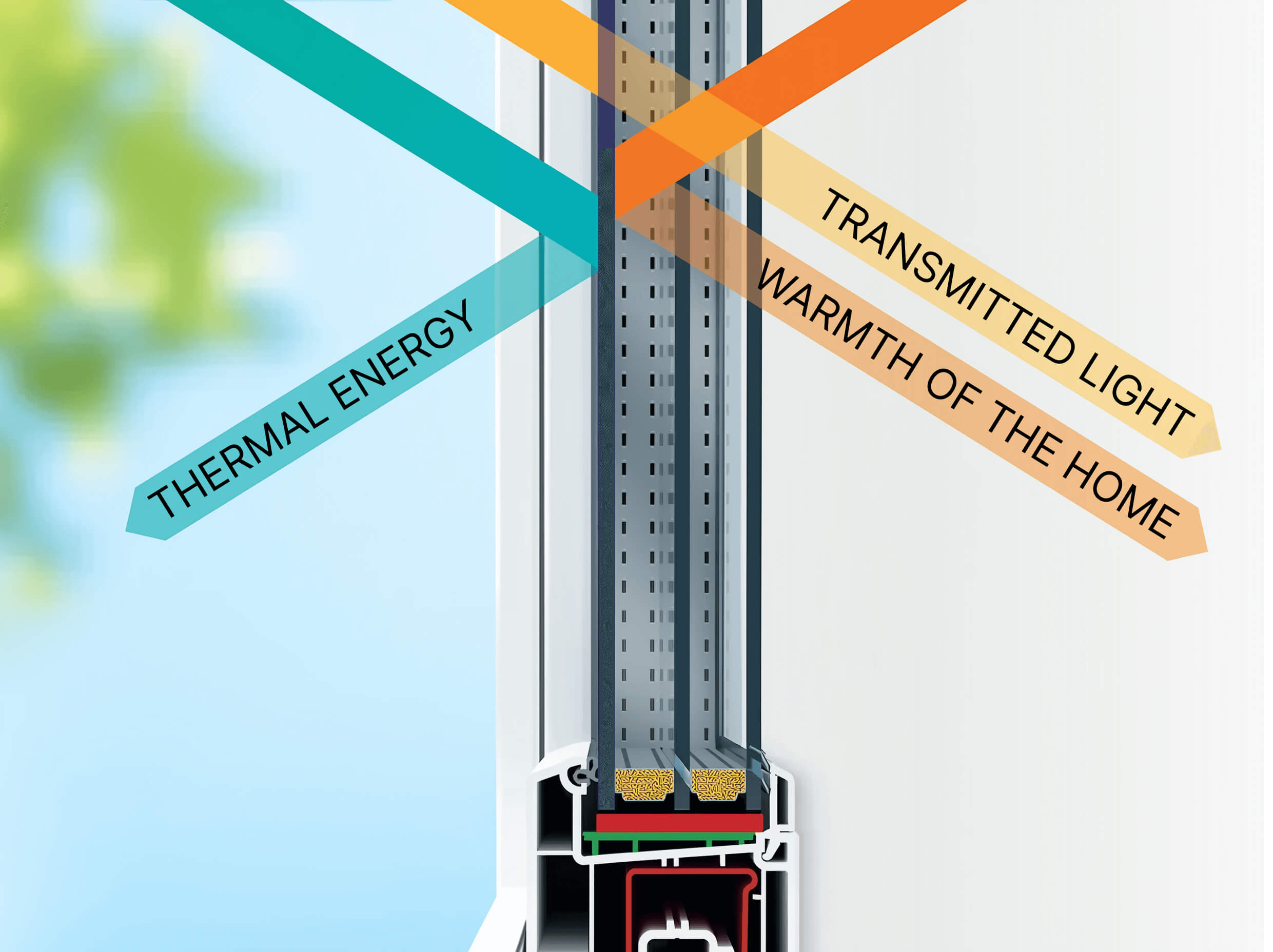
Water or misting trapped inside the sealed unit, where you cannot wipe it away, is a different beast entirely. A double-glazed unit is sealed with an inert gas (usually argon) and a desiccant in the spacer bar. When the perimeter seal fails, humid air leaks in, the desiccant saturates, and the cavity fogs up.
What it tells you: the sealed unit has failed and must be replaced. This is the one type of condensation that is unambiguously a product fault. On a quality unit it should not happen for 10–15 years or more, and it is normally covered by warranty. If it appears within a year or two, that is a defect to claim (more on that below).
3. Exterior condensation (on the outside face of the glass)
Dew on the outside of the glass, typically on clear cold mornings, alarms people who have just spent thousands on new windows. In fact it is the opposite of a problem.
What it tells you: your glazing is working extremely well. Exterior condensation appears precisely because a high-performance, low-emissivity unit lets so little heat escape from inside that the outer pane stays cold enough to collect dew from the night air — exactly like a car windscreen or a lawn. It clears as the sun comes up and is a sign of a low Uw value, not a defect.
| Where the water is | Likely meaning | Action |
|---|---|---|
| Inside face of glass | High humidity and/or cold glazing | Ventilate, dehumidify, consider upgrading glazing |
| Between the panes | Failed sealed unit (product fault) | Replace unit — usually under warranty |
| Outside face of glass | Excellent insulation working as intended | None — it is a good sign |
The link to glazing, Uw and installation
If you find yourself wiping the inside of the glass every morning, three culprits are worth checking — and two of them point straight at the quality of what was installed.
- Single glazing or no thermal break. A single pane or a basic aluminium frame has a high Uw value (whole-window thermal transmittance; lower is better). Old aluminium can sit above Uw 5 W/m²K, meaning its inner surface runs very cold and condenses readily. A modern PVC window at Uw 1.0–1.3 keeps the inner glass far warmer, so it tolerates much higher indoor humidity before condensing. This is why upgrading glazing often cures interior condensation on its own — and why our guide on the Uw value is worth reading before you buy.
- A cold, leaky frame. Even with good glass, a poor frame or a worn gasket creates a cold strip where condensation gathers.
- A bad installation joint. This is the one people miss. If the gap between the frame and the wall (the junta de instalación) was filled badly — foam with no vapour seal, no proper tape — you get a thermal bridge and air leakage around the perimeter. Condensation then forms in the corners of the reveal and on the wall beside the window, not on the glass itself. That is an installation defect, not a glazing problem, and no amount of ventilation will fully fix it.
Distinguishing “my windows are too cold” from “my installer botched the joint” matters, because the remedy and who pays for it are completely different.
The real risk: damp, mould and your health
Left alone, persistent condensation does not stay on the glass. The water runs down onto the frame, the sill and the wall, and within a few weeks you get the tell-tale black spots of mould (moho) in the corners and behind furniture pushed against cold external walls.
This is not just unsightly. Mould spores are a recognised trigger for:
- Respiratory problems — coughing, wheezing and worsened asthma, especially in children.
- Allergic reactions and irritated eyes, nose and throat.
- Aggravated conditions for anyone with a weakened immune system.
Beyond health, prolonged damp rots timber, blisters paint, corrodes fittings and damages plaster, turning a free ventilation fix into an expensive repair. In a rented home in Spain, chronic condensation damage can also become a dispute between tenant and landlord over whether the cause is the building fabric or the occupant’s habits — another reason to diagnose it correctly and early.
How to fix it — from free to a full upgrade
Work through these in order. Most homes solve interior condensation with the first three.
- Ventilate deliberately. The single most effective free fix. Open opposing windows for 5–10 minutes, two or three times a day (the German Stoßlüften / cross-ventilation method) to dump moist air without chilling the walls. In Spain’s mild climate this costs almost nothing in lost heat.
- Cut the moisture at source. Use the kitchen and bathroom extractor fans, cover pans while cooking, dry laundry outdoors or in a ventilated room, and avoid unflued gas or paraffin heaters, which pump water vapour straight into the air.
- Dehumidify. In persistently damp coastal homes (the Mediterranean and Atlantic north are humid), a dehumidifier keeping relative humidity around 45–55% will stop condensation cold. Cheap moisture-absorber tubs help in small rooms and wardrobes.
- Improve airflow around cold spots. Pull furniture a few centimetres off external walls and avoid blocking the airflow over the glass with heavy curtains pressed to the window.
- Upgrade the glazing. If condensation persists on a modern window despite good ventilation, or if you still have single glazing or thermal-break-free aluminium, replacing it with a low-Uw double- or triple-glazed unit raises the inner surface temperature and ends the problem at its root. This is also where you stop wiping windows every morning for good.
- Fix the installation joint. If the damp is in the reveal and corners rather than on the glass, the perimeter needs to be reopened and sealed properly. A competent company will diagnose this rather than just sell you new glass.
When condensation is a defect you can claim
Some condensation is on you; some is on whoever sold and fitted the windows. Treat it as a defect to claim when:
- There is misting between the panes of a sealed unit — a clear product failure, normally covered for 10+ years.
- Damp and mould appear around the frame perimeter soon after a new installation, pointing to a badly sealed joint or a thermal bridge the installer created.
- A window was sold to you as high-performance but the Uw delivered is far higher than specified in the quote, so it condenses far more than it should.
In Spain, new goods carry a legal conformity guarantee, and reputable window companies add their own product and installation warranties on top. The practical problem is proving the fault sits with the company rather than your habits — which is far easier when you bought from a vetted business that documented the specification and the installation method in writing. Companies listed on Estimia are verified before they can receive enquiries, and the structured quotes record exactly what Uw and what installation scope you were promised, giving you something concrete to hold them to if condensation later turns out to be their fault rather than yours.
Conclusion
Condensation is a messenger, not a mystery. Interior misting usually means too much humidity and too little ventilation — fixable for free — though on cold single glazing it signals you have outgrown your windows. Interpane misting is a failed unit to replace under warranty. Exterior dew is a badge of honour showing your glazing insulates beautifully. The dangerous outcome is ignoring persistent interior damp until it becomes mould and a health problem. Ventilate first, cut moisture at source, and if the glass still streams, the cure is better glazing and a properly sealed installation.
If your windows are old, single-glazed or condensing despite everything you try, compare verified window companies on Estimia and request several quotes side by side — specifying the Uw value and a proper installation joint up front is the surest way to stop condensation for good.