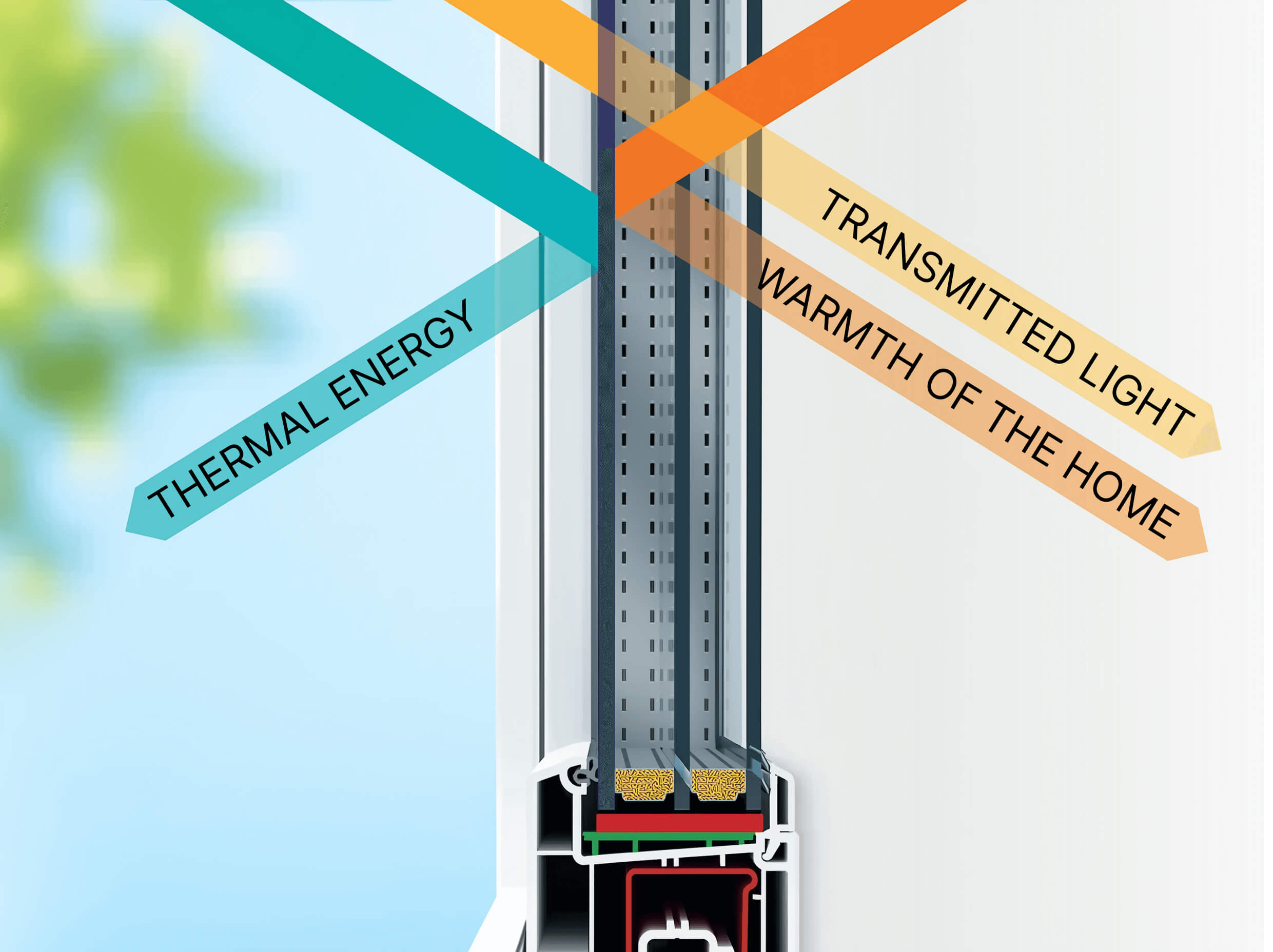
In most of Europe the window’s job is to keep heat in. In Andalusia, Murcia, the Levante coast and the Canaries it is the opposite: the challenge is keeping the summer sun out so the air conditioning isn’t fighting a losing battle from May to October. A south- or west-facing room with ordinary glazing can turn into a greenhouse by mid-afternoon, and no amount of cooling power is efficient when sunlight is pouring energy straight through the glass.
The good news is that solar control is a solved problem, addressed in layers — the glass itself, what you put in front of it, and how you orient and shade each façade. This guide explains the technologies that matter, the single number that tells you how much solar heat a window lets through, the trade-off between daylight and heat, and roughly what each option costs in 2026. The aim is a home that stays cool without living in the dark.
The number that matters: g-value (solar factor)
Before any product, understand the metric. The g-value (also called the factor solar, or SHGC internationally) measures the fraction of solar heat that passes through the glazing, from 0 to 1.
- A g-value of 0.7 means 70% of the sun’s heat comes through — typical of plain double glazing.
- A solar-control glass brings this down to roughly 0.3–0.4, cutting incoming solar heat roughly in half.
- The lower the g-value, the cooler the room — but push it too low and you also dim the daylight.
The companion number is light transmittance (LT) — how much visible light gets through. The art of good solar-control glass is a low g-value with a still-decent LT, so you block heat without turning the living room gloomy. On a hot Spanish façade you want a low g-value; in a north-facing or cooler-climate room you can afford a higher one to keep the brightness.
Don’t confuse the g-value with the Uw value. Uw governs winter heat loss; g-value governs summer heat gain. On the coast the g-value is often the more important of the two — see our dedicated guide on the Uw value for the winter side of the equation.
Solar-control glass
The first line of defence is the glazing itself.
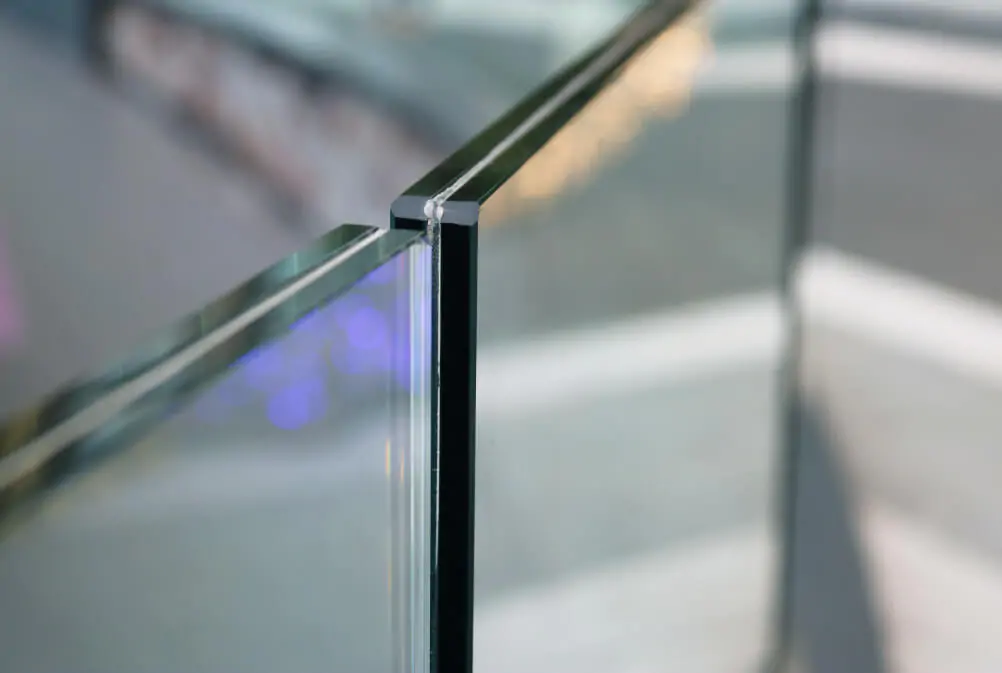
- Low-emissivity (bajo emisivo) glass carries a microscopically thin metallic coating. Standard low-E is tuned to keep winter heat in; solar-control low-E is tuned to reflect summer solar heat out while staying clear, and is the right choice for hot façades. It looks like ordinary glass.
- Tinted (body-tinted) glass is coloured through the body — grey, bronze or green. It cuts glare and heat but darkens the view and the room, and the glass itself heats up.
- Reflective glass has a mirror-like coating that bounces sunlight away. Very effective on heat, but it gives a “office tower” look, can reflect into neighbours’ homes, and may be restricted by a comunidad de vecinos for aesthetic reasons.
For most homes, solar-control low-E double glazing is the sweet spot: it stays clear, keeps the view, and combines a low g-value with good light. It is specified as part of the sealed unit when you buy the window, so it is the cheapest solar upgrade to add at purchase and the most disruptive to add later.
Exterior shading: the most effective layer
A rule worth memorising: shading the sun before it reaches the glass beats blocking it after. Once sunlight passes the glass, much of its energy is already inside the room as heat. This is why traditional Spanish architecture relies so heavily on exterior shading — and why it works.
Persianas (roller shutters)
The classic Spanish exterior blind, rolling down outside the glass into a box (cajón) above. They block sun almost completely when down, add security and some acoustic and thermal benefit, and are motorisable. The trade-off is the cajón itself, which is a notorious weak point for heat loss and air leakage if poorly insulated — worth checking when you buy or replace windows.
Toldos (awnings)
Retractable fabric awnings over terraces, balconies and large windows. Excellent for shading west-facing terraces in the late-afternoon sun, and they let you choose shade or sun. A comunidad often regulates colour and model on a shared façade.
Lamas (adjustable louvres / brise-soleil)
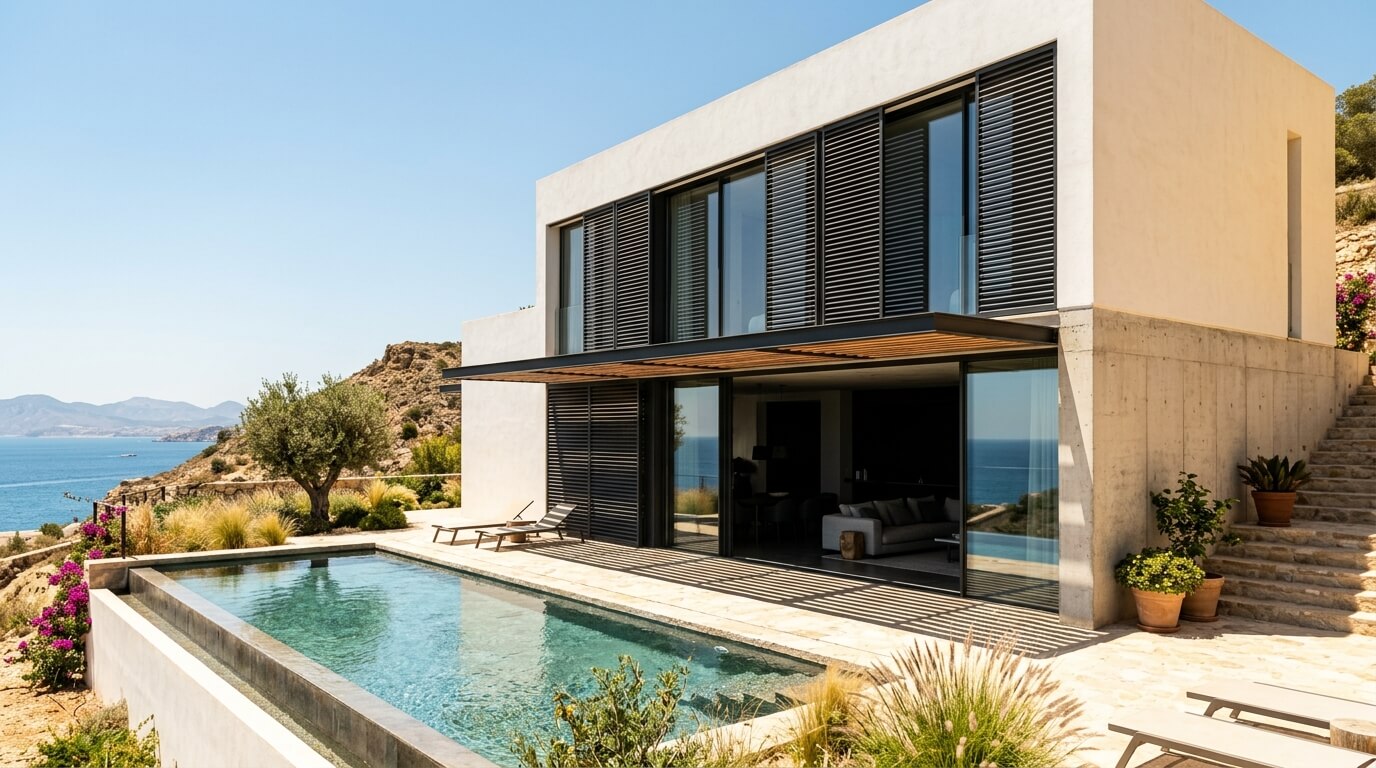
Horizontal or vertical adjustable slats mounted outside, increasingly popular on modern Andalusian homes. They cut high summer sun while admitting low winter sun and keeping the view — the most architecturally elegant solution, and the most expensive.
Exterior shutters (mallorquinas / contraventanas)
Hinged louvred shutters, traditional across Spain. They shade while allowing ventilation through the slats — well suited to bedrooms in hot inland towns.
Interior shading
Interior options are cheaper and easier to fit but less effective on heat, because the sun has already entered through the glass.
- Blinds (venecianas, roller blinds): good for glare and privacy control, modest on heat. Reflective-backed blinds help.
- Curtains: comfort and light control, minimal solar benefit unless thermal-lined.
- Use interior shading to fine-tune light and glare, and rely on glass and exterior layers for the actual heat.
Window films
Solar-control films are applied to existing glass and are the retrofit answer when you can’t change the glazing. A quality film cuts a large share of solar heat and UV, reducing fading of furniture and floors, and costs far less than new windows.
- Best as a retrofit on otherwise-good windows, not a substitute for proper glazing on a replacement project.
- Reflective films can alter the look of the façade and may need comunidad approval.
- Quality and fitting vary enormously — a cheap film bubbles and discolours within a few years.
Insect screens (mosquiteras) and night ventilation
Screens are not sun protection, but they are the key that unlocks Spain’s best free cooling: night ventilation. With mosquiteras fitted you can throw windows open after sunset, flush the day’s heat out and draw cool night air in — the traditional way Spanish homes survive summer without running the AC overnight. Pair screens with the cross-ventilation strategy below.
Orientation strategy: treat each façade differently
The same window behaves completely differently depending on which way it faces. A good solar plan is orientation-specific, not one-size-fits-all.
| Orientation | Summer sun behaviour | Recommended approach |
|---|---|---|
| South | High overhead sun; easy to shade with overhangs/lamas | Solar-control glass + horizontal lamas or a balcony overhang; admits useful low winter sun |
| West | Low, intense late-afternoon sun — the worst for overheating | Strongest shading: exterior persianas, toldos or vertical lamas; low-g glass |
| East | Morning sun, gentler | Moderate shading; persianas or blinds usually enough |
| North | Almost no direct sun | Prioritise daylight and view; high-LT glass, minimal shading needed |
The west façade is almost always the problem child in Spain — late-day sun hits at a low angle that overhangs can’t block, straight into living rooms during the hottest hours. That is the orientation to invest the most shading in.
Balancing daylight against heat
The temptation is to block everything, but a dark home is a poor trade. The goal is selective control:
- Keep glass clear and high-LT on north and shaded façades for free daylight.
- Use low-g solar-control glass plus adjustable exterior shading on south and west, so you can let light in on a mild day and shut it out on a fierce one.
- Favour adjustable systems (lamas, persianas, toldos, shutters) over fixed dark glass, because the Spanish year swings from a brutal August to a chilly January when you actually want that solar gain.
What it costs in 2026
Rough, realistic ranges for mainland Spain. Glass options are upgrades to the sealed unit at purchase.
| Option | Typical cost | Notes |
|---|---|---|
| Solar-control low-E glass | +€20–€50/m² over standard | Best value; add at purchase |
| Solar-control film (fitted) | €25–€60/m² | Retrofit for existing glass |
| Persianas (motorised) | €150–€400 per window | Plus the cajón |
| Toldo (terrace awning) | €200–€600+ per m² of cover | Motorised costs more |
| Adjustable lamas / brise-soleil | €300–€700+/m² | Premium, architectural |
| Mosquiteras | €40–€120 per window | Enables night ventilation |
These vary by region, access and finish; the coast and big cities sit at the upper end.
Conclusion
Beating the Spanish sun is about layers, in order of effectiveness: shade it outside before it reaches the glass (persianas, toldos, lamas), specify low-g solar-control glass to cut what does reach it, fine-tune with interior blinds, retrofit film where you can’t change the glazing, and use mosquiteras to unlock cool night air. Treat each façade on its merits — pour the most shading into the west — and you keep the daylight while shutting out the heat, with an air-conditioning bill that reflects it.
If you are buying or replacing windows on a hot façade, compare verified window companies on Estimia and get several quotes that spell out the g-value, the glazing and the shading — side by side, so you can see exactly what each one is offering. For the winter half of the picture, read our guide on the Uw value.