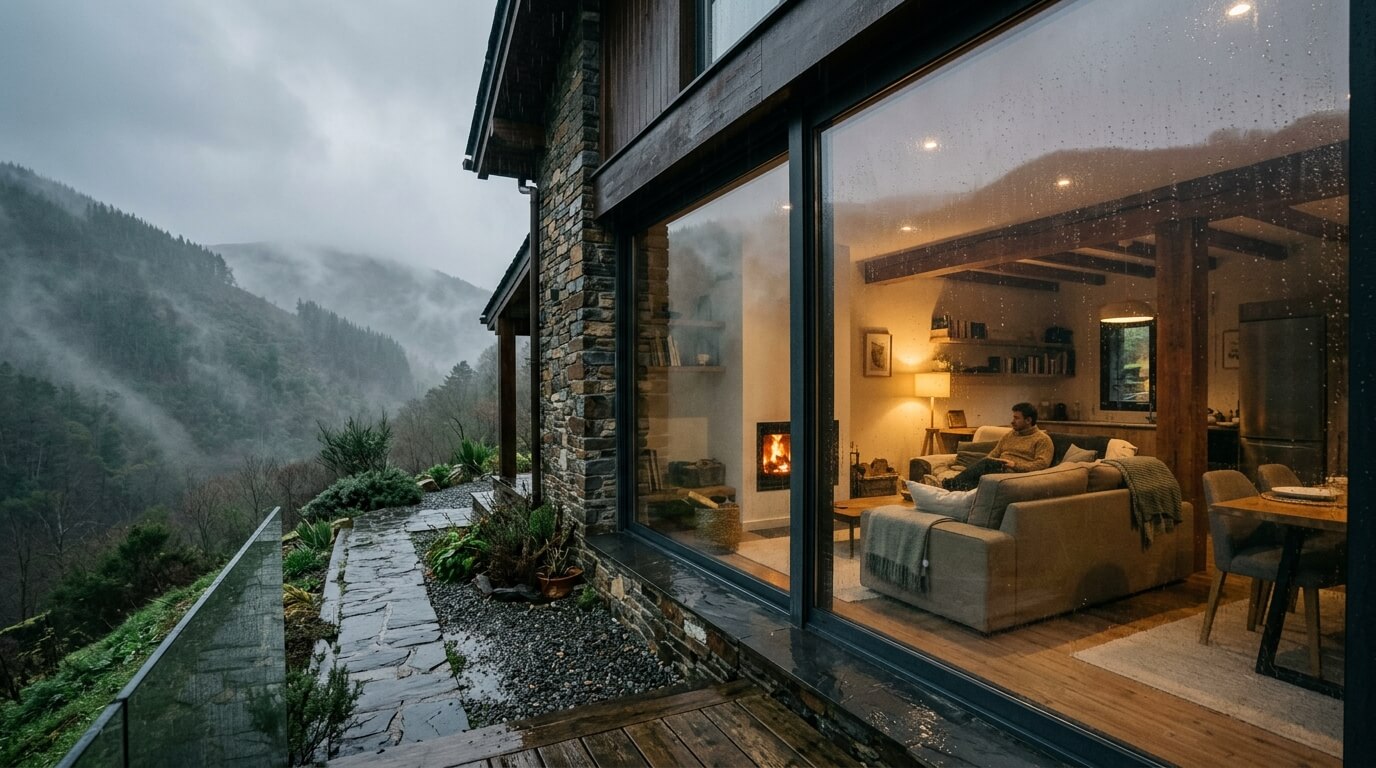
Spain is a noisy place to live, and most of that noise gets into your home through the windows. A busy avenue in Madrid, a terraced bar street in Malaga at 1 a.m., a flight path near Barcelona or Palma, the neighbour’s air-conditioning unit — the walls keep nearly all of it out, but a window is a thin sheet of glass in a frame, and it is almost always the weakest acoustic link in the building envelope. If you can hear traffic clearly with the windows shut, the windows are the problem.
The good news is that acoustic glazing genuinely works, and the difference between a basic window and a properly specified acoustic one is the difference between a restless night and silence. The catch is that “soundproof” is a word salesmen love and physics does not — there is no such thing as total silence, only measurable reduction. This guide gives you the acoustic basics, the four things that actually determine how quiet a window is, the realistic decibel reductions to expect, what to specify for different noise problems in Spain, and how to make sure the quotes you compare are describing the same thing.
The basics: dB and Rw
Two numbers matter.
- Decibels (dB) measure loudness, on a logarithmic scale. This is the part people get wrong: a reduction of 10 dB is perceived as roughly half as loud, not 10% quieter. So a window that cuts 35 dB is not “a bit better” than one that cuts 30 dB — it is dramatically quieter to the human ear.
- Rw (weighted sound reduction index), measured in dB, is the rating of the window itself — how many decibels it removes across a standard range of frequencies, tested in a lab. A higher Rw means a quieter window. In Spain you will also see this expressed with the adaptation terms Rw (C; Ctr), where Ctr specifically reflects performance against low-frequency traffic and city noise — the most relevant figure for a Spanish urban flat.
As a rough orientation:
| Window type | Typical Rw | Real-world feel |
|---|---|---|
| Old single glazing | ~25–28 dB | Street feels almost “open window” |
| Standard double glazing (4-16-4) | ~30–32 dB | Noticeable improvement, traffic still clear |
| Acoustic double glazing | ~38–42 dB | Conversation and traffic strongly muffled |
| High-spec acoustic / laminated | ~43–47 dB | Heavy traffic reduced to a distant hum |
The Spanish building code (CTE DB-HR, Protección frente al ruido) sets minimum acoustic requirements for façades, but in a city centre or near an airport you will usually want to exceed the minimum considerably.
To put those numbers in context, here is how loud everyday sources actually are — and how much of that a window has to remove before a room feels calm:
| Sound source | Typical level |
|---|---|
| Quiet bedroom at night | ~30 dB |
| Comfortable sleep threshold | 30–40 dB |
| Normal conversation | 50–60 dB |
| Busy two-way street | 70–80 dB |
| Tram or passing lorry | 80–85 dB |
| Construction site / road drill | 90+ dB |
A busy street at 75 dB outside, dropped by a 45 dB acoustic window, lands at 30 dB inside — the level of a quiet bedroom. That single subtraction is the whole game.
What actually makes a window quiet
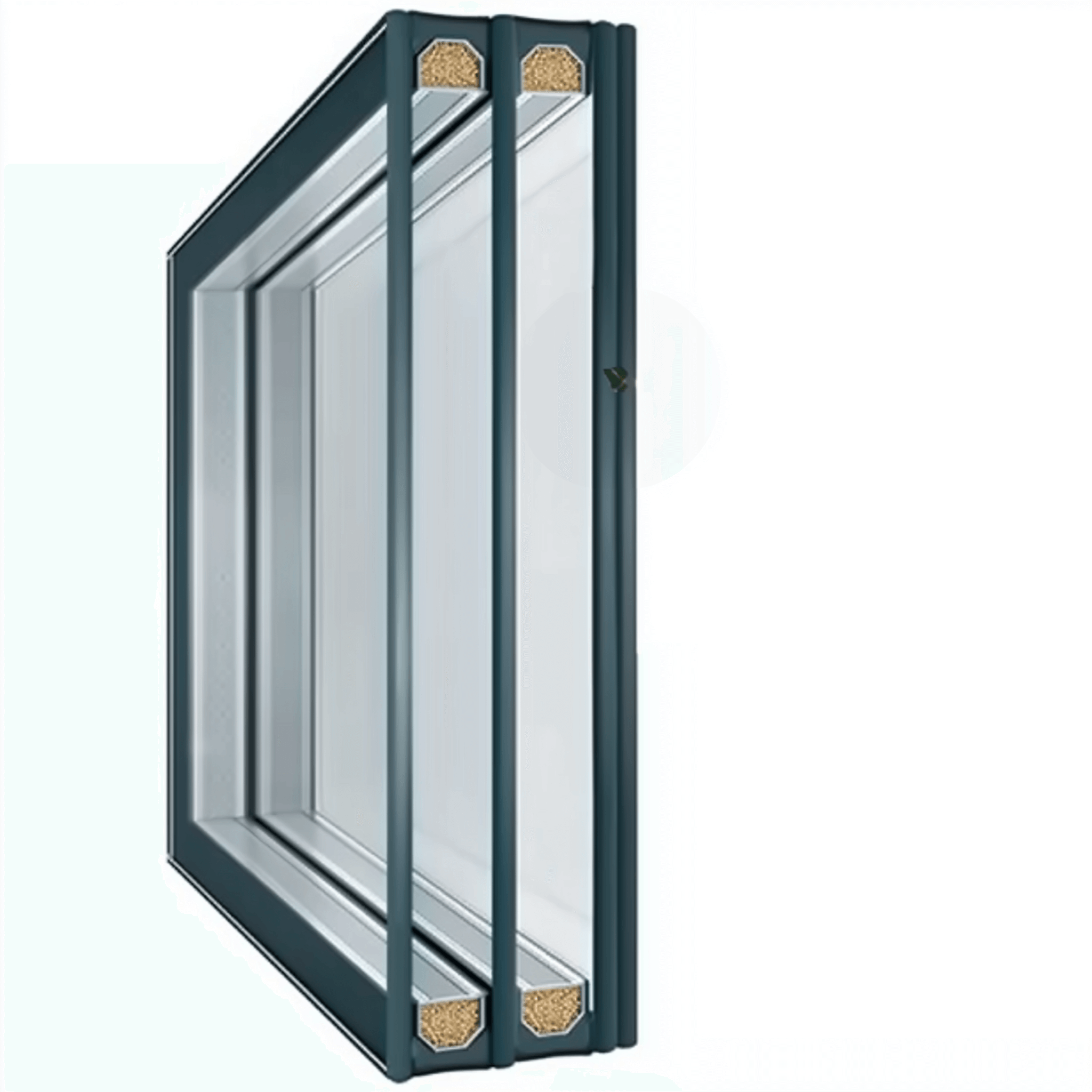
A window’s acoustic rating is not one feature — it is a stack of them. Get one wrong and the rest is wasted. Here is the anatomy of an acoustic glass unit — the three layers of defence between the street and your bedroom:
Anatomy of an acoustic glass unit
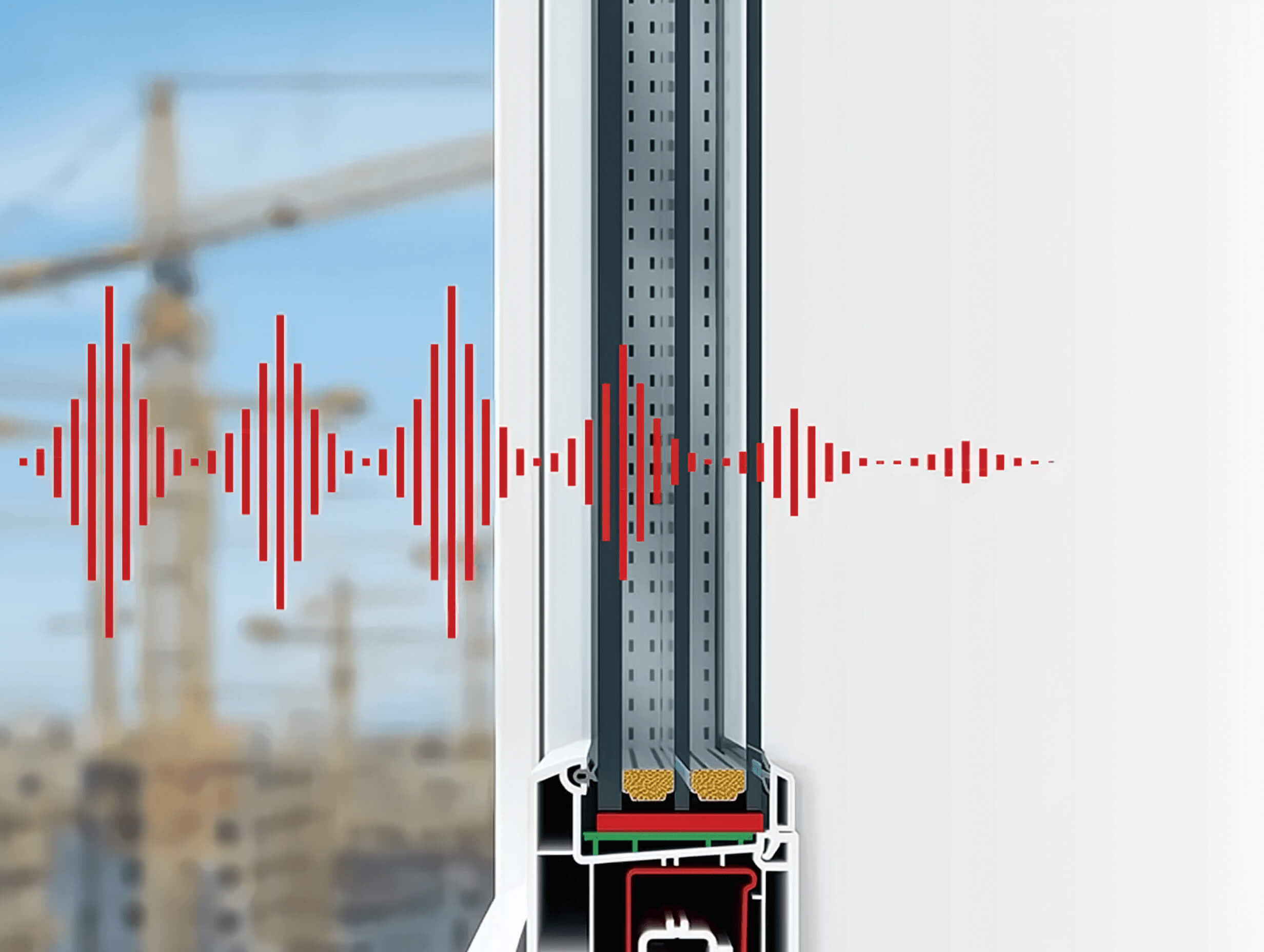
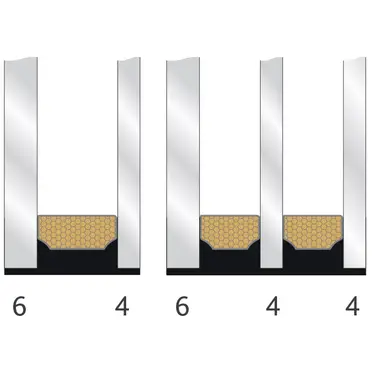
Asymmetric panes
A 6 mm pane against a 4 mm or an 8.8 mm laminated one staggers the weak frequencies — one of the cheapest real acoustic gains.
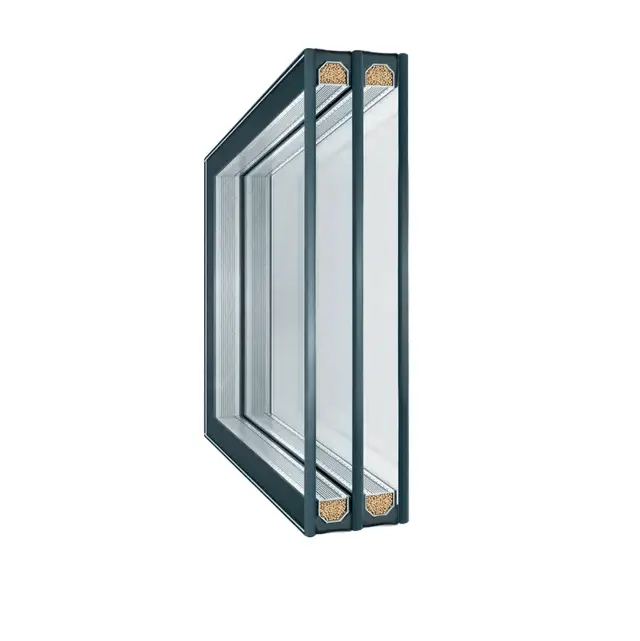
Wide cavity + argon
A 20 mm or wider gap, filled with denser-than-air argon, decouples the panes and damps the low bass that glass struggles with.
Laminated acoustic glass
The single biggest lever — an acoustic PVB film absorbs vibration, and the same pane improves security and UV protection.
The same stack is sold under names like Silent Package or Quiet Package: simply swapping two equal panes for different thicknesses already lifts a unit to around 39 dB, and a full laminated triplex build reaches the top of the scale. The table below shows how the build-up maps to real noise reduction:
| Glazing build-up | Glass | Sound insulation (Rw) | Best for |
|---|---|---|---|
| Single chamber | 4-4 mm | ~25 dB | Quiet areas only |
| Standard double | 4-4-4 mm | ~30 dB | Basic comfort |
| Double + argon | 4-4-4 mm | ~35 dB | A typical city flat |
| Asymmetric “silent” unit | 4-6-8 mm | ~45 dB | Busy streets |
| Acoustic triplex (laminated) | 6.5–12.8 mm | up to 50 dB | Maximum protection |
1. Laminated acoustic glass
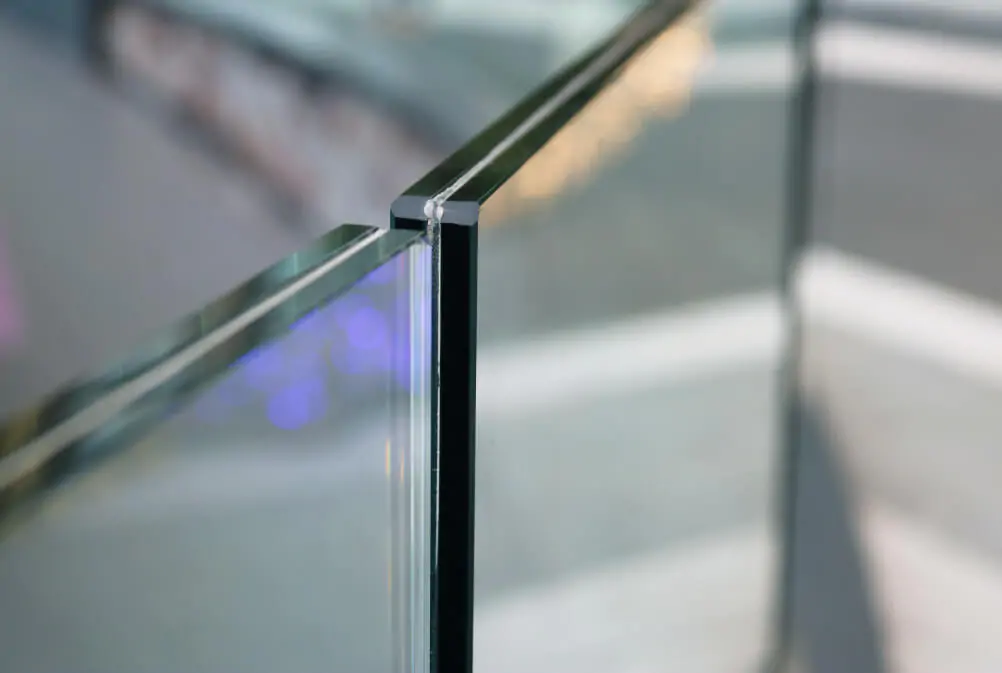
The biggest single lever. Laminated glass sandwiches a plastic interlayer (PVB) between two panes; an acoustic PVB is specially formulated to damp vibration. Replacing one ordinary pane in a unit with laminated acoustic glass typically buys you several extra decibels and also improves security and UV protection. This is the first thing to specify and the first thing cheap quotes leave out.
2. Asymmetric pane thicknesses
Two panes of the same thickness resonate at the same frequency and let that frequency through — the “coincidence dip”. Using two different thicknesses (for example a 6 mm pane against a 4 mm or a 8.8 mm laminated pane) staggers the weak points so no single frequency passes easily. Asymmetry is one of the cheapest ways to gain real acoustic performance, yet it is routinely ignored in standard units.
3. A wider cavity (and the right gas)
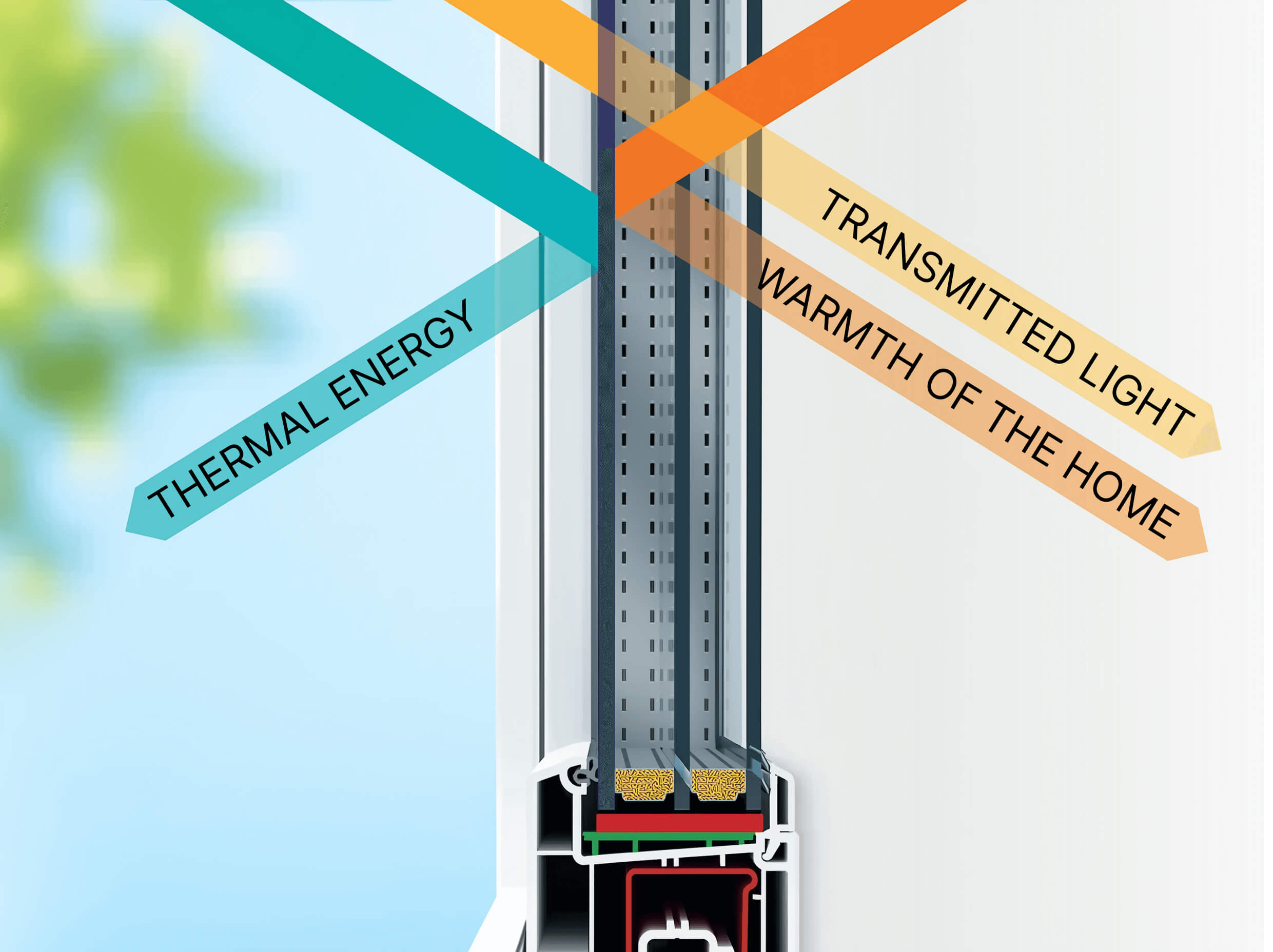
A bigger air gap between the panes decouples them acoustically. Going from a 16 mm to a 20 mm or wider chamber improves low-frequency performance. Filling that cavity with argon (denser than air) helps both thermal and acoustic performance slightly — though for sound, glass thickness and lamination matter far more than the gas.
4. Frame sealing — and the frame itself
The best glass on earth is useless in a leaky frame. Sound travels through the smallest air gap, so multi-chamber PVC or thermally broken aluminium frames with two or three lines of perimeter gaskets are essential. A tilt-and-turn (oscilobatiente) window seals far better than a typical sliding window, where the panels slide past each other and rarely seal tightly — which is why sliding terrace doors are usually the noisiest opening in the home and need extra attention.
5. The installation
Even a 42 dB window will leak noise if it is fitted badly. Gaps around the frame, unsealed reveals and skipped acoustic foam create flanking paths that bypass all that expensive glass. Acoustic performance is only as good as the installation joint, which is why how a company installs matters as much as what it sells you.
Realistic decibel reductions
Be wary of any quote promising “soundproof” or “100% silence”. Here is what is actually achievable when the whole stack is done right:
- Upgrading from single glazing to standard double glazing: roughly a 3–5 dB improvement — modest.
- Upgrading from single glazing to proper acoustic glazing: commonly a 12–18 dB improvement, which subjectively feels like cutting the noise by half or more.
- A top-spec acoustic window in a well-sealed frame, properly installed, can reach Rw 45+, taking a loud street to a soft background murmur.
What windows cannot do is stop low-frequency thuds (a nightclub bassline, heavy lorries) as effectively as mid- and high-frequency noise — bass is the hardest part of the spectrum, which is exactly why the Ctr figure matters in cities and why you should ask for it.
Now you know how it works. Build your perfect quiet window in our cost calculator in about a minute — or browse Estimia’s ready-made soundproof window solutions and the profiles we recommend for busy streets.
What to specify for different Spanish noise problems
The right glazing depends on what you are fighting.
- Busy urban street / avenue (most of Madrid, Barcelona, Valencia): asymmetric double glazing with one laminated acoustic pane, wide cavity, multi-gasket PVC tilt-and-turn frame. Target Rw ≈ 38–42 dB. Prioritise a good Ctr for traffic.
- Nightlife / terraced bar zones (Andalusia, coastal old towns, zonas de ocio): the noise is loud, late and low-frequency. Go for laminated acoustic glass on both panes if budget allows, maximum asymmetry, and avoid sliding windows on the noisy façade. Target Rw ≈ 42–45 dB.
- Near an airport or rail line (around Barajas, El Prat, Palma, major lines): high-spec acoustic units with thick laminated panes; this is where Rw 45+ earns its keep, ideally combined with checking the wall and roof, since the façade as a whole matters.
- Quiet residential / suburban: standard double glazing is usually enough; spend the acoustic budget on thermal performance instead.
Cost versus benefit
Acoustic glazing is a modest premium on top of a standard double-glazed window, not a separate category of product. As a rough guide for 2026, the acoustic upgrade adds in the order of €40–€90/m² over a standard unit, depending on the pane build-up — a small fraction of the total window cost. For a single street-facing bedroom that means the difference between sleeping and not sleeping for a few hundred euros.
The key insight is targeting: you rarely need acoustic glass on every window in the house. Specify the best acoustic units only on the rooms facing the noise (the street-side bedroom, the living room over the avenue) and standard high-thermal units elsewhere. This keeps the cost-benefit firmly in your favour. It also pairs naturally with a thermal upgrade — see our guide on the Uw value — since you are replacing the windows anyway.
What to put in your quote (so you can compare like with like)
The reason acoustic quotes are so hard to compare is that each company describes the glass differently. Insist on these line items, and three quotes suddenly become directly comparable:
- The full glass build-up in millimetres, e.g. 8.8 acoustic laminated / 20 argon / 6 — not just “acoustic glass”.
- The Rw (C; Ctr) rating of the finished window, in dB.
- The frame system and number of gasket lines, and the opening type (tilt-and-turn vs sliding).
- The installation method — sealed perimeter, acoustic foam, finished reveals.
- Which specific windows get the acoustic spec and which do not.
A company that cannot or will not give you the Rw and the glass build-up is selling you a number it has not measured. Every company listed on Estimia is verified before it can take enquiries, and because Estimia structures requests around the same specification, the acoustic quotes that come back state the same fields — letting you compare the actual Rw and glass build-up side by side instead of trusting the loudest sales pitch.
Conclusion
Quiet windows come from a stack of decisions, not a magic pane: asymmetric thicknesses, laminated acoustic glass, a wide cavity, a well-gasketed frame, and a clean installation. Expect a real upgrade from single glazing to deliver 12–18 dB of reduction — enough to halve the perceived noise — while remembering that low-frequency bass and badly sealed sliding doors are the limits of what glass can do. Spend your acoustic budget where the noise actually is, and always pin the Rw and glass build-up down in writing.
Compare verified window companies on Estimia and request several acoustic quotes side by side — when every quote lists the same Rw, glass build-up and installation scope, choosing the window that will finally let you sleep becomes a simple, confident decision.