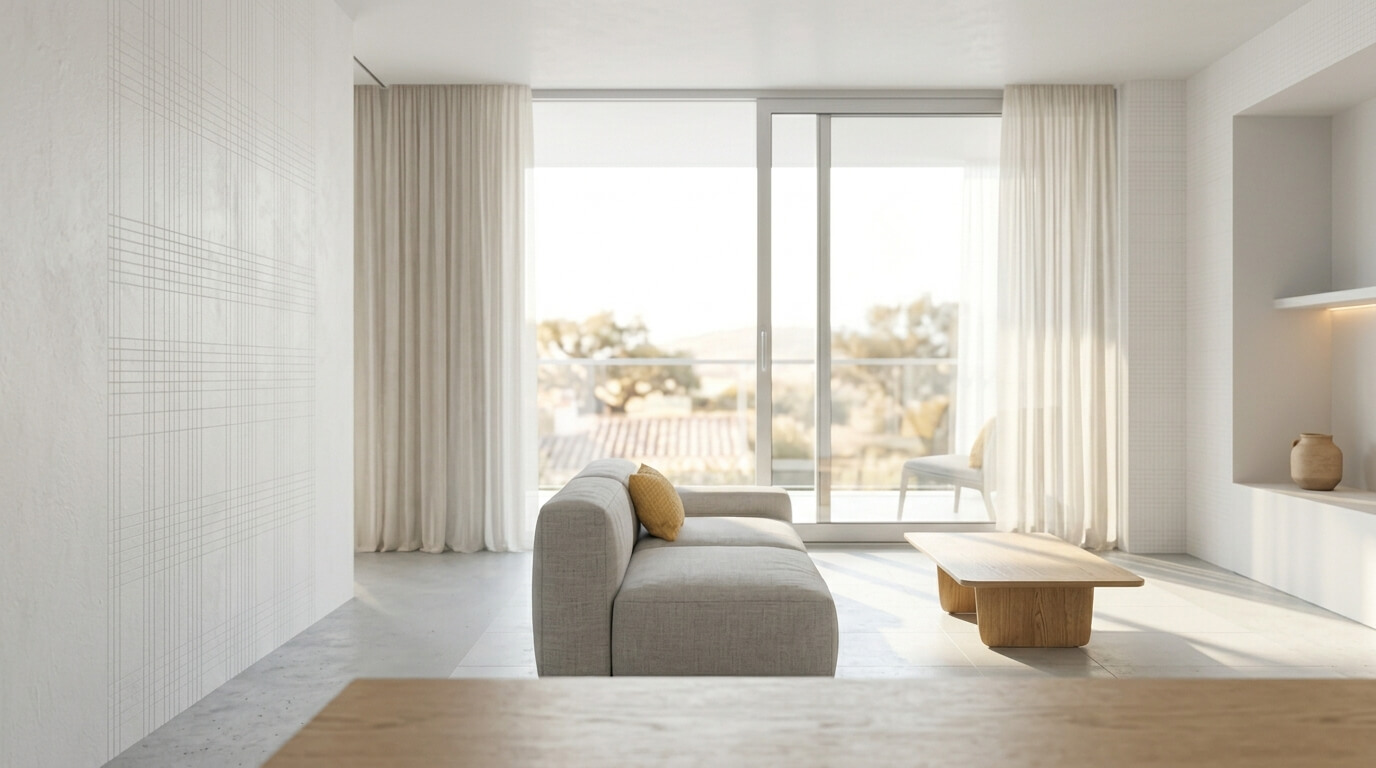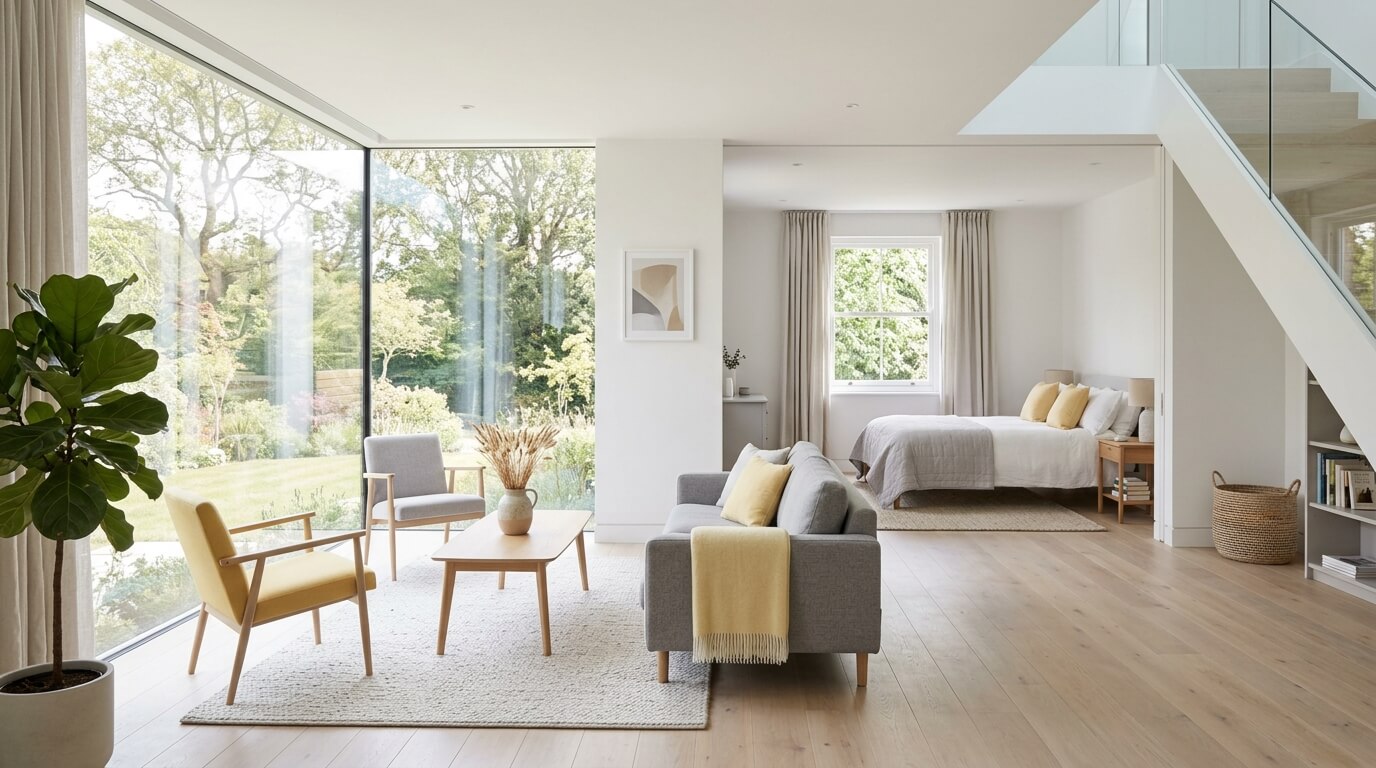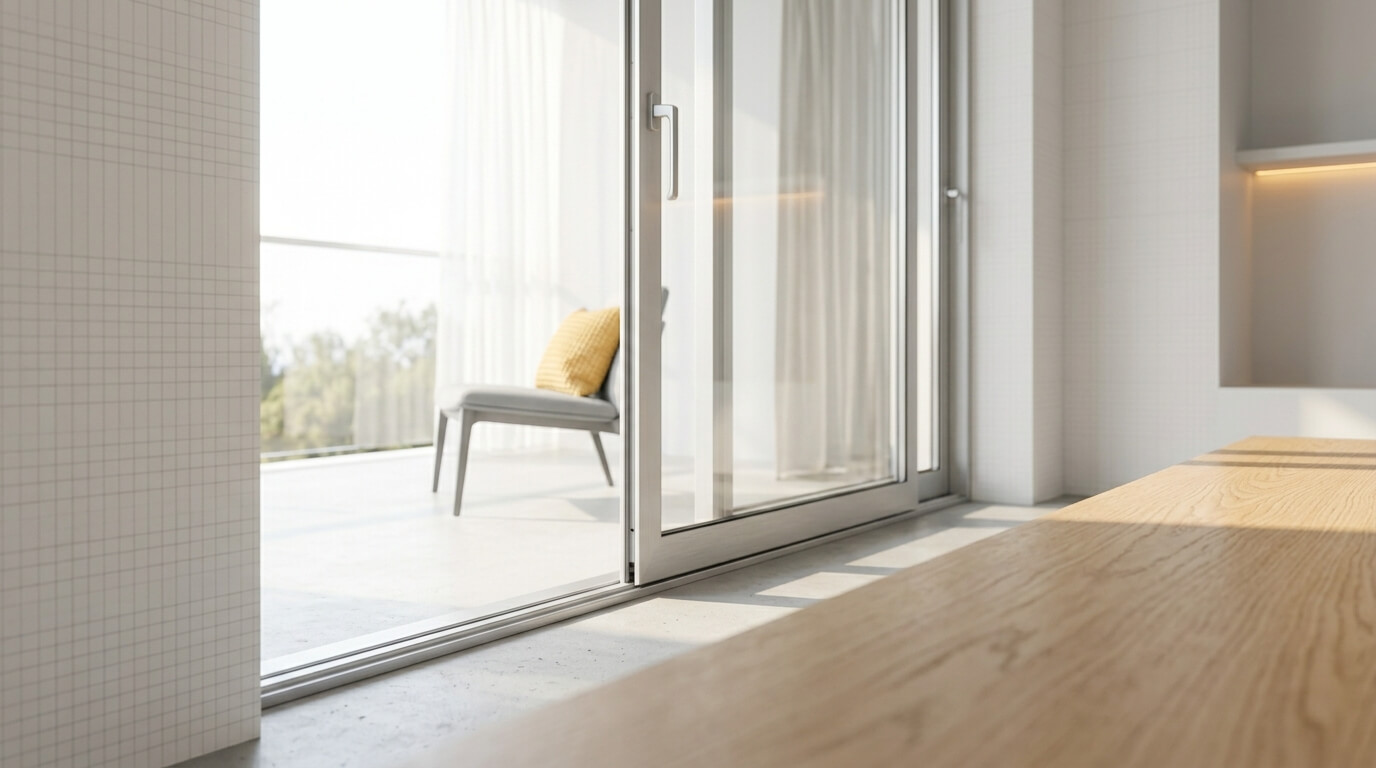
The sliding door is the heart of how Spanish homes live with their terraces and gardens. It is the threshold between the salón and the sun, opened a hundred times a summer, and the single biggest hole in your home’s thermal envelope. Get it right and you have a wall of glass that disappears, seals tight in February and slides with one finger. Get it wrong and you have a draughty, juddering panel with a step everyone trips over.
The problem is that “sliding door” covers at least four very different systems, each with its own mechanism, price and ideal use. This guide explains the types, the numbers that actually matter, and how to read a quote — so that when you compare offers from different companies, you are comparing like with like.
The four main types of sliding door
1. Corredera (standard sliding)
The classic. Panels slide horizontally past each other on a bottom track, riding on rollers. Economical, space-saving (nothing swings into the room or garden) and reliable. The trade-off is sealing: because panels simply overlap and rely on brush seals, a basic corredera is the least air-tight of all the options. Fine for a mild Mediterranean balcony; less ideal as your living room’s main winter barrier.
A variant, the corredera con ruptura de puente térmico (thermal-break sliding), closes much of that gap and is the sensible minimum for a heated room.
2. Elevable / lift-and-slide (oscilo-paralela elevable)
Here the handle does something clever: turn it and the entire panel lifts a few millimetres off its seals, glides almost weightlessly, then drops back down to compress firmly against the gaskets when closed. The result is the best of both worlds — easy movement of very heavy, large panels and excellent sealing when shut.
Lift-and-slide is the go-to for big living-room-to-terrace openings where you want both performance and large glass. Panels can be heavy (100 kg+) yet move with one hand.
3. Plegable / folding (bi-fold)
Several narrow panels hinged together that concertina back against one or both sides, opening up the entire span. Spectacular when you want the wall to truly vanish for an outdoor party. The downsides: more frames (so more visible aluminium and less glass when closed), more hardware to maintain, and generally higher cost per metre than a corredera.
4. Minimalist / slim-frame sliding
The premium category: ultra-slim sightlines (sometimes under 25 mm of visible frame between panels) and very large glass. Maximum view, maximum light, minimum aluminium. These overlap with panoramic glazing — for full-height, near-frameless glass walls, see our guide on panoramic windows and patio doors. They demand careful structural planning and command the highest prices.
Pros and cons at a glance
| Type | Sealing | Max size | Cost | Best for |
|---|---|---|---|---|
| Corredera | Moderate | Medium | € | Balconies, mild climates, budget |
| Lift-and-slide | Excellent | Large | €€€ | Main living-room openings |
| Folding | Good | Wide spans | €€€ | “Open the whole wall” effect |
| Minimalist | Very good | Very large | €€€€ | Views, design-led homes |
The numbers that matter: thermal breaks and Uw
The single most important spec is the whole-door Uw value (W/m²K) — how much heat it loses. Lower is better.
- A basic aluminium corredera without a thermal break can be as poor as Uw 3.5–5.0 — a thermal hole in your wall.
- Add a ruptura de puente térmico (a non-conductive polyamide barrier inside the aluminium profile) and decent double glazing, and you reach roughly Uw 1.4–2.2.
- A good PVC or premium lift-and-slide with high-performance glazing can reach Uw 1.0–1.6.
If a quote for an aluminium sliding door does not mention a thermal break, treat it as a red flag in any heated room. (For a full explanation of how this figure is built up, see our guide on the Uw value.) Pair the right Uw with the right glass: solar-control / low-g glazing in Andalusia and the south to keep heat out, laminated acoustic glass on a noisy street.
Thresholds and accessibility
The bottom track is where comfort and safety live or die. Options:
- Standard raised track — best sealing and water resistance, but a step of 5–7 cm that is a trip hazard and blocks wheelchairs and prams.
- Reduced / low-profile threshold — a compromise of a couple of centimetres.
- Flush / enrasado (zero-threshold) — the track sits level with the finished floor for a seamless indoor-outdoor flow. Lovely and accessible, but it demands proper drainage and waterproofing detailing so rain does not pool inward.
In Spain’s wetter north (Galicia, the Basque coast) a flush threshold needs a competent installer and a drainage channel; on a dry Almería terrace it is lower-risk. This is precisely the kind of detail where a verified, experienced installer earns their fee.
Security
A terrace door is a common break-in point. Look for:
- Multi-point locking (several locking points up the frame, not a single latch).
- Anti-lift blocks so the panel cannot be levered off its track.
- Laminated (seguridad) glass that holds together when struck.
- An RC2 security rating for meaningful burglary resistance.
A lift-and-slide that drops onto its seals and engages multiple hooks is inherently harder to force than a basic corredera.
Maximum sizes
Capability rises with system quality:
- Corredera: sensible up to around 2.4 m panel height and moderate widths.
- Lift-and-slide: panels up to ~3 m tall and very heavy individual leaves.
- Minimalist: the largest single panes, often needing structural and craneage planning.
Bigger glass means more weight on the lintel and the track — which is a structural question, not just a window question, so it should be discussed before you order.
PVC vs aluminium for sliders
- PVC insulates better intrinsically (no thermal break needed), is cheaper, and is excellent for moderate sizes. Very large or ultra-slim sliders are harder in PVC because the material is less rigid.
- Aluminium is stronger and slimmer, enabling bigger panels and minimalist sightlines — but it must have a thermal break to perform. It is the material of choice for large lift-and-slide and minimalist systems.
For a small-to-medium terrace door where budget matters, PVC often wins. For a big living-room wall of glass, thermal-broken aluminium lift-and-slide usually does.
Price tiers in Spain (2026)
Realistic supplied-and-fitted ranges:
| System | Typical price (supplied & fitted) |
|---|---|
| Basic aluminium corredera | €300–€500 / m² |
| Thermal-break corredera | €450–€700 / m² |
| PVC sliding | €400–€700 / m² |
| Lift-and-slide (elevable) | €700–€1,300 / m² |
| Folding (bi-fold) | €800–€1,400 / m² |
| Minimalist slim-frame | €1,200–€2,500+ / m² |
Cost drivers: glazing (triple, acoustic, solar-control), panel size, threshold type, hardware brand and security class. Note that NextGenerationEU rehabilitation grants for energy upgrades are due to close by December 2026, and qualifying improvements may attract IRPF deductions — keep your energy certificate and invoices. If you live in a comunidad de vecinos, altering the façade’s appearance usually needs community approval.
So which should you pick?
- Tight budget, mild climate, balcony: thermal-break corredera or PVC sliding.
- Main living-room-to-terrace opening, want performance and big glass: lift-and-slide.
- Want the whole wall to open for the view or a party: folding.
- Design-led home, maximum view, budget available: minimalist slim-frame.
And remember the rest of the house: the door is for the terrace, but for bedrooms, kitchens and living-room windows, the tilt-and-turn (oscilobatiente) seals and insulates better — see our guide on tilt-and-turn windows.
Compare before you commit
The cheapest sliding-door quote is rarely the best value, because two doors at the same price can differ wildly in Uw, threshold detailing, hardware and glass. The hard part is comparing offers that each describe the door differently.
That is where Estimia helps. Every company listed is verified and quality-controlled before it can take enquiries, and you can request and compare several quotes side by side from proven local installers — so you judge on thermal performance, threshold quality and security, not just the bottom line.
Compare verified terrace-door and window companies on Estimia and get several quotes to compare side by side before you choose.