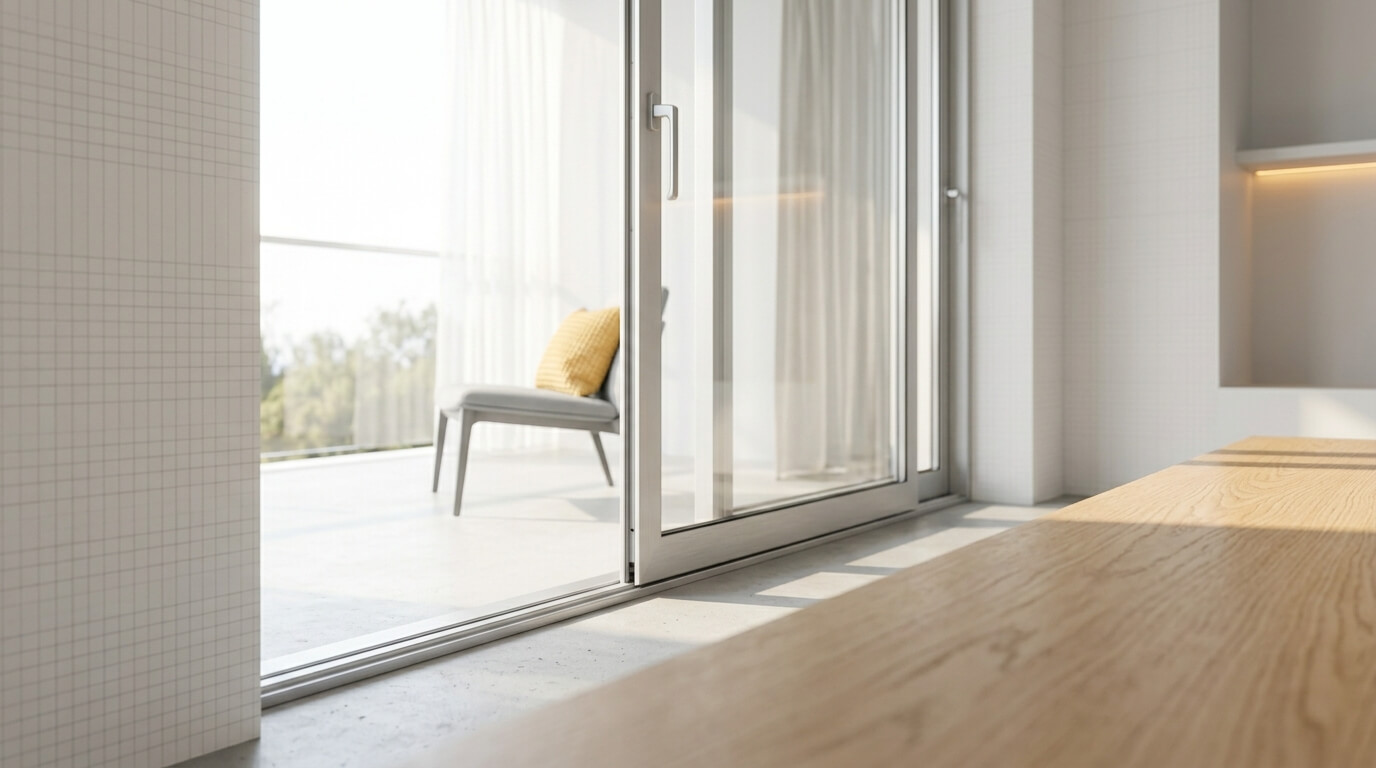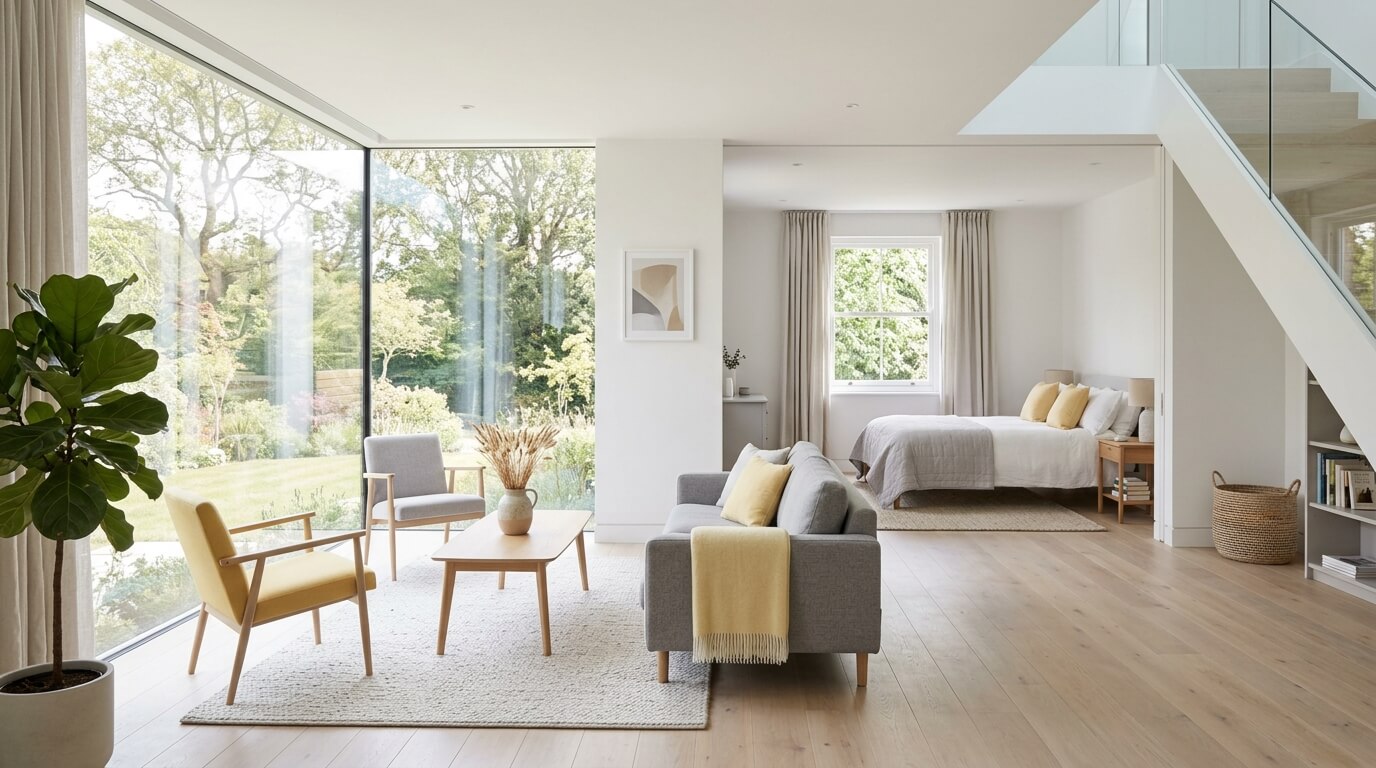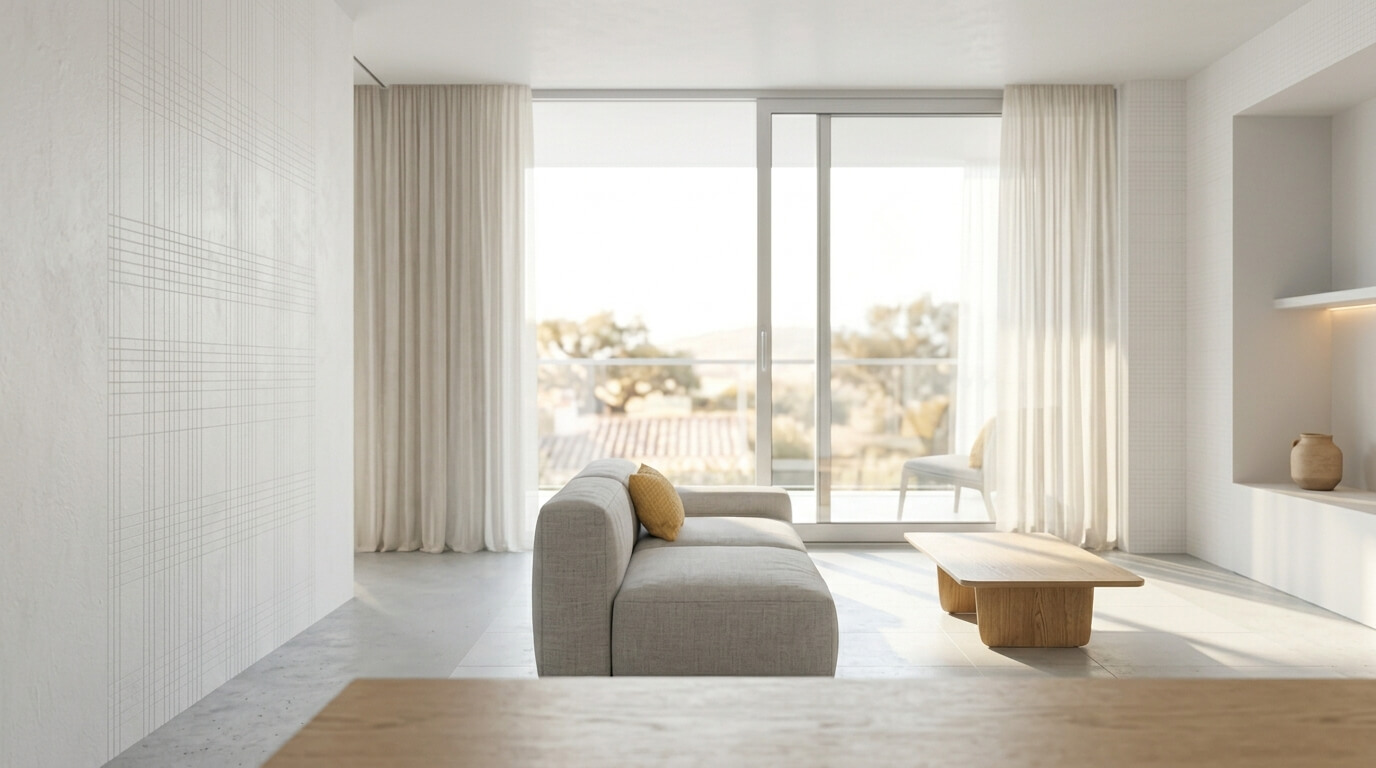
There is a reason the first thing a Spanish architect does with a south-facing salón is reach for glass. Light is the country’s greatest free asset — the long Andalusian afternoons, the silver Cantabrian sky, the clean Mediterranean horizon — and panoramic glazing is how you pour it indoors. Done well, a wall of slim-framed glass dissolves the boundary between living room and terrace, frames a view like a painting, and floods rooms with daylight that no amount of lighting design can replicate.
Done badly, the same wall of glass becomes a greenhouse in July, a heat-bleed in January, and a security and structural headache. Large-format glazing is unforgiving: the bigger the glass, the bigger the consequences of getting the specification wrong. This guide explains how panoramic windows and patio doors work, and — crucially for Spain — how to control the sun, the structure, the security and the cost.
What counts as “panoramic” glazing
Panoramic glazing is large-format glass that prioritises view and light over visible frame. In practice it covers a family of systems:
- Fixed picture windows — single large panes that don’t open, used to frame a view.
- Minimal-frame / slim sliding systems — sliding panels with sightlines sometimes under 25 mm between leaves, so the eye reads glass, not aluminium.
- Lift-and-slide (elevable) walls — large, heavy panels that lift off their seals to glide open, then drop to seal tight. The workhorse of big openings.
- Corner / butt-jointed glazing — two panes meeting at a corner with no post, for a frameless wraparound view.
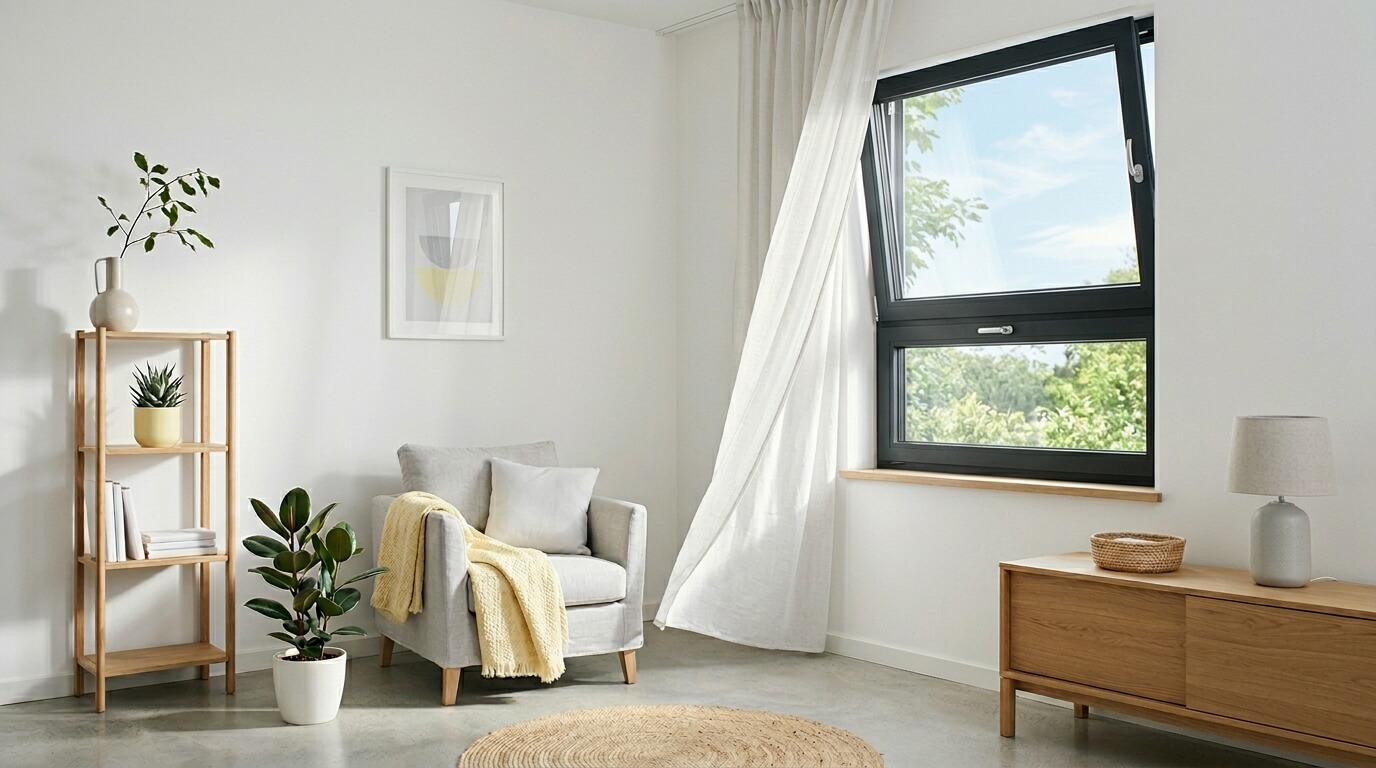
Most of these overlap directly with terrace doors. A panoramic patio door is a high-end sliding door — so this guide is best read alongside our guide on how to choose a sliding door, which covers the corredera / lift-and-slide / folding families in detail. For the rooms behind the glass wall, the tilt-and-turn (oscilobatiente) remains the better-sealing choice for ordinary windows.
Light and views: the whole point
The design payoff is real:
- Slimmer sightlines mean a higher glass-to-frame ratio — more view, more daylight, a less “boxed-in” room.
- Lift-and-slide lets you stack big panels aside so the opening genuinely disappears.
- Corner glazing removes the visual anchor of a wall, making small rooms feel far larger.
But more glass means more of everything the glass lets through — heat, glare and, potentially, cold. The art is keeping the view while controlling the physics.
Thermal and solar control for hot regions
This is where Spain differs sharply from northern Europe. In Bilbao your enemy is heat loss; in Sevilla it is heat gain. A panoramic wall must usually do both, and the key spec is not just Uw.
- Uw (whole-window U-value, W/m²K) — heat loss. Quality panoramic systems reach roughly Uw 1.0–1.6 with good double or triple glazing. (See our guide on the Uw value for how this is calculated.)
- g-value (solar factor) — the fraction of solar heat the glass lets in. This is the number that matters most in hot regions. A plain double glazing might have a g-value around 0.6 (lets in 60% of solar heat); solar-control glass drops that to roughly 0.3–0.4 while staying clear.
Practical recommendations by zone:
| Region | Priority | Specify |
|---|---|---|
| Andalusia & southern coast | Block solar heat | Low g-value solar-control glass, external shading |
| Mediterranean coast (Valencia, Murcia) | Balance heat & glare | Solar-control glazing, overhangs |
| Central Spain (Madrid) | Hot summers, cold winters | Solar control + low Uw (triple glazing) |
| Galicia & Basque north | Reduce heat loss | Triple glazing, low Uw; solar control less critical |
| Canary Islands | Constant solar load | Solar-control glass throughout |
Beyond the glass itself, external shading is your most powerful tool — a deep overhang, a brise-soleil, exterior blinds or a pergola bioclimática over the terrace cuts solar gain before it ever reaches the glass, which no coating can fully match. A south-facing panoramic wall in Sevilla without external shading will overheat no matter how good the glazing.
Structural considerations
Big glass is heavy and the loads are real:
- A single large insulated pane can weigh well over 100 kg; a lift-and-slide leaf more still.
- That weight bears on the lintel above and the track/sill below — both must be sized for it, which often means engaging the structure of the building, not just the window opening.
- Corner glazing removing a structural post may require a beam or steel to carry the load above. This is an architect-and-installer question, decided before you order glass.
- Slim frames flex less forgivingly than chunky ones, so installation tolerances and a level, load-bearing sill are critical.
In a comunidad de vecinos, enlarging an opening or changing the façade’s appearance almost always needs community approval and may need a building licence — confirm both early.
Security with large glass
A wall of glass need not be a weak point if specified properly:
- Laminated security glass (vidrio laminado) — two panes bonded with an interlayer that holds together when struck and resists penetration. Essential at ground level.
- Multi-point locking and anti-lift hardware on sliding panels.
- An RC2 rating for meaningful burglary resistance on accessible openings.
Laminated glass also blocks UV (protecting furniture and floors from fading) and improves acoustics — a useful bonus on a busy street.
Costs in Spain (2026)
Panoramic systems sit at the top of the glazing market. Realistic supplied-and-fitted guidance:
| System | Typical price (supplied & fitted) |
|---|---|
| Large fixed picture window | €500–€1,000 / m² |
| Minimal-frame sliding | €1,200–€2,500+ / m² |
| Large lift-and-slide wall | €700–€1,300 / m² |
| Corner / butt-jointed glazing | €1,500–€3,000+ / m² |
Add cost for solar-control and triple glazing, oversized panes (which may need crane access), structural work to the opening, and motorisation. Note that NextGenerationEU rehabilitation grants for energy-efficiency upgrades are due to close by December 2026, and qualifying improvements can attract IRPF deductions — keep the energy certificate and invoices. For a deep renovation, the panoramic wall is often the line item where good glazing spec pays back most in comfort.
Maintenance
Large glass is low-maintenance but not no-maintenance:
- Tracks and rollers on sliding/lift-and-slide systems need occasional cleaning and lubrication; grit in the track is the commonest cause of stiff operation.
- Seals and gaskets should be checked periodically, especially on coastal homes where salt air is harsh on hardware.
- Glass cleaning of very large or high panes may need professional equipment — worth factoring in.
- Drainage channels at flush thresholds must be kept clear so rain drains outward, not in.
Bringing it together
Panoramic glazing is the most rewarding and the least forgiving glass you can buy. The reward is a room transformed by Spanish light and a view that becomes part of the architecture. The risk is solar overheating, structural surprises and a price that can run away. The way to manage all three is the same: a clear specification — the right g-value for your region, the right Uw, laminated security glass, properly sized structure and a flush or sealed threshold — installed by someone who has done it before.
Think of your home’s glazing as a system. Use tilt-and-turn windows for the bedrooms and kitchen where sealing matters most, a well-chosen sliding door for the everyday terrace opening, and a panoramic system for the one wall where the view and the light deserve to take over.
Compare verified specialists
Large-format glazing is exactly the kind of job where experience separates a flawless result from an expensive mistake, and where two quotes at the same price can hide very different glass, structure and threshold detailing. Comparing them properly is hard on your own.
On Estimia, every glazing company is verified and quality-controlled before it can receive enquiries, and you can request and compare several quotes side by side from proven local specialists — so you judge on solar control, structure and security, not just the headline figure.
Compare verified panoramic and terrace-glazing companies on Estimia and get several quotes to compare side by side.