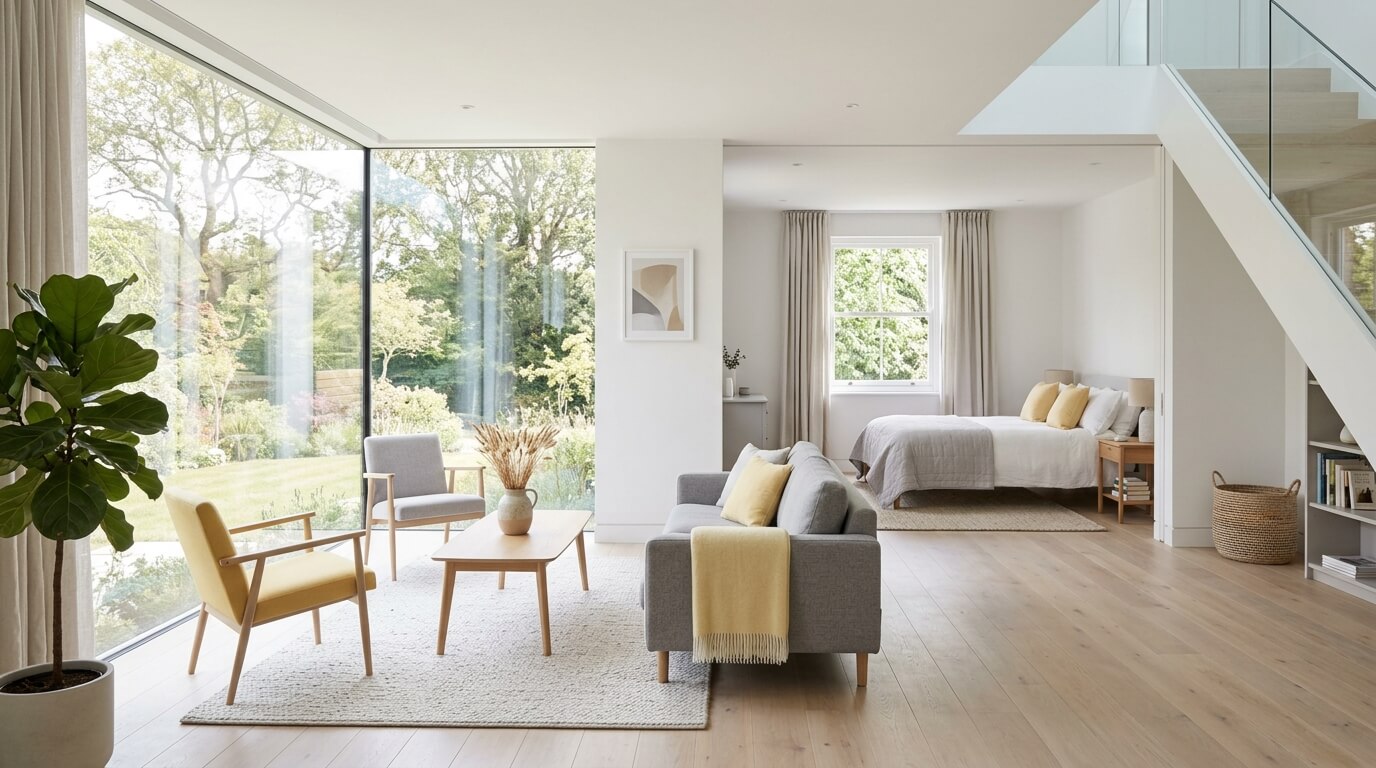
When people plan a window replacement they tend to choose one window — one frame, one glazing, one opening type — and repeat it across the whole house. It is simpler to quote and simpler to fit, but it is rarely the best result. A bedroom, a kitchen, a bathroom and a living room ask completely different things of a window: one needs silence and darkness, another needs to shrug off grease and steam, a third needs privacy, a fourth needs as much glass as the wall will allow. The frame material can stay consistent for looks and budget, but the glazing, the opening type and the extras should change room by room.
This guide walks through the house room by room, explaining what actually matters in each space and the choices that deliver it. Use it to brief installers precisely — the more specific your request, the more comparable and accurate the quotes you get back.
Bedrooms: quiet, dark and well ventilated
A bedroom window has three jobs, and ordinary glazing handles none of them well.
- Acoustics. If the room faces any noise — a street, a plaza, neighbours — specify acoustic (laminated, asymmetric) glass. Standard double glazing gives around 30–32 dB of reduction; a good acoustic unit reaches 38–42 dB, the difference between hearing the street and not. This is the single most worthwhile bedroom upgrade.
- Blackout. Glass tints don’t darken a room; shading does. Pair the window with an exterior persiana, which blocks light far better than any blind and adds insulation and security. A well-sealed cajón matters here.
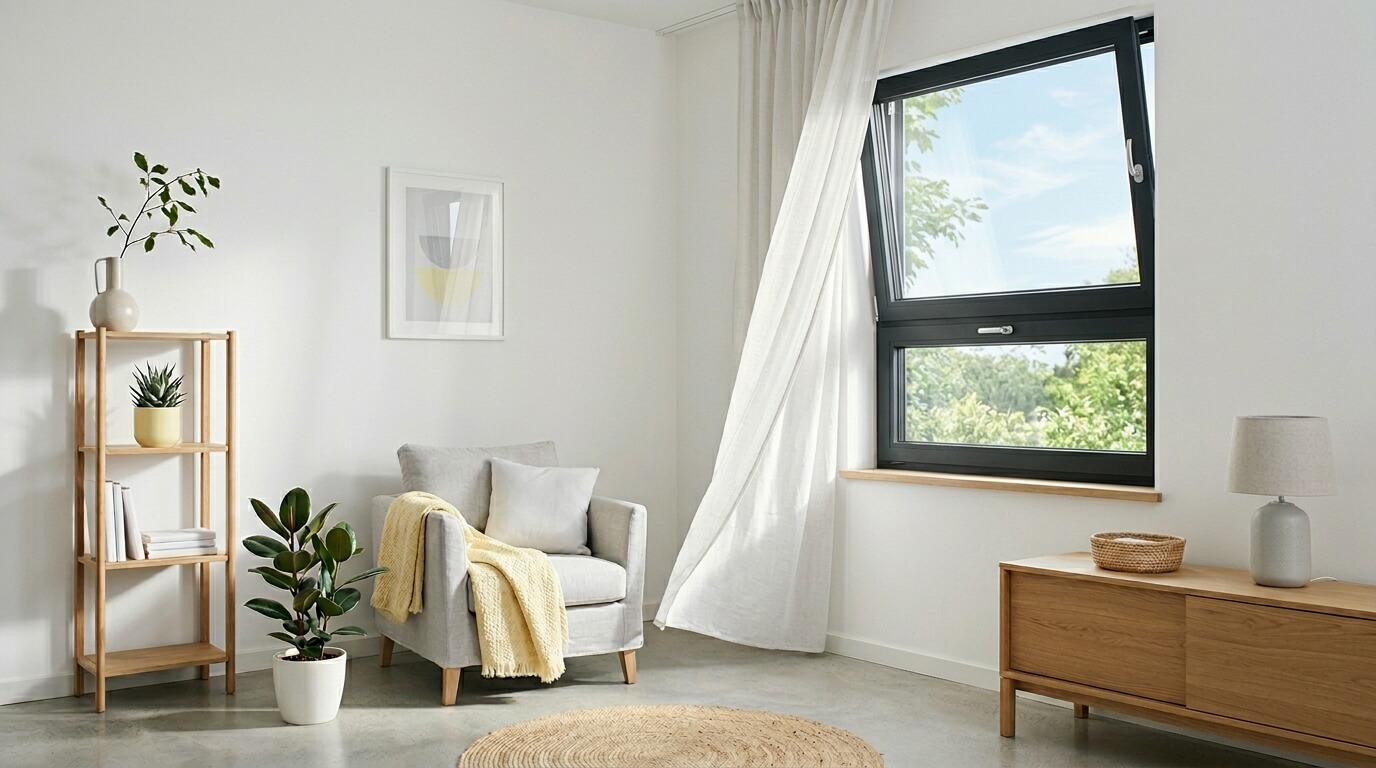
- Ventilation, especially at night. A tilt-and-turn (oscilobatiente) is ideal: tilt it for secure, draught-free trickle ventilation overnight without leaving the window wide open, and turn it fully for a daytime flush. Fit a mosquitera so it can stay open after dark in summer.
A bedroom on a busy road is the strongest case in the house for acoustic glass plus a quality persiana.
Kitchens: easy to clean, easy to ventilate, practical to open
Kitchens generate grease, steam and smells, so the priorities are hygiene and airflow.
- Easy-clean surfaces. PVC frames wipe down effortlessly and resist grease — a practical default over textured or untreated finishes near a hob.
- Strong ventilation. Cooking needs to clear fast. A tilt-and-turn that opens wide is excellent; an awning/projecting opening lets you ventilate even in light rain.
- Practical openings over the worktop. A window behind the sink is awkward to reach. Consider a side-hung or tilt-only sash you can operate one-handed, or a tilt-and-turn whose handle you can reach across the counter. Avoid an inward-opening turn that collides with the tap or a draining rack.
- Light and a view make a kitchen pleasant, but ventilation and reach come first.
Bathrooms: privacy, moisture resistance and ventilation
Bathrooms are wet, steamy and private — a distinct set of demands.
- Privacy glass. Use obscure / textured glass (vidrio translúcido, satin/acid-etched, or moulded patterns like carglass) to let light in while blocking the view. This is standard for any bathroom overlooked by neighbours or the street.
- Moisture resistance. Bathrooms run humid, so the frame must not mind water and the gaskets must seal well. PVC and aluminium are unaffected by moisture; wood is the weakest choice here unless very well finished and maintained. Clear the drainage holes regularly, as condensation collects.
- Ventilation against mould. Steam needs to escape. A window that tilts lets you vent after a shower without sacrificing privacy or security — a small tilting top sash is perfect. Where there is no window, mechanical extraction does the job, but a tiltable window is better.
Living rooms: light, views and large glazing
The living room is where you maximise glass and connection to the outside.
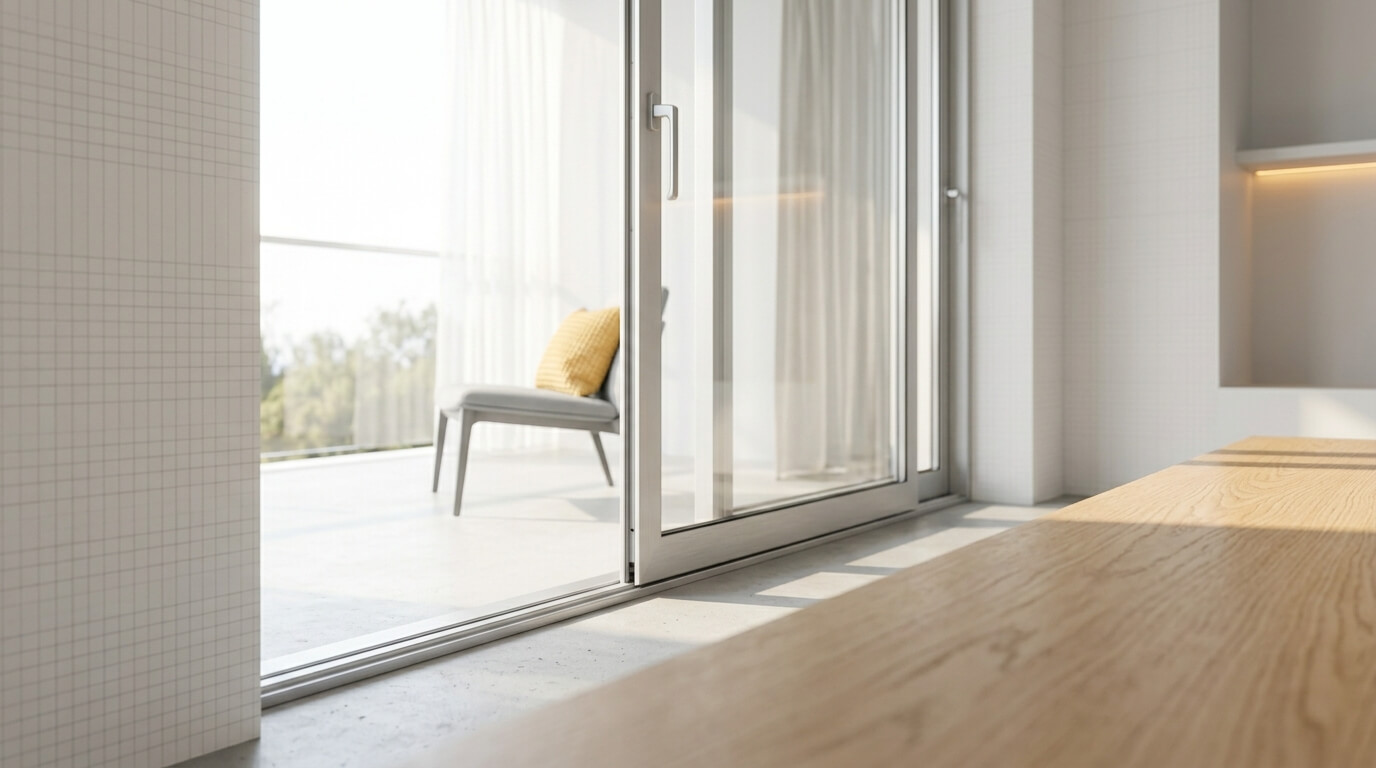
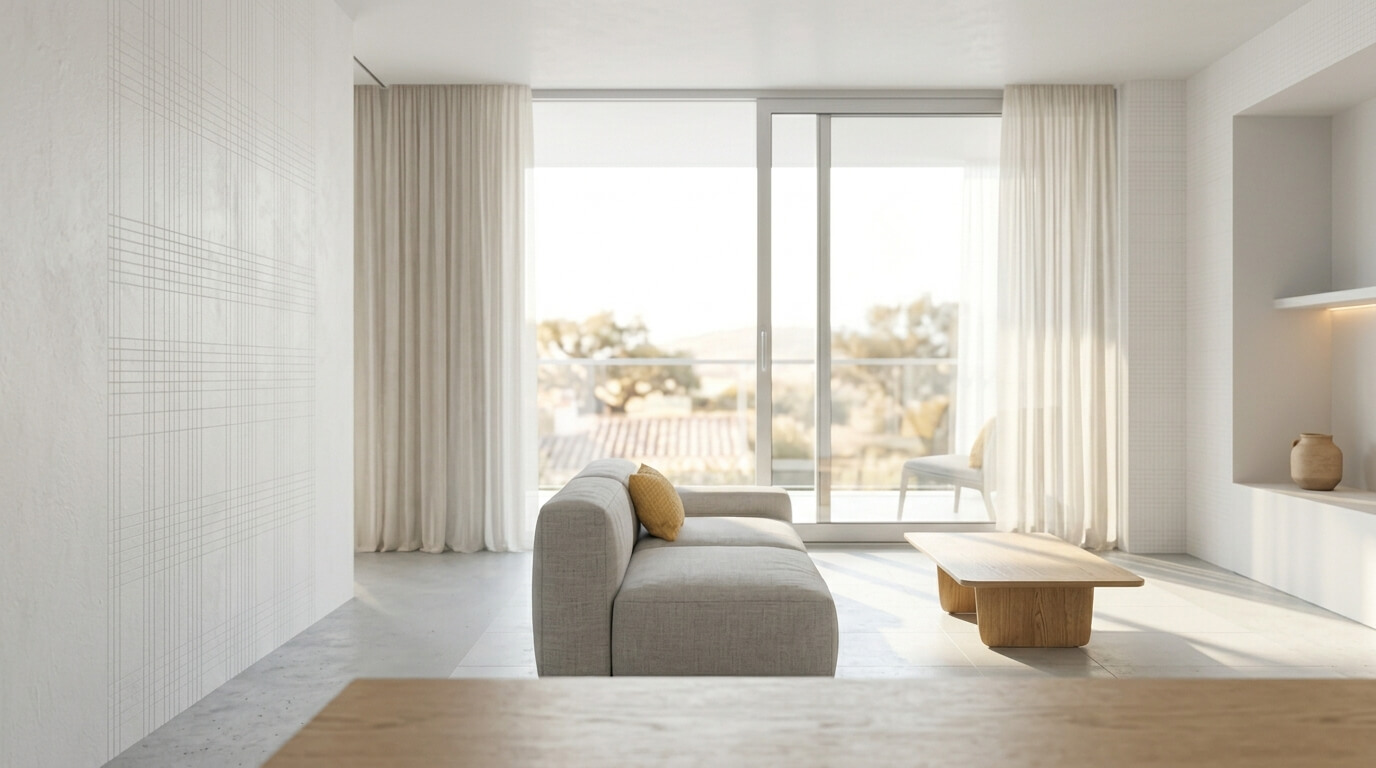
- Large glazing and big openings. Living rooms suit large fixed panes for the view and lift-and-slide or sliding doors (correderas) onto a terrace or garden. For wide spans, thermal-break aluminium carries large sashes with slim sightlines better than PVC.
- Daylight and view first, but balanced against heat. On a south or west façade, pair big glass with solar-control low-E glazing and exterior shading (toldo, lamas) so the room doesn’t overheat — see our guide on sun-protection technologies for the full strategy.
- Comfort underfoot. Large glazed areas can feel cold by the glass in winter; good low-E glazing and a sensible Uw keep the space comfortable right up to the window.
- Acoustics if street-facing, just as in a bedroom — a living room on a busy avenue benefits from acoustic glass too.
Children’s rooms: safety first
A child’s room shares the bedroom priorities — acoustics, blackout, ventilation — with safety added on top.
- Restricted opening. Fit opening restrictors / limiters or key-lockable handles so a window can be ventilated but not opened wide enough for a child to fall. This matters above ground-floor level.
- Laminated (safety) glass. Laminated glass holds together if broken, instead of shattering — sensible at low level and in play areas, and it doubles as acoustic glass.
- Lockable tilt-and-turn. Tilt-only ventilation with a lockable or restricted turn function gives airflow without a fully openable sash within a child’s reach.
- Keep furniture away from the window as well; the hardware is only part of the safety picture.
Facing a busy street vs facing a garden
Orientation onto the world outside changes the brief as much as the room does.
| Facing | Priorities | What to specify |
|---|---|---|
| Busy street | Block noise, dust, prying eyes; security | Acoustic glass (38–42 dB), good seals, persianas, secure locking; obscure glass where privacy is needed |
| Quiet garden / patio | Maximise light, view and access | Large glazing, sliding/lift-and-slide doors, standard acoustic spec; prioritise the view |
A practical, common pattern in a Spanish flat is acoustic glass and persianas on the street side, large clear glazing and sliding doors on the patio or interior-courtyard side — the same flat, two different window specifications, each matched to what that face of the building actually needs.
A quick room-by-room summary
| Room | Top priorities | Typical best choice |
|---|---|---|
| Bedroom | Acoustics, blackout, night airflow | Acoustic glass + tilt-and-turn + persiana + mosquitera |
| Kitchen | Easy-clean, ventilation, reach | PVC tilt-and-turn or awning; reachable handle |
| Bathroom | Privacy, moisture, venting | Obscure glass + tiltable sash; PVC/aluminium frame |
| Living room | Light, view, large openings | Large panes / sliding doors; thermal-break aluminium; low-E + shading |
| Children’s room | Safety + bedroom needs | Restrictors, laminated glass, lockable tilt-and-turn |
| Street-facing | Noise, privacy, security | Acoustic + laminated glass, persianas, strong locks |
Conclusion
The most comfortable home doesn’t put the same window everywhere — it puts the right window in each room: quiet, dark and ventilated where you sleep; easy to clean and easy to open where you cook; private and moisture-proof where you bathe; bright and expansive where you live; safe where your children play. Keep the frame material consistent for looks and budget if you like, but vary the glazing, the opening type and the extras to match each space and each orientation.
When you brief installers this precisely, the quotes that come back are accurate and genuinely comparable. Compare verified window companies on Estimia and request several quotes side by side, room by room, so every window in the house earns its place. For the details behind the choices here, see our guides on acoustic glass, sun-protection technologies and the Uw value.