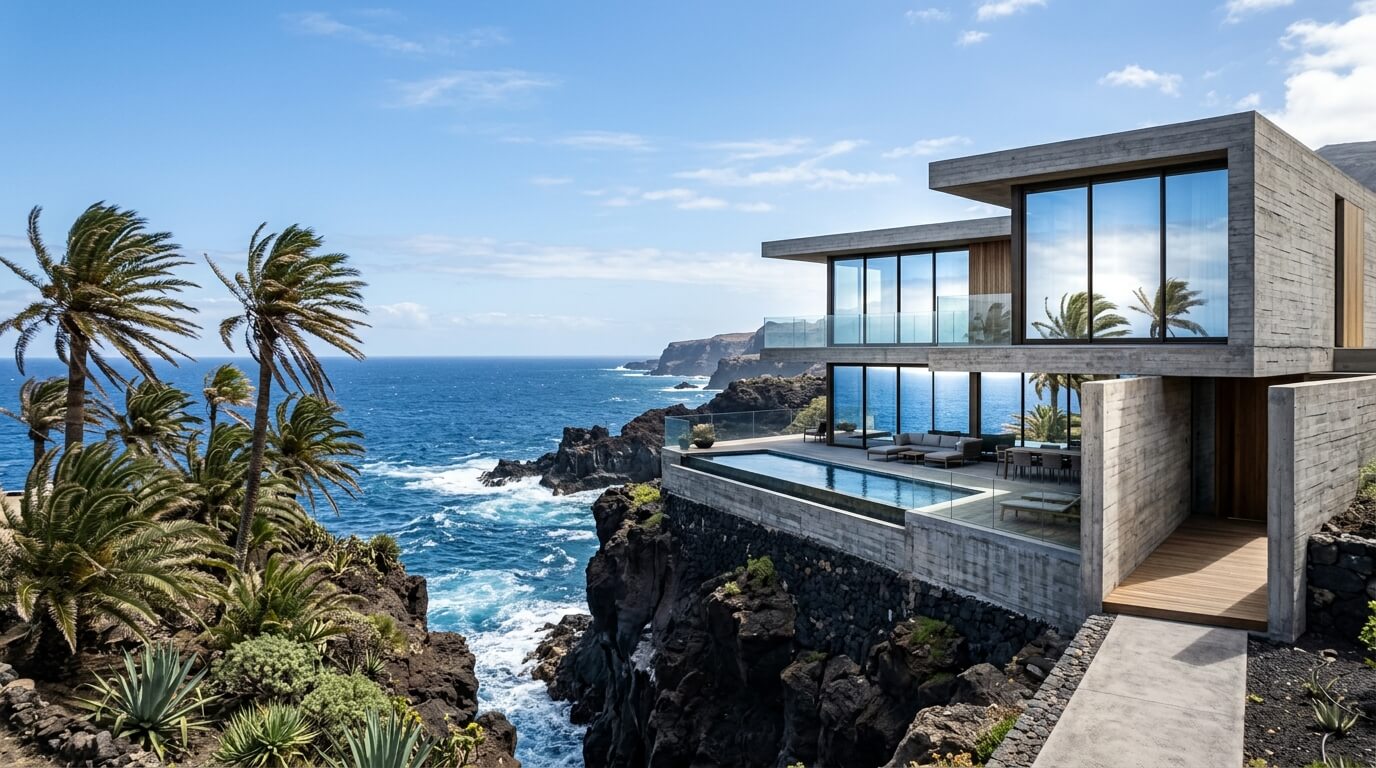
Although the Canary Islands are part of Spain, their climate has almost nothing in common with the mainland. Off the coast of Africa and warmed year-round, the islands are subtropical: mild winters, warm summers, intense ultraviolet radiation, salt-laden Atlantic air and the famous, near-constant trade winds (los alisios). Choose windows the way you would for Madrid or the north and you will pay for insulation you never use while neglecting the things that actually matter here — sun, salt and wind. This guide is the Canary-specific reference.
Because exposure varies enormously — from a sheltered inland barranco to a wind-battered north-coast headland on Tenerife or a sun-blasted resort flat in the south of Gran Canaria — Estimia lets you request and compare quotes from verified window companies that work on your island, so you compare installers who understand local conditions rather than gambling on whoever advertises loudest.
The Canary problem in one sentence
On the mainland interior, a good window keeps heat in. In the Canaries the heating season is so short that insulation is almost irrelevant; the window’s job is to block intense sun, resist salt corrosion and stand up to persistent wind. Nearly everything below follows from that.
Forget insulation — lead with solar control
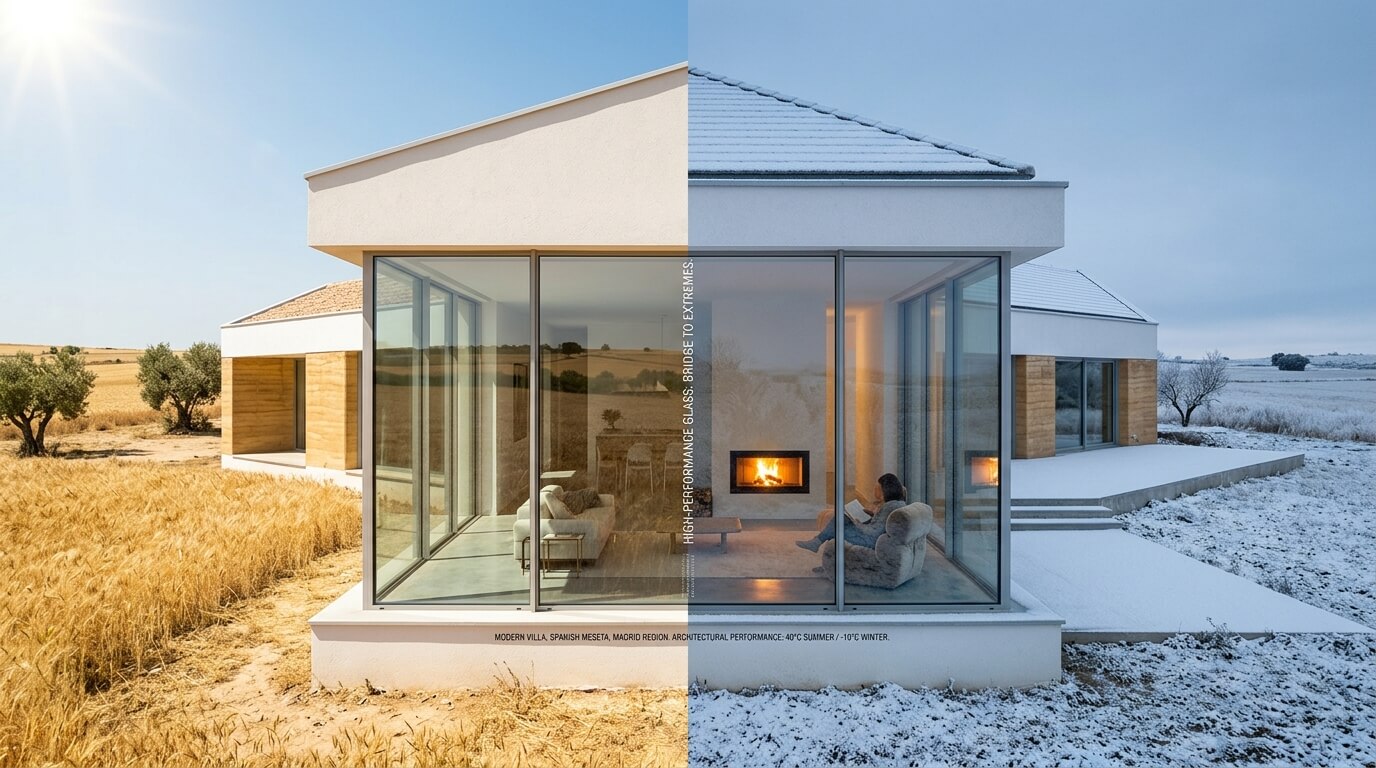
The Canaries sit in CTE winter climate zone α, the mildest in Spain — the building code barely asks anything of window insulation here. Spending money on triple glazing or ultra-low Uw values is close to pointless: there is no real winter to keep out. (See How to Choose Triple-Glazed Windows for why a third pane is wasted in this climate.)
What matters instead is the g-value — the fraction of the sun’s heat the glass lets through. With high solar elevation and some of the strongest UV in Spain, solar-control glazing on sun-facing openings is the single most valuable upgrade. Aim for a low g-value (≈ 0.3–0.4) on south- and west-facing glass to keep rooms cool without going dark. Our guides Sun-Protection Technologies for Windows and How to Stop Your Home Overheating in Summer cover the glazing and shading in full.
UV stability: the island sun destroys cheap frames
The Canaries deliver punishing year-round ultraviolet. UV slowly degrades plastics and pigments, so frame UV stability is essential:
- White PVC copes very well and is the value default.
- Dark or coloured PVC absorbs far more heat and can warp or fade unless it is a premium, UV-stabilised foiled profile explicitly warranted for high-insolation climates.
- Powder-coated aluminium is extremely UV-stable and holds dark colours for decades.
If you want dark frames under the island sun, aluminium is the safer choice than dark PVC.
Salt air and corrosion-resistant hardware
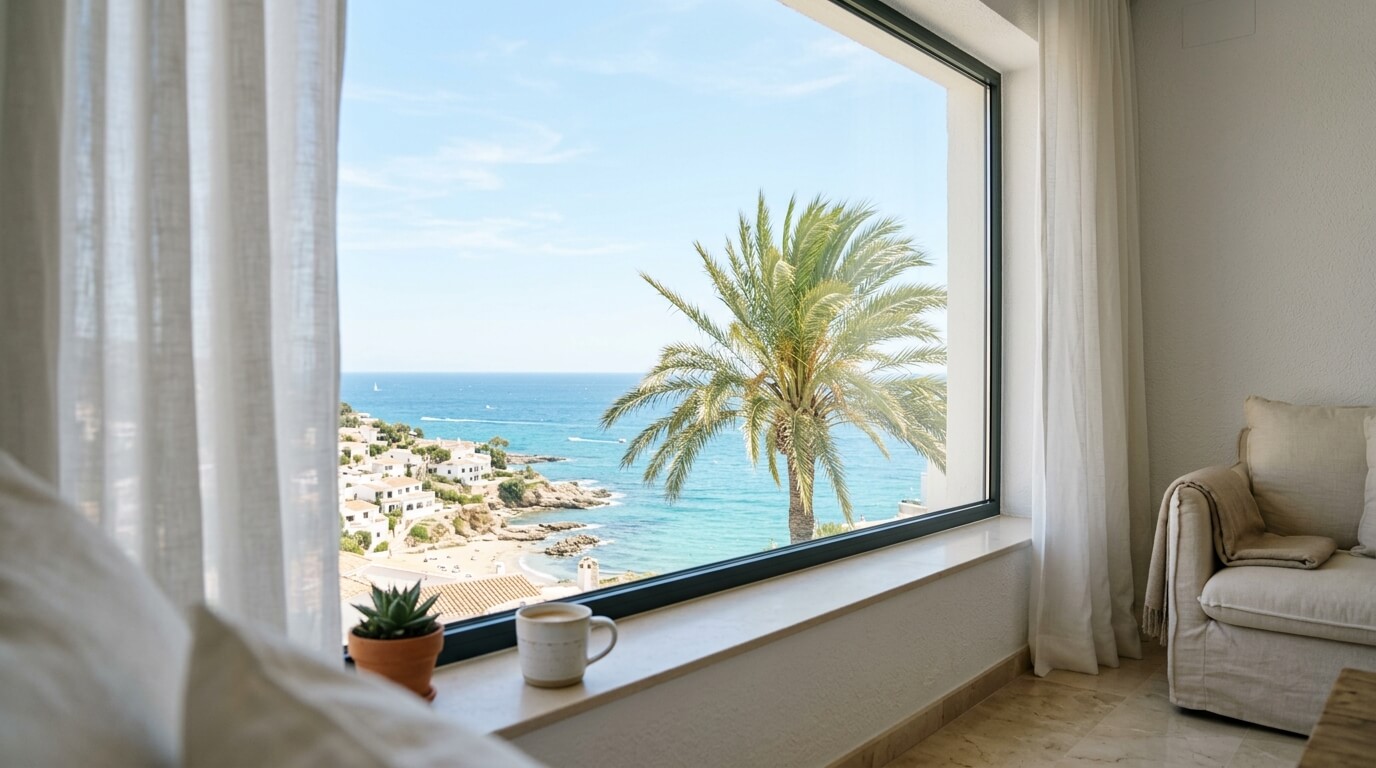
The islands are surrounded by ocean and the air is salty almost everywhere. As on any marine coast, the first casualty is rarely the frame — it is the hardware: hinges, locks, handles and the rollers in sliding doors. Seized, corroded mechanisms are the commonest coastal failure. Specify:
- Marine-grade / corrosion-resistant hardware with enhanced anti-corrosion coatings, tested to high salt-spray standards.
- Stainless-steel fixings rather than ordinary steel.
- On aluminium, a Qualicoat Seaside / Qualimarine powder coat designed for marine environments.
- Accessible, rinseable sliding tracks, because salt and dust collect there.
An occasional fresh-water rinse of frames, tracks and hardware genuinely extends their life near the sea. The principles match our guide Windows for the Mediterranean Coast, which covers marine specification in depth.
The trade winds: don’t skip the wind rating
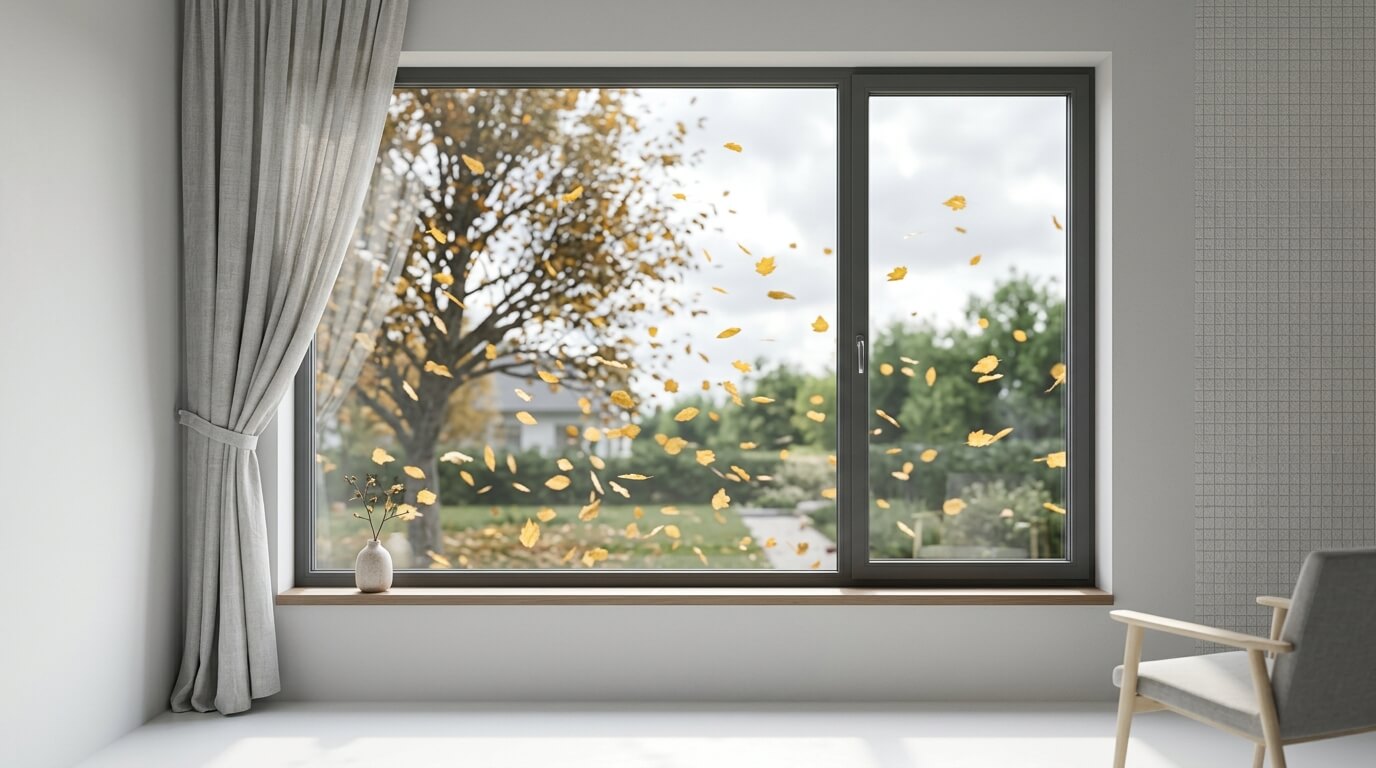
What sets the Canaries apart from the Mediterranean is the wind. The trade winds blow steadily for much of the year, and exposed north- and north-east-facing coasts — and the higher ground — can see strong, sustained gusts. That makes wind-load and weathertightness ratings genuinely important, not a box-ticking exercise:
- Wind resistance (EN 12210) — the structural class, so the window holds firm under sustained pressure.
- Watertightness (EN 12208) — wind-driven rain resistance, important on the wetter, windier north.
- Air permeability (EN 12207, Class 4) — so persistent wind doesn’t drive draughts through the seals.
On an exposed headland, ask the installer explicitly what classes they are fitting. Our companion guide Wind Loads in Coastal Areas explains these standards.
Two micro-climates, two priorities
The Canaries are not uniform — the islands’ relief creates sharp contrasts:
- The sunny south (south Gran Canaria, south Tenerife, the resort coasts) — hot, dry, intensely sunny. Solar control and UV stability lead; salt matters on the first line.
- The greener, windier north (north Tenerife, La Palma, the higher ground) — cloudier, wetter, windier, cooler. Wind and water ratings and good ventilation matter more; solar control still applies but is less dominant.
Specify for your side of the island, not a generic “Canary” package.
Sliding systems and terrace living
Canary homes are built around outdoor living — terraces, porches and pool areas with large glazed openings. Thermal-break aluminium sliding and lift-and-slide systems dominate here: slim sightlines for big spans, excellent UV stability, and good corrosion resistance with the right coating. Pair large sliders with solar-control glass, or the terrace room becomes the hottest in the house. See How to Choose a Sliding Door and Glass Curtains and Terrace Enclosures for the options.
What to specify in the Canaries — checklist
- Solar-control glazing (low g-value) on south- and west-facing openings — the top priority.
- UV-stable frames: white PVC, or aluminium / premium foiled PVC for dark colours in full sun.
- Corrosion-resistant, marine-grade hardware and stainless fixings.
- Qualimarine / Qualicoat Seaside coating on aluminium near the sea.
- Wind-load (EN 12210), watertightness (EN 12208) and Class 4 air-permeability ratings on exposed coasts.
- Mosquito nets for year-round secure ventilation.
- Don’t pay for heavy insulation you’ll never use.
Conclusion
The Canary Islands flip the mainland brief: insulation barely matters, while sun, salt and wind dominate. Lead with solar-control glazing, insist on UV-stable frames and marine-grade corrosion resistance, and don’t skip the wind and water ratings on exposed coasts. Specify for your island and your side of it. Compare several like-for-like quotes from verified companies on Estimia — every one is vetted before it can contact you — so you are dealing with installers who genuinely understand subtropical sun, salt air and the trade winds.