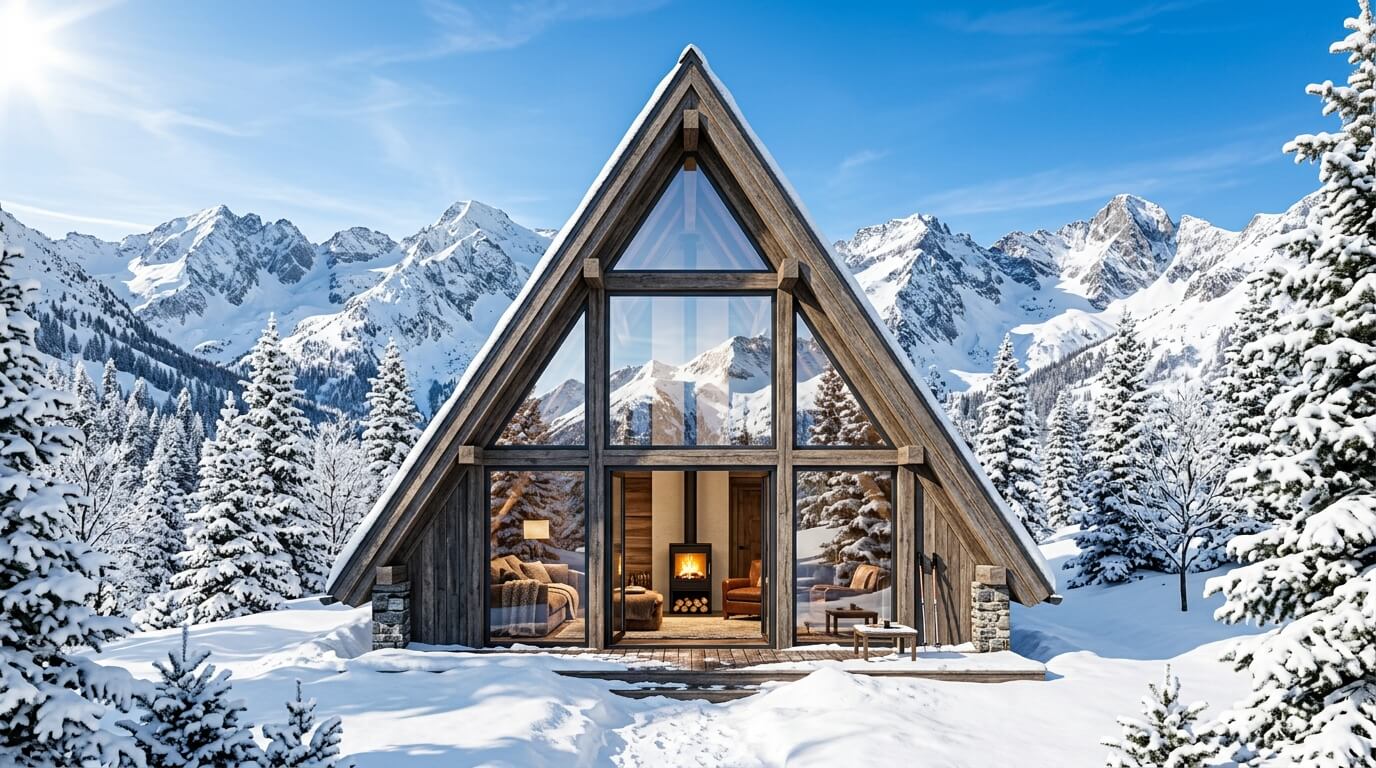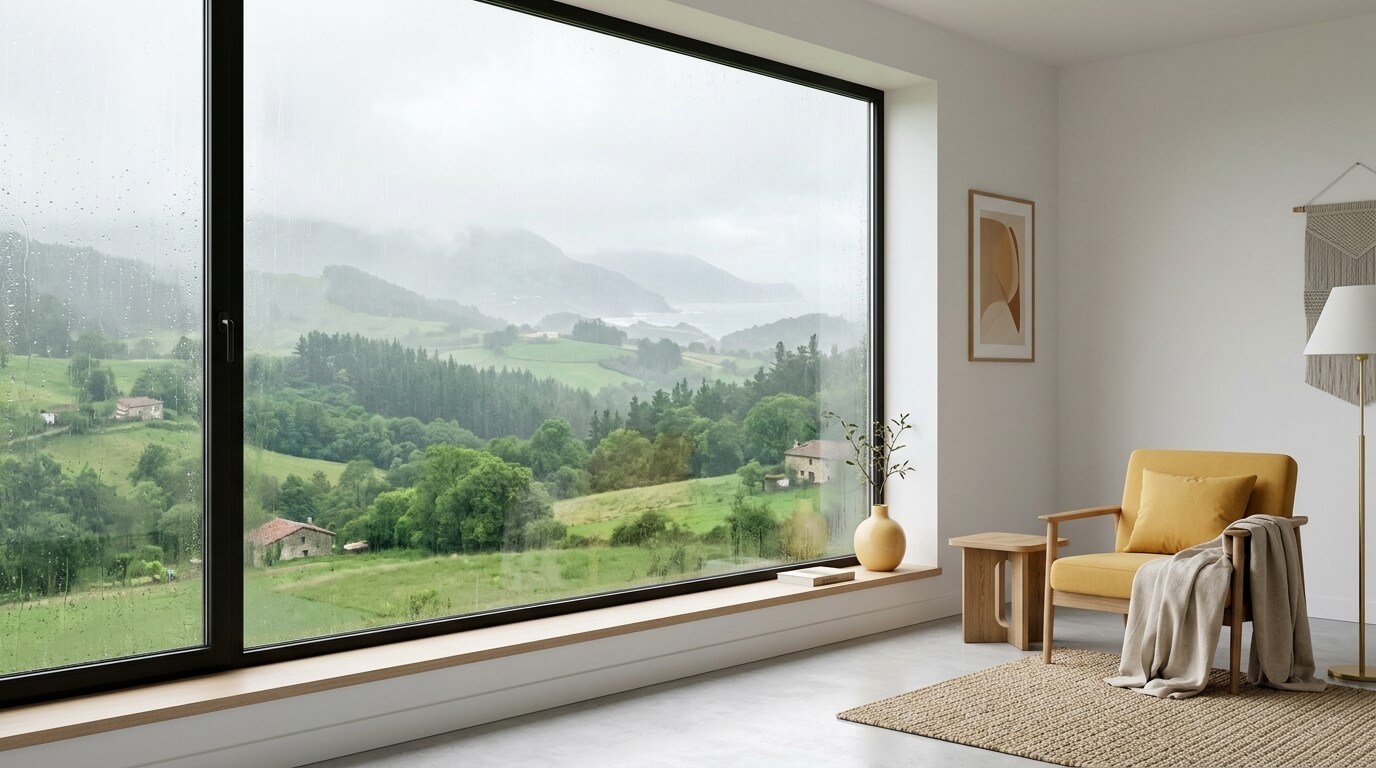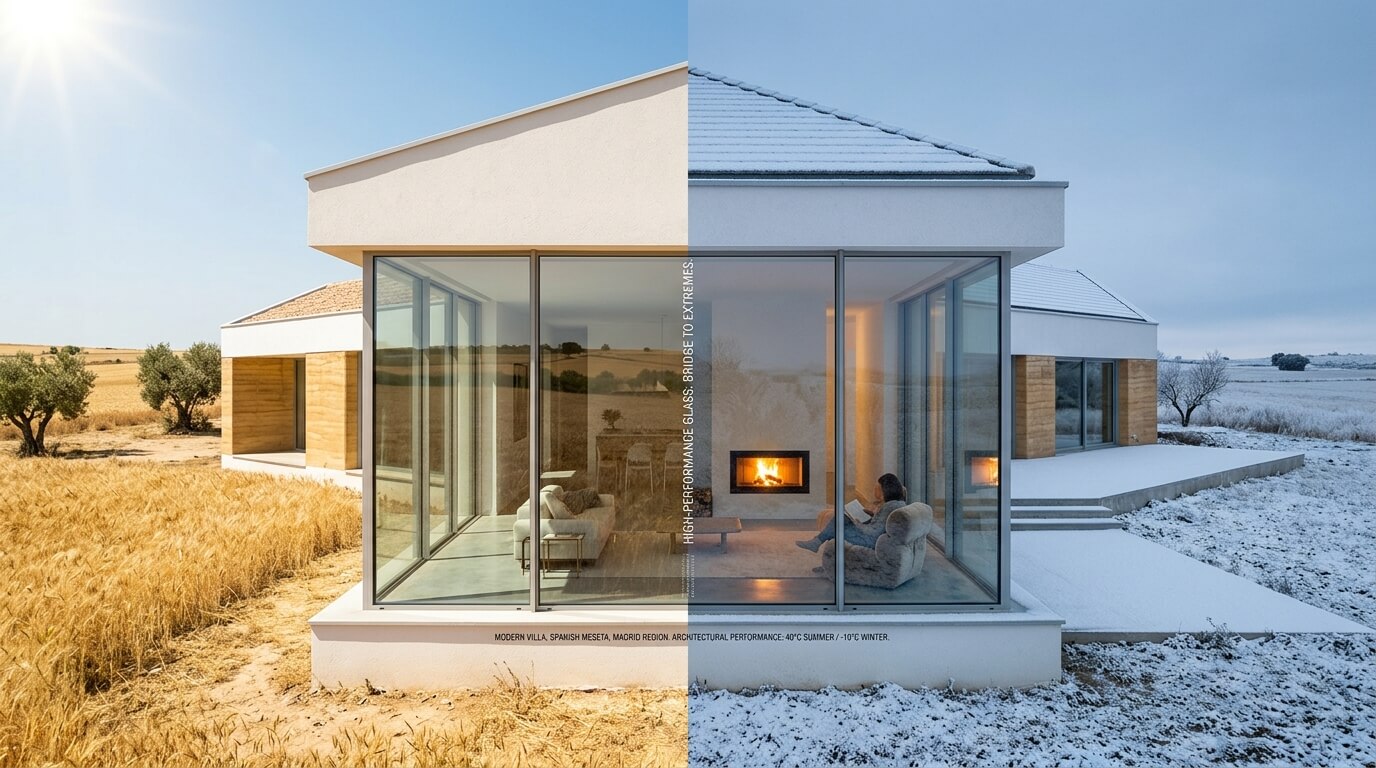
The great interior plateau of Spain — Madrid, Castilla-La Mancha, Castilla y León, inland Aragón and Extremadura — has a continental climate of extremes. The old saying about Madrid, nueve meses de invierno y tres de infierno (“nine months of winter and three of hell”), captures it: scorching, dry summers and genuinely cold winters, often with large swings between hot days and cold nights. That dual demand makes window choice harder here than anywhere on the coast, where you only really fight one season. A coastal window optimised for keeping heat out will be cold in a Madrid January; a northern window optimised for cold will cook you in July. This guide is about getting both right.
Because the balance shifts across the interior — and with each room’s orientation — Estimia lets you request and compare quotes from verified window companies in your province, so you weigh the two-season trade-off with installers who understand a continental climate.
The continental problem in one sentence
On the coast you optimise for one season; inland you must insulate against a cold winter and block solar heat in a fierce summer with the same window. Every recommendation below is about serving both without compromising either.
You need good insulation AND good solar control
Most of inland Spain sits in CTE winter climate zones C and D (parts of the higher interior reach E). That means the building code demands real insulation — a window Uw of 1.8–2.1 W/m²·K maximum, and you should aim below it:
- Double glazing with argon + low-e: Uw ≈ 1.1–1.4 is the sensible inland baseline for winter.
- Triple glazing is worth considering in the colder zone-D/E parts of the interior, though on the coast it would be wasted — see How to Choose Triple-Glazed Windows.
But unlike the cold north, you also face a brutal summer, so you cannot ignore the g-value (solar heat let in). The winning inland specification does both jobs at once: a low-e, argon, solar-control double-glazed unit that insulates well in winter and rejects solar heat in summer. Our guides Energy-Efficient Windows in Winter and How to Stop Your Home Overheating in Summer cover each side.
Orientation is the key to the two-season puzzle
The clever move inland is to vary the glass by orientation so it works with the seasons rather than against them:
- South-facing glass: the summer sun is high (easily shaded by an overhang or persiana) while the winter sun is low and welcome. Use a moderate g-value and rely on external shading for summer — you get free winter warmth and a cool summer.
- West-facing glass: the worst for summer overheating — low, intense afternoon sun straight onto the pane. Here prioritise a low g-value solar-control unit.
- East-facing glass: morning sun; solar control useful but less critical.
- North-facing glass: little direct sun — lead with insulation (low Uw); a higher g-value is fine.
Specifying the right glass per orientation is one of the things worth making explicit on a quote.
External shading: your summer ally, your winter friend
Inland summers reward external shading — and the interior already has the perfect tool in the persiana (external roller shutter), near-universal on the meseta. Lowered on a 40°C afternoon, persianas block almost all solar gain; raised on a bright winter day, they let the low sun warm the room. Toldos, brise-soleil and overhangs sized for high summer sun do the same job architecturally. External shading is the single most effective anti-overheating measure — see Sun-Protection Technologies for Windows.
Airtightness for big temperature swings
The continental interior has cold, sometimes windy winters, so airtightness matters as much as the glass:
- Air permeability Class 4 (EN 12207) — the best class, so winter draughts don’t undo the insulation.
- Good seals also help in summer, keeping the cooled air in when the AC runs.
A tilt-and-turn (oscilobatiente) window earns its place inland: closed and sealed for the cold and the heat, tilted for secure night ventilation to flush out summer heat with cool night air. See Tilt-and-Turn Windows.
Frames for a continental climate
- High-chamber PVC is an excellent value insulator and very common across the interior.
- Thermal-break aluminium works well too, provided the thermal break is generous — without it the frame is a winter cold bridge.
- A summer caution: dark frames absorb heat in the strong inland sun. Dark PVC needs a premium UV-stabilised foil; aluminium holds dark colours better. See PVC or Aluminium Windows.
Condensation: a winter symptom inland
Cold interior winters plus a tightly sealed modern home can produce condensation if humidity isn’t managed. Efficient windows keep the inner glass warm, but you still need deliberate ventilation (trickle vents or controlled airing) so trapped moisture doesn’t condense on the coldest surface. See Condensation on Windows.
What to specify for an inland home — checklist
- Low-e, argon, solar-control double glazing — insulates in winter and blocks summer heat (the inland sweet spot).
- Whole-window Uw ≤ 1.4; consider triple glazing in the colder zone-D/E interior.
- g-value tuned to orientation — capture south winter sun, block the west summer sun.
- External shading (persianas, toldos, overhangs) for the summer.
- Air permeability Class 4 for cold, windy winters.
- Insulating frames (high-chamber PVC or wide-thermal-break aluminium); UV-stable finishes for dark colours.
- Secure night ventilation (tilt-and-turn) to flush summer heat.
Conclusion
Inland Spain is the hardest brief in the country because you must beat two opposite seasons with one window. The answer is a solar-control, low-e, argon double-glazed unit in an insulating frame, glass tuned to each orientation, external shading for the summer and Class 4 airtightness for the winter — with triple glazing reserved for the coldest interior. Get several like-for-like quotes from verified companies on Estimia — every one is vetted before it can contact you — so you are comparing installers who genuinely understand a continental climate of extremes, not a one-season coast.