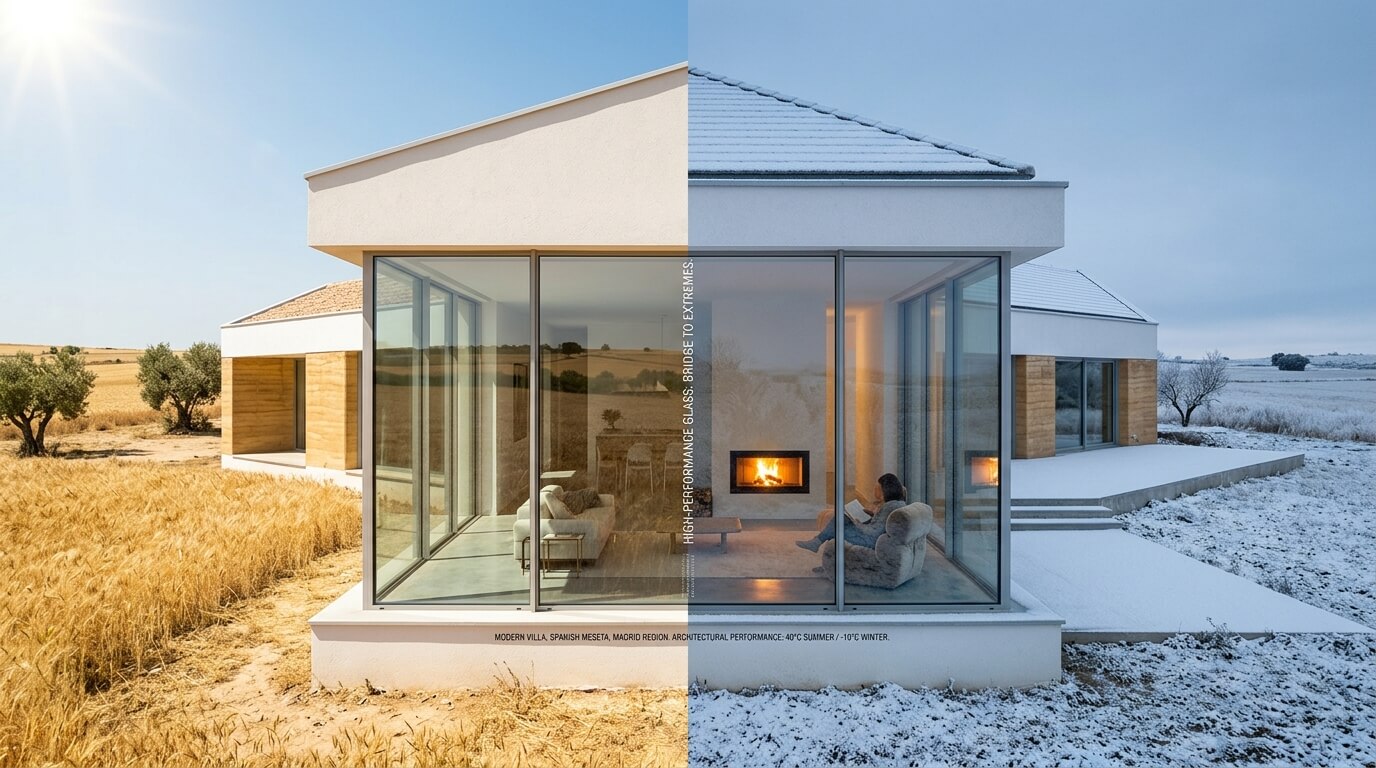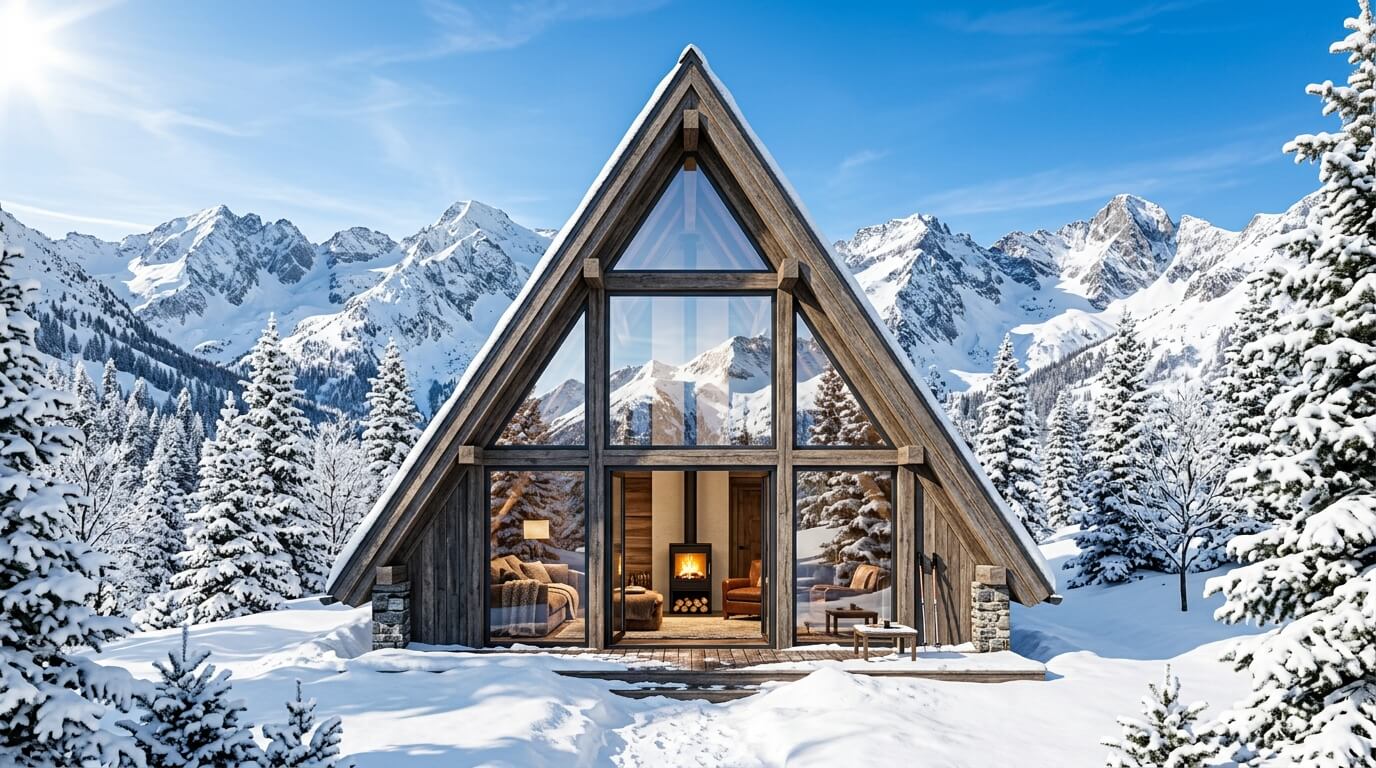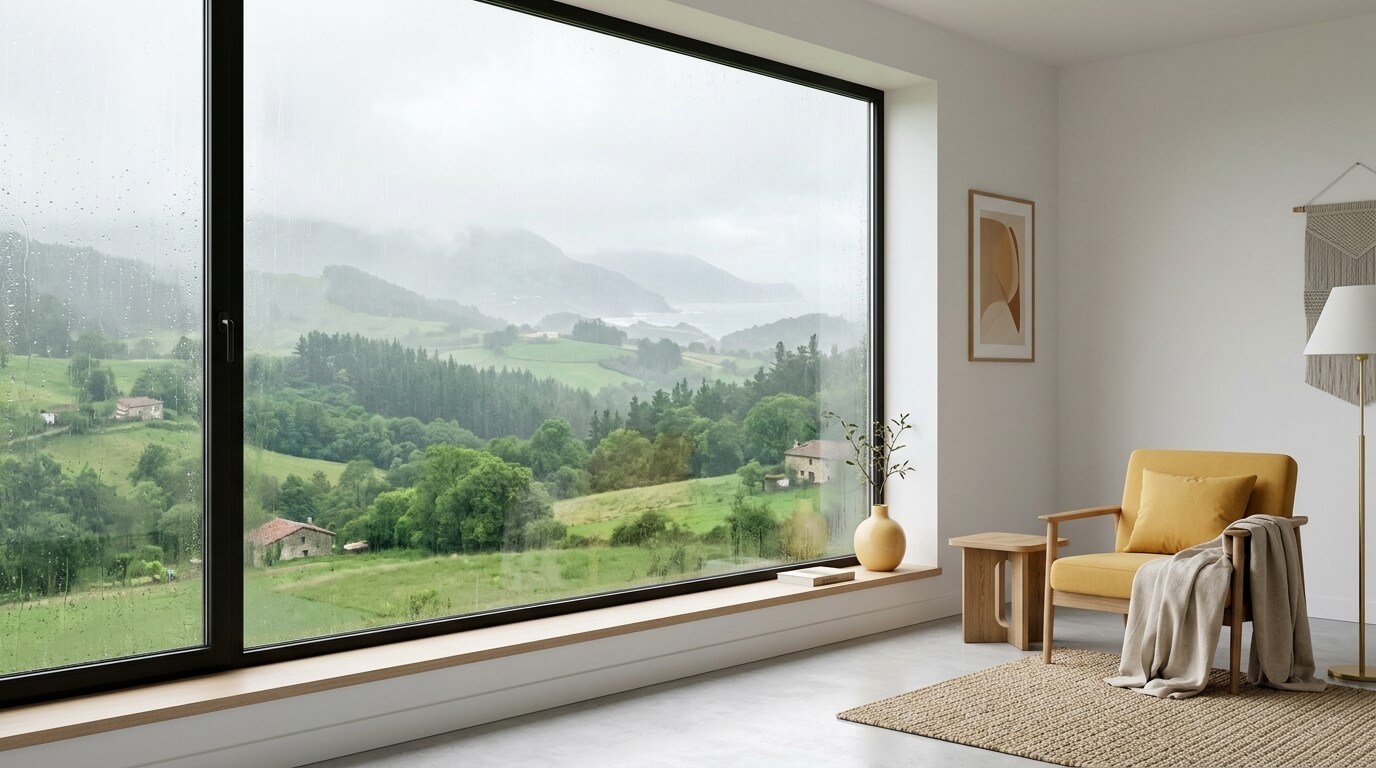
The “other Spain” — Galicia, Asturias, Cantabria, the Basque Country and the green strip along the Atlantic and Cantabrian coast — has almost nothing in common, climatically, with the sun-baked Mediterranean. Here the rain is frequent, the humidity is high, the winters are properly cold and damp, and the Atlantic throws wind and driving rain at the façade for much of the year. The windows that suit a flat in Alicante are simply the wrong tool for a house in A Coruña, Gijón or Bilbao.
In the north the brief is the reverse of the coast: you are designing windows to keep heat in, keep water and wind out, and stop condensation and mould before they start. This guide is the 2026 reference for exactly that. We cover the priorities that matter in a cool, wet, humid climate — low Uw thermal insulation, watertightness and wind resistance, condensation control, ventilation and material choice in damp conditions — with region-specific notes for the España verde. Because exposure varies enormously between a sheltered inland valley and a wind-blasted Atlantic clifftop, Estimia lets you compare quotes from verified companies that already build for the northern climate, not installers used to the dry south.
Priority one: a low Uw value
In the north, thermal insulation is the headline number, and it is captured by the Uw value — the whole-window thermal transmittance in W/m²K. Lower is better: it means less heat escaping, lower heating bills and warmer internal glass surfaces (which, as we’ll see, is also the key to controlling condensation).
Realistic targets for a northern home in 2026:
| Window type | Typical Uw (W/m²K) | Verdict for the north |
|---|---|---|
| Old single-glazed aluminium, no thermal break | 5.0+ | Disaster — heat haemorrhage and condensation |
| Basic double glazing, modern frame | ~1.8–2.4 | Acceptable minimum, not ideal |
| Quality PVC, double glazing, low-E | ~1.0–1.4 | The northern sweet spot for most homes |
| Premium PVC/composite, triple glazing | ~0.7–0.9 | Worth it for exposed, high-altitude or Passive-style homes |
Unlike the Mediterranean coast — where the g-value (solar gain) dominates and triple glazing is usually overkill — the north is one of the few parts of Spain where triple glazing genuinely earns its place, particularly inland in the colder, higher parts of Galicia, Asturias and Álava, or in homes aiming at very low energy use. On the milder coastal strip, a good double-glazed, low-E unit with a warm-edge spacer is often the better value choice.
Pair the glazing with a low-emissivity (bajo emisivo) coating that keeps radiant heat inside, and ideally an argon-filled cavity and a warm-edge spacer — that last detail also pushes up the temperature of the glass edge, where condensation otherwise loves to form.
Priority two: watertightness and wind resistance
The Atlantic and Cantabrian coasts get driving, wind-blown rain — water pushed horizontally against the façade under pressure. A window that is merely “weather resistant” on paper can still leak at the corners and along the seal in a real Galician temporal. Here the relevant European ratings matter, and you should ask for them by name:
- Watertightness — EN 12208. Classes run from 1A up to 9A (and beyond, to “Exxx” for extreme exposure). The higher the class, the more wind-driven water pressure the window keeps out. For an exposed northern façade, aim high — a low watertightness class is a false economy when the rain arrives sideways.
- Wind resistance — EN 12210. Classes (e.g. A1–C5) describe how much wind load the window withstands without excessive deflection. Exposed coastal and elevated homes need a higher class.
- Air permeability — EN 12207. Classes up to Class 4 describe how airtight the closed window is. Better air-tightness means fewer draughts, less heat loss and less wind-driven water finding its way in.
These three ratings are interlinked and they are exactly what separates a window built for the south from one built for an Atlantic storm. Our companion guide on wind loads in coastal areas goes deeper into what each class means and how profile reinforcement, glazing thickness and anchoring deliver them — well worth reading if your home is exposed.
Priority three: condensation control and mould prevention
This is the issue northern homeowners feel most directly. Condensation forms when warm, humid indoor air meets a cold surface — and in a damp climate with poor windows, that surface is the inside of the glass and the frame. Left unchecked it leads to mould (moho) around the reveals, peeling paint and a musty house.
The two-part fix:
- Warmer internal surfaces. A low Uw window with warm-edge spacers keeps the inner glass and frame temperature higher, so the air near it stays above its dew point and water never condenses. This is one of the most under-appreciated reasons to invest in better glazing in the north: it is not only about heat bills, it is about a dry, mould-free home.
- Controlled ventilation to remove the moisture. Better windows are more airtight, which is good for heat — but a sealed home with no air exchange traps humidity from cooking, showering and breathing. The answer is deliberate, controlled ventilation, not leaky windows:
- Trickle vents (microventilación) built into the frame, or a tilt position (oscilobatiente) for secure background airing.
- In the highest-performance retrofits, mechanical ventilation with heat recovery (MVHR), which exhausts damp air while reclaiming the heat — increasingly relevant under Spain’s tightening CTE energy requirements.
The principle to remember: insulate and seal the windows, then ventilate on purpose. Doing one without the other is how damp problems start.
Priority four: the right material for a damp climate
Material choice matters more in the wet north than almost anywhere else in Spain.
- PVC is the strong default. It does not corrode, does not rot, is unaffected by constant damp, insulates excellently and is low-maintenance — ideal for a rainy climate, and usually the best value at roughly €280–€480/m² installed.
- Thermal-break aluminium is durable and handles big openings, but plain aluminium with no thermal break is the worst possible choice in the north: it conducts cold straight through and streams with condensation on a damp winter morning. Only specify aluminium with a proper thermal break, and expect to pay more for a Uw that PVC reaches more cheaply.
- Wood is traditional and beautiful in northern casas and historic centres, but in a high-humidity, high-rainfall climate it demands real, ongoing maintenance to avoid rot. Wood-aluminium composite — warm timber inside, weatherproof aluminium outside — is the premium answer that sidesteps the rot problem, at a premium price.
For most northern homeowners, quality PVC is the rational core choice, with composite reserved for heritage façades or high-end projects.
Region-by-region notes
Galicia (A Coruña, Vigo, Santiago). The wettest corner of Spain, with serious wind-driven rain on the Atlantic coast and the Rías. Prioritise high EN 12208 watertightness and EN 12210 wind resistance, low Uw, and PVC for its total immunity to damp. Inland and at altitude, consider triple glazing.
Asturias and Cantabria (Oviedo, Gijón, Santander). Cool, very humid, frequent rain off the Cantabrian Sea. Condensation and mould control are the daily concern — low Uw with warm-edge spacers plus controlled ventilation is the recipe.
Basque Country (Bilbao, San Sebastián). Mild but extremely wet, with heavy rainfall. Watertightness and good ventilation are key; the urban housing stock benefits hugely from acoustic upgrades at the same time, since the better laminated glass that cuts noise also raises performance generally.
Inland north and high ground (interior Galicia, Asturian mountains, Álava, Navarra’s highlands). Colder winters tip the balance towards triple glazing and the lowest Uw you can justify, while keeping the watertightness and wind ratings high.
What to specify in the north — a checklist
- Low Uw: target ~1.0–1.4 for double-glazed coastal homes; ~0.7–0.9 with triple glazing inland/exposed.
- Low-E coating, argon fill and warm-edge spacers — for both heat and condensation control.
- High EN 12208 watertightness and EN 12210 wind resistance classes on exposed façades.
- Good EN 12207 air permeability (Class 3–4) to stop draughts and wind-driven water.
- Controlled ventilation: trickle vents, tilt-and-turn, or MVHR in high-performance retrofits.
- PVC as the default material; thermal-break aluminium or composite only where their strengths are needed — never plain aluminium.
Conclusion
The green north demands the opposite specification to the Mediterranean coast: keep heat in, keep water and wind out, and engineer against condensation. That means leading with a low Uw value, insisting on high watertightness, wind-resistance and air-permeability classes, controlling humidity with deliberate ventilation, and choosing damp-proof materials — with PVC the sensible core and triple glazing genuinely worthwhile inland. The exact balance shifts from a Bilbao flat to a Galician clifftop, which is precisely why comparable, expert quotes are worth more here than a single opinion.
Compare verified northern-Spain window companies on Estimia and get several like-for-like quotes side by side — every company is vetted before it can receive your enquiry, so you are comparing installers who understand Atlantic rain, wind and damp, not just whoever turns up first.