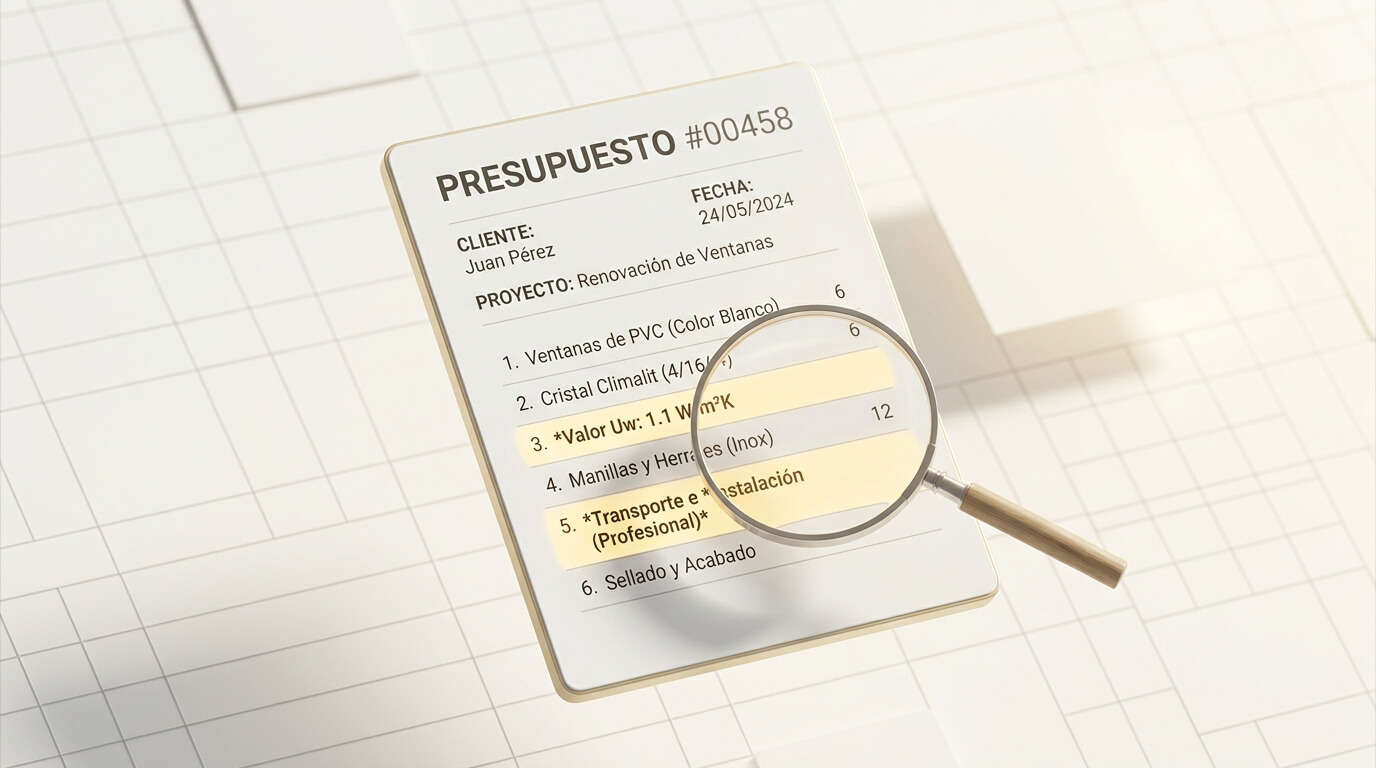
You did everything right. You asked three companies for a presupuesto to replace your windows, and now three documents are sitting on your kitchen table — €7,800, €6,400 and €4,300. The cheapest is 45% below the dearest. Which one wins?
The honest answer is: you can’t tell yet. Not from the totals. A window quote is only meaningful once you know what is inside it, and in Spain the same word — “ventana de PVC” — can describe a budget two-chamber profile with bargain glass or a premium seven-chamber frame with acoustic laminated panes. The price gap is often not a discount at all; it is two different products. This guide shows you how to read a quote properly, line by line, so you compare like with like and stop the cheap-looking quote from costing you the most.
First, understand what a quote really is
A presupuesto is a description of a job dressed up as a number. Your task when comparing is to reverse that: ignore the total at first, and reconstruct the job each company is actually promising. Only when two jobs are identical does comparing their prices mean anything. Estimia is built around this principle — when you request quotes through the platform they are structured around the same specification, so the comparison is honest from the start. But whether your quotes come through Estimia or arrive in your inbox, the checklist below is what separates a real comparison from a guess.
The line items that must appear
A trustworthy quote is itemised, not a single lump sum. Insist on seeing each of these spelled out:
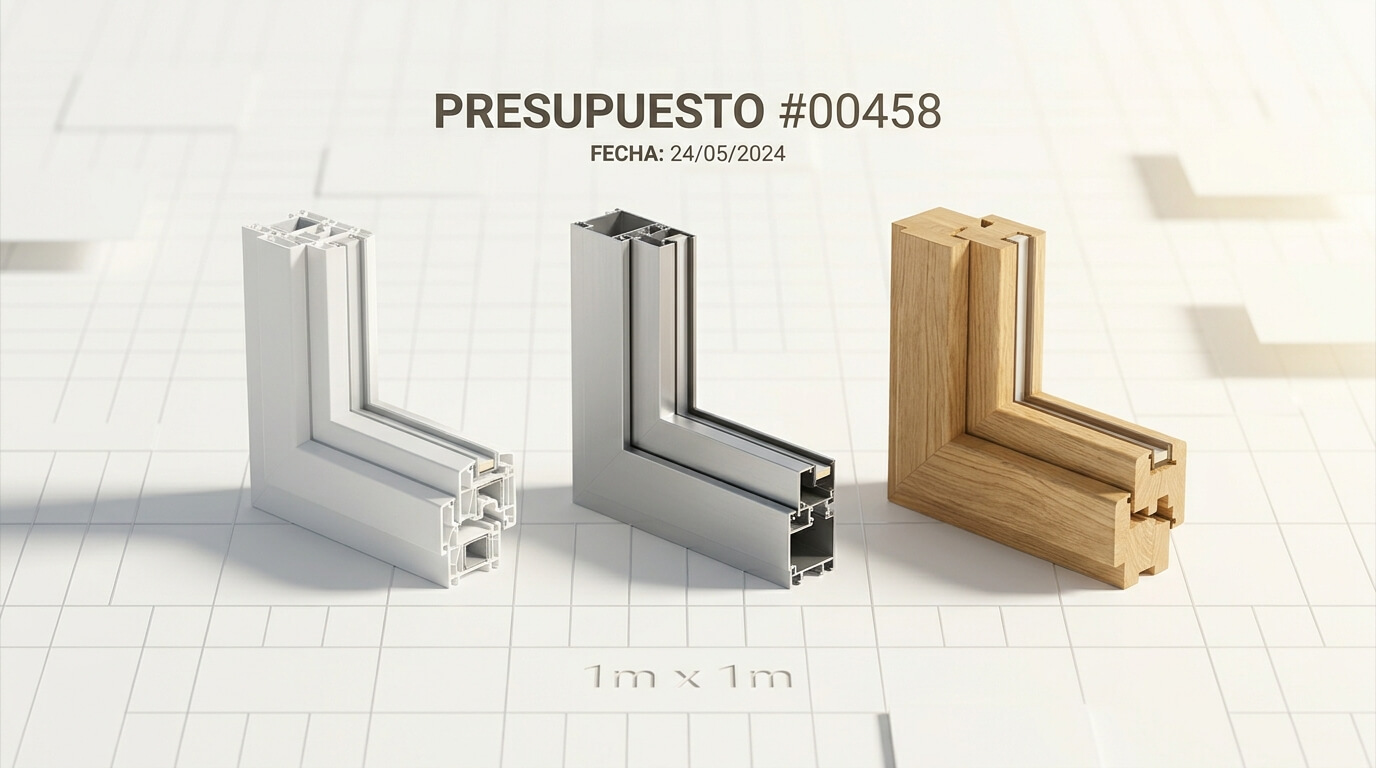
- Frame material and system/series — e.g. “PVC, 70 mm, 5 chambers” or “aluminium with thermal break, [series name]”. A vague “PVC de calidad” tells you nothing.
- Number of chambers in the profile — more chambers generally means better insulation.
- Glazing make-up — written as something like
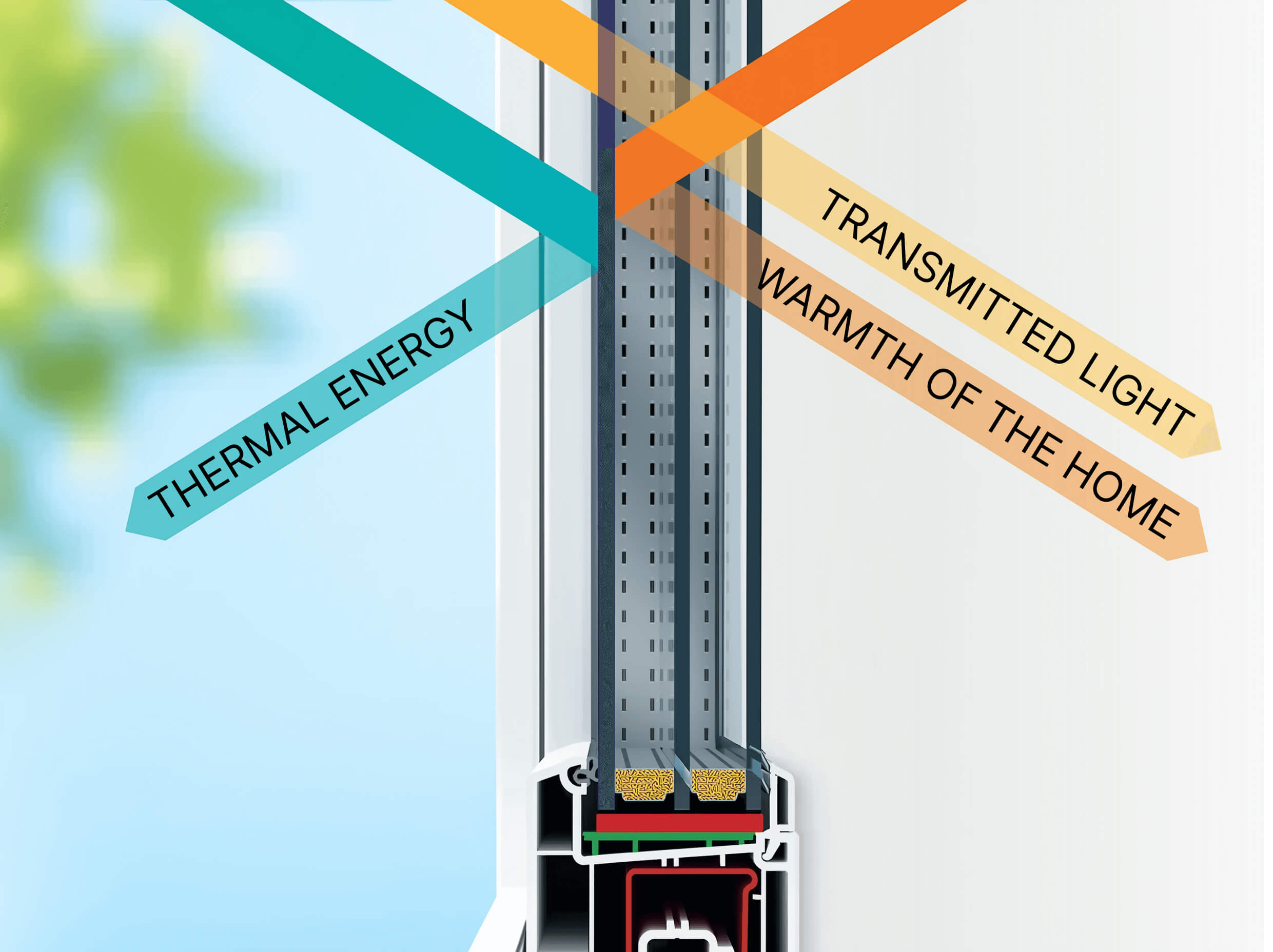
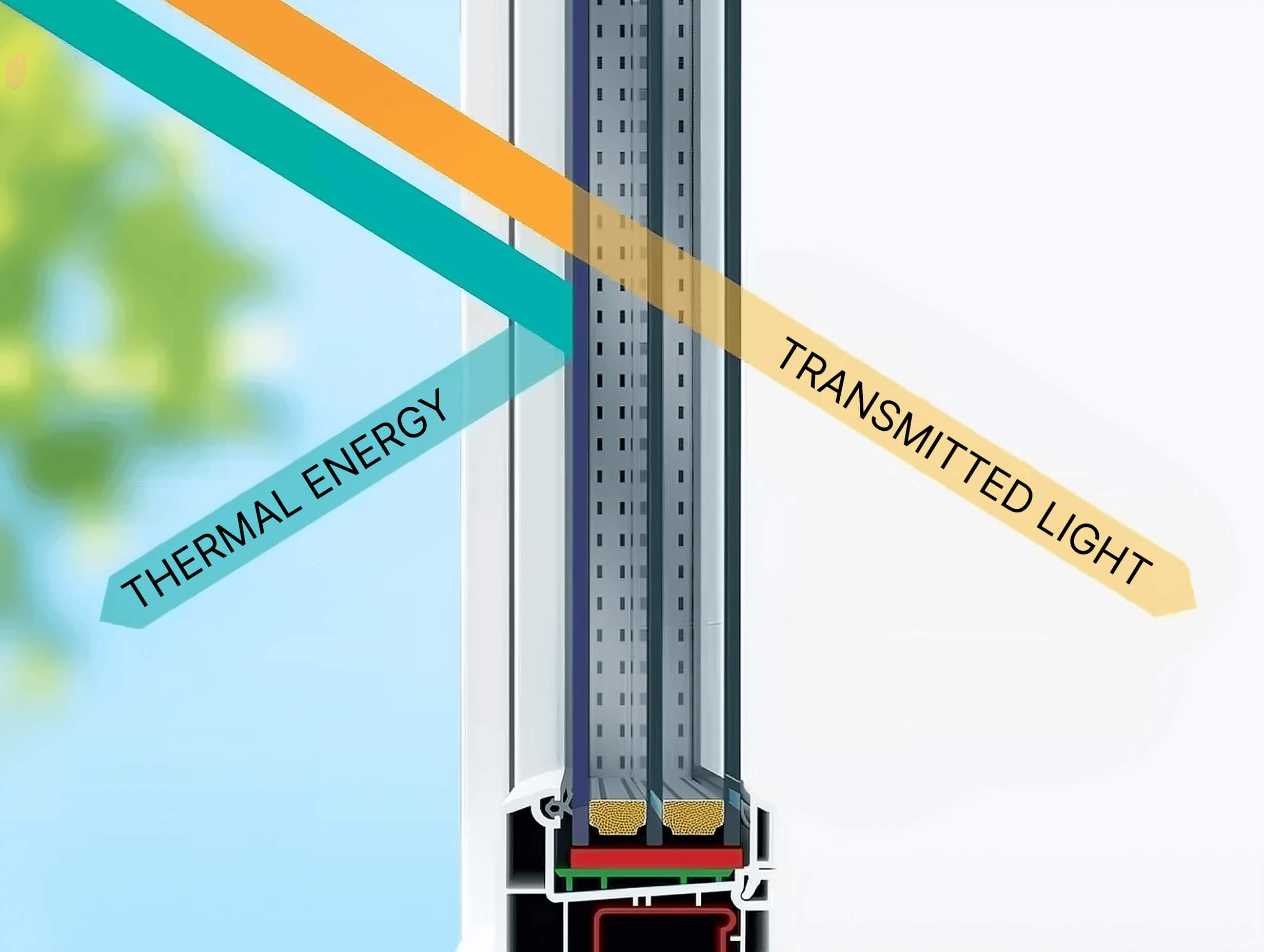
4/16/4(pane / air-or-gas gap / pane), plus whether the cavity is argon-filled, and whether the glass is low-emissivity (bajo emisivo), solar-control, laminated or acoustic. - The Uw value — the whole-window thermal transmittance in W/m²K. This is the single number that lets you compare insulation across brands. Lower is better; modern PVC sits around 1.0–1.3.
- Acoustic rating in dB if noise is a concern.
- Opening types per window — fixed, tilt-and-turn (oscilobatiente), sliding, lift-and-slide.
- Quantity and dimensions of each opening.
- Installation included — and which kind (see below).
- Removal and disposal of the old windows and rubble (escombros).
- Persianas, mosquiteras, reveals (mochetas) — included or not.
- Warranty terms — separately for the product and for the installation.
- IVA — stated, and at which rate.
- Lead time and payment schedule.
If a quote is a single line — “Suministro e instalación de ventanas: €6,400” — it is not comparable to anything. Send it back and ask for the breakdown.
Apples to apples: what must match before you compare
Two quotes can only be set against each other once these match. This is the heart of the whole exercise.
1. Same frame and profile class
PVC against PVC, with a similar number of chambers; thermal-break aluminium against thermal-break aluminium. Comparing a five-chamber PVC quote to a budget aluminium quote is meaningless even if both say “windows”.
2. Same glazing specification
A quote with standard double glazing will always undercut one with low-E + acoustic laminated glass. That is not a better deal — it is a lesser product. Match the glass make-up, the coatings and the gas fill.
3. Same Uw value (within reason)
If one quote promises Uw 1.1 and another Uw 1.6 for the “same” window, they are not the same window. The Uw is the great equaliser across brands and sales pitches — make companies state it in writing.
4. Installation included, and the same method
This is where quotes diverge most. Ask explicitly:
- Is fitting included or quoted separately?
- Is it a proper replacement (old frame removed, reveal re-rendered and sealed) or a cheaper fit-over-the-existing-frame job? The second is faster and cheaper and far more likely to leak or lose heat at the edges.
- Who actually does the work — the company’s own crew or a subcontractor?
5. Removal, disposal and the “extras”
Confirm the old windows are taken away, the rubble is removed, and persianas/mosquiteras/reveals are handled. These “small” items, left out of a headline price and added later, are a classic way to make a quote look cheaper than it is.
6. IVA, on the same basis
Make sure every quote includes IVA at the same rate — comparing a price con IVA against one sin IVA hands an automatic ~10–21% illusion of savings to the second.
Red flags in cheap quotes
A quote that is dramatically below the others is sending you a message. Look for:
- A single lump sum with no itemisation.
- No Uw value, no glazing make-up, no profile series — vagueness that hides downgrades.
- Aluminium without a thermal break sold for habitable rooms.
- “Installation not included” in the small print, or fit-over-frame masquerading as replacement.
- IVA excluded from the headline figure.
- No written installation warranty, or a product warranty quietly substituted for one.
- Large up-front deposits (well over the customary 40–50%) before any work begins.
- No company insurance, no CIF on the document, no fixed address.
None of these automatically means fraud — but each one means the cheap number is buying you less than the others, and the difference will surface later as condensation, draughts, leaks or a contractor who can’t be found.
The questions to ask every company
Before you sign anything, get answers in writing to:
- What is the Uw value of the exact window you are quoting?
- What is the glazing make-up and is it low-E / acoustic / solar-control?
- Does the price include installation, and is it removal-and-replace or fit-over-frame?
- Do your own employees install, or subcontractors?
- Is there a written installation warranty, and for how many years?
- Are you insured, and will you provide the policy details?
- Does the price include removal and disposal of the old windows and rubble?
- Is IVA included, and at what rate?
- What is the lead time and the payment schedule?
A company that answers these clearly and in writing is showing you exactly the transparency you are paying for. One that gets evasive is answering the question in a different way.
How Estimia makes the comparison honest
The reason quotes are so hard to compare in the wild is that nobody fills them in the same way. Estimia removes that friction. When you request quotes through the platform, they come back structured around the same specification — material, glazing, Uw, installation scope — so you are comparing genuinely comparable offers rather than reverse-engineering three different documents. And because every company on Estimia is verified before it can receive your enquiry, the red-flag checklist above is largely handled for you: uninsured operators and companies that won’t stand behind their work don’t make it onto the platform.
Conclusion
Never compare window quotes by their totals. Compare them by what they describe — same frame class, same glazing, same Uw, installation included on the same basis, removal and IVA accounted for. Do that and the “cheapest” quote often turns out to be the dearest, while the fair quote becomes obvious.
Get several like-for-like quotes from verified companies on Estimia and compare them side by side — the structure does the apples-to-apples work for you. For the numbers behind the comparison, see our €/m² window pricing guide; and before you sign, read how to choose a window company in Spain.