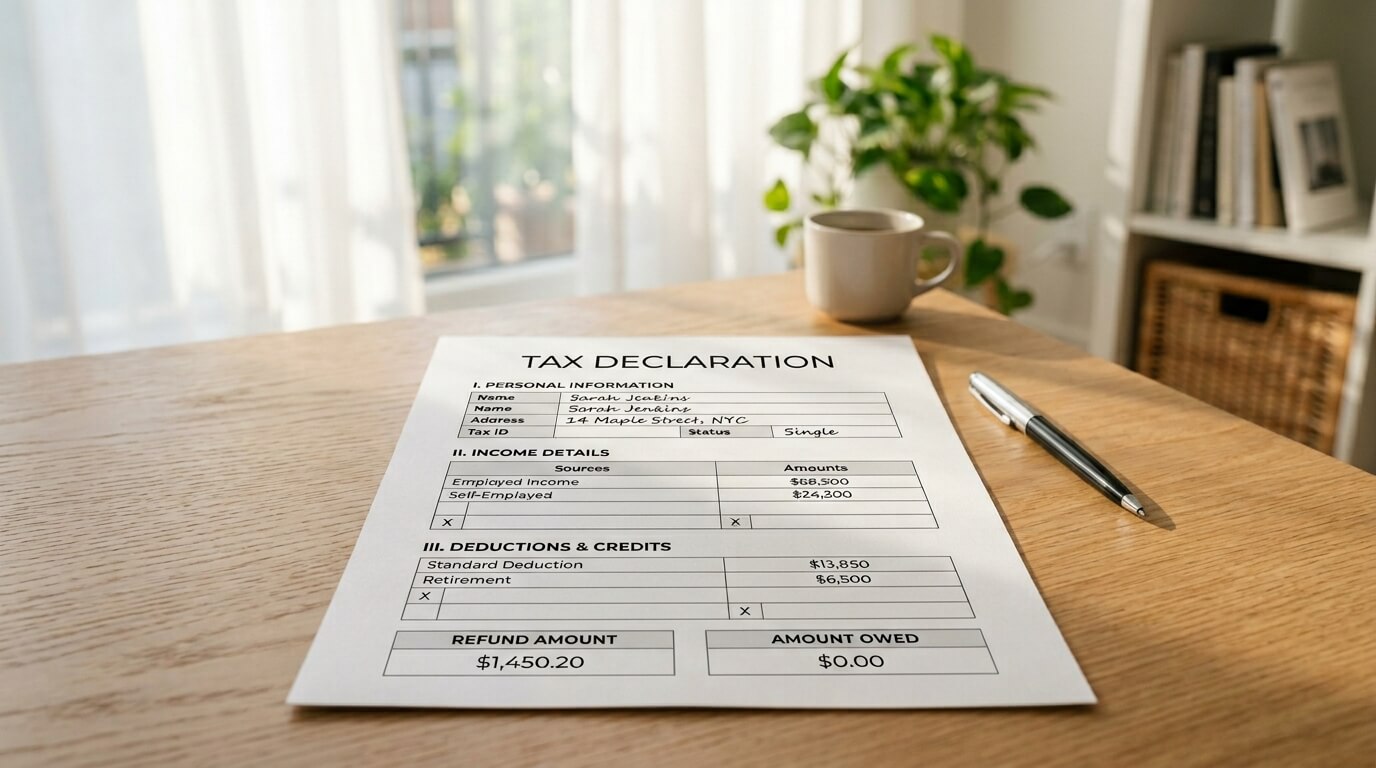
Replacing your windows is one of the few home improvements in Spain that the State will help pay for twice over. In 2026 there are two completely separate financial benefits you can claim for the same energy-efficiency works: a direct grant funded by NextGenerationEU, and a deduction on your IRPF income tax. They come from different pots, follow different rules, and — crucially — can be combined on the same project if you plan it correctly.
The catch is that both are paperwork-driven and time-limited — and the calendar shifted in 2026. The original NextGenerationEU rehabilitation aid (the Programa 4 line under Royal Decree 853/2021) had its execution and justification deadline set at 30 June 2026, not the end of the year, so its window is now closing. Stepping in behind it is the brand-new Plan Estatal de Vivienda 2026–2030 (Royal Decreto 326/2026, in force with effect from 1 January 2026), which keeps window and building-envelope grants alive — at up to 40% and €7,500 per dwelling — well beyond the NextGen cut-off. The IRPF deduction, meanwhile, has been extended to 31 December 2026. Every euro still depends on documents that must exist before and after the work, issued by an installer who can actually produce them. This guide walks through both benefits, the requirements, the step-by-step process and the errors that most often sink a claim — with realistic Spanish numbers throughout.
The two benefit sources at a glance
| NextGenerationEU direct grant | IRPF tax deduction | |
|---|---|---|
| Type | Subvención — money paid/discounted toward the works | Reduction of the income tax you owe |
| Programme | Energy rehabilitation aid, Programa 4 (improvement of the building envelope) | State IRPF deductions for energy-efficiency works in the home |
| How much | Up to 40% of the eligible cost, commonly capped around €3,000 per dwelling | 20%, 40% or 60% of the amount paid, depending on the energy improvement achieved |
| Main condition | A measurable reduction in heating/cooling demand or non-renewable primary energy | The same works, evidenced by energy certificates before and after |
| Where you claim | Your Comunidad Autónoma (each region runs its own call/convocatoria) | In your annual Declaración de la Renta |
| Deadline | Original NextGen line: works/justification by 30 June 2026. Successor Plan Estatal de Vivienda 2026–2030 runs to 2030 (regional calls vary — funds also run out, so apply early) | Works with an energy certificate issued before 1 January 2027; claimed in the corresponding tax year |
| Taxable? | The grant itself may count as income for IRPF in the year received | n/a — it reduces tax owed |
The headline to remember: the grant gives you cash off the job now; the deduction gives you money back at tax time. Done properly, a single window renovation can benefit from both.
Benefit 1 — the NextGenerationEU direct grant (Programa 4)
This is the aid most people mean when they ask about ayudas para ventanas. It sits within the Recovery, Transformation and Resilience Plan funded by NextGenerationEU, specifically the line aimed at improving the building envelope (envolvente térmica) — and windows are a core part of that envelope.
What you can get. Up to 40% of the eligible cost of the works, with a typical per-dwelling cap in the region of €3,000. The exact percentage and ceiling vary by region and by how deep the energy improvement is, but for most homeowners the practical message is: expect somewhere up to about €3,000 off a qualifying window replacement.
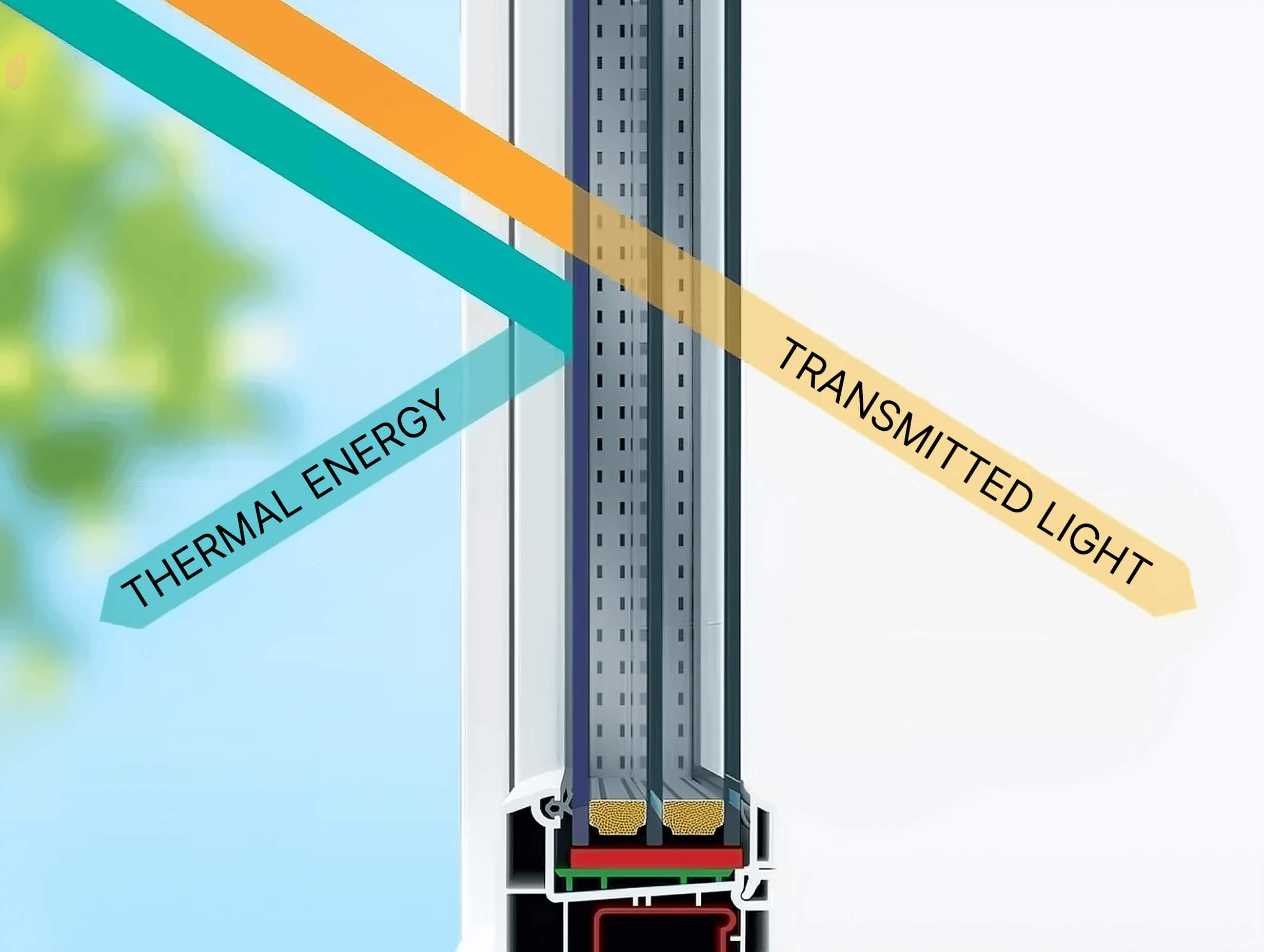
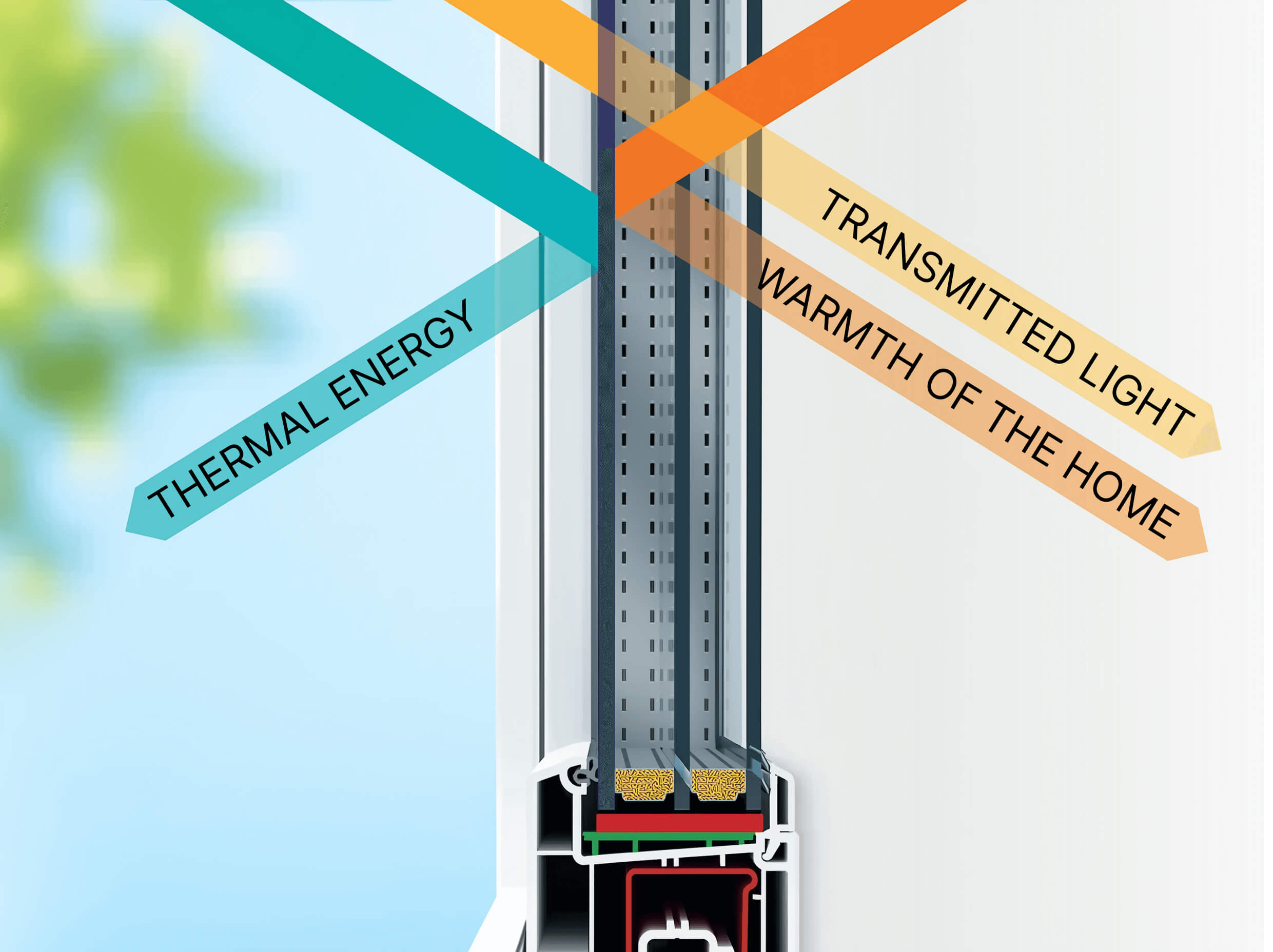
The core requirement: a real energy improvement. This is not a grant for swapping like-for-like. You generally need to demonstrate a meaningful reduction in your home’s heating and cooling demand or non-renewable primary energy consumption — the threshold often cited is in the order of a 7% reduction in demand from envelope works. New windows with a low Uw value (the whole-window U-value, in W/m²K) and good airtightness are exactly how that is achieved, especially when you move from old single-glazed aluminium with no thermal break to a modern thermally-broken or PVC frame with double or triple glazing.
Where you apply. The programme is managed regionally. Each Comunidad Autónoma (Andalucía, Comunidad Valenciana, Madrid, Cataluña, Galicia, Canarias and the rest) opens its own convocatoria with its own forms, portal and timing. Funds are finite and awarded until exhausted, so applying early in your region’s call matters as much as the deadline itself.
The 2026 hand-over: NextGen out, Plan Estatal de Vivienda 2026–2030 in. The original NextGenerationEU line had its works-and-justification deadline at 30 June 2026 (with only exceptional extensions authorised case-by-case by the Bilateral Monitoring Commission). To avoid a gap, the Government approved a new Plan Estatal de Vivienda 2026–2030 — Royal Decreto 326/2026 of 22 April, with effect from 1 January 2026 — endowed with €7 billion, of which roughly €2.1 billion is earmarked for rehabilitation. For the building envelope, including replacing windows, it grants up to 40% of the cost with a ceiling of €7,500 per dwelling; deeper whole-home energy renovations can reach €20,500 per dwelling, with extra envelopes for heritage-protected or historic-centre buildings. As with NextGen, it is rolled out through each region’s own calls — so the practical advice is unchanged: check what is open in your Comunidad Autónoma right now.
Region by region: where the grant stands in 2026
Because every Comunidad Autónoma runs its own convocatoria, the picture is a patchwork that changes through the year as budgets open, exhaust and reopen. As a mid-2026 snapshot:
| Region | Status in 2026 | Typical terms / notes |
|---|---|---|
| Galicia | NextGen efficiency line (VI406E); rural-housing rehab line open 21 Jan – 1 Sep 2026 Source: Xunta de Galicia · IGVS — Mejora de la eficiencia energética en viviendas | Up to 40%, max €3,000 per dwelling; work must not have started when you apply |
| Comunidad Valenciana | 2024–2026 NextGen call ran until 27 Feb 2026 (now closed); awaiting the new Plan Estatal rollout Source: Generalitat Valenciana · Sede electrónica — ayudas a la eficiencia energética en viviendas | Demand-reduction and thermal/acoustic comfort works via the GVA portal |
| Cataluña | NextGen building-level call closed end-2025; Barcelona adds a municipal Plan Renove complement to 30 June 2026 Source: Generalitat de Catalunya · ICAEN — ayudas a la rehabilitación de edificios residenciales | Catalan aid managed by the Agència de l’Habitatge; Barcelona top-up stacks on the state grant |
| Comunidad de Madrid | Plan Rehabilita Madrid 2026 open roughly 3 Jun – 30 Sep 2026 Source: Comunidad de Madrid — ayudas de rehabilitación energética (PRTR) | Regional PRTR aid plus the city’s own Oficina Verde rehabilitation line |
| Andalucía | Earlier call closed Dec 2024; reopened/modified in 2026 (Orden of 14 May 2026, Plan Eco Vivienda), with execution deadlines extended for existing files Source: Junta de Andalucía — Plan Eco Vivienda, convocatoria de rehabilitación energética | Concurrencia no competitiva — first come, first served while funds last |
| Murcia | NextGen efficiency line via the CARM sede; works must finish by 30 June 2026 Source: CARM · Sede electrónica — eficiencia energética en viviendas (PRTR) | Up to 40%, around €3,000 per dwelling for window/envelope works |
| Aragón | Programa 4 (PRTR) 2026 call ran 13 Jan – 3 Feb 2026 (closed); works by 30 June 2026 Source: Gobierno de Aragón — Programa 4 (PRTR) 2026, actuaciones en viviendas | Up to 40%, max €3,000 per dwelling |
Two caveats matter more than any single date in this table. First, regional calls open and close on their own schedule and can be exhausted in weeks, so always confirm the live convocatoria on your region’s official bulletin (BOJA, DOGV, DOGC, BOCM, DOG, etc.) before committing. Second, the minimum eligible spend is typically around €1,000 per actuation, and the energy-improvement threshold still applies everywhere — a cheap like-for-like swap will not qualify in any region.
Benefit 2 — the IRPF tax deduction for energy-efficiency works
Separately, the State offers a personal income-tax deduction for works that improve the energy efficiency of your home. There are three brackets, and which one you land in depends on what the works achieve:
- 20% deduction — for works that reduce heating and cooling demand by at least 7%. Base capped at €5,000 per year. This is the bracket most straightforward window replacements fall into.
- 40% deduction — for works that reduce non-renewable primary energy consumption by at least 30%, or that lift the home’s energy rating to A or B. Base capped at €7,500 per year.
- 60% deduction — for whole-building energy renovations (typically driven through a comunidad de propietarios) that reduce non-renewable primary energy consumption by at least 30% or reach rating A/B. Higher accumulated base over several years.
For a single home swapping its windows, the 20% bracket is the realistic target; the higher brackets usually require a more comprehensive renovation. The deduction applies to the amounts you actually paid (by bank transfer, card or other traceable means — not cash), and you claim it in the Declaración de la Renta for the relevant year.
The extended deadline. In December 2024 the Government prorogued these deductions, and for individual dwellings they now cover works whose energy certificate is issued before 1 January 2027 — i.e. works carried out and paid during 2026 still qualify. The whole-building (60%) bracket runs even longer. So while the direct-grant calendar tightened in mid-2026, the tax deduction stays open through the end of the year.
Crucial interaction with the grant — read this before you do the maths. The deduction base is not the full price of the job: any public subsidy you receive must be subtracted first. You only deduct on the net amount that actually left your pocket. If the windows cost €8,000 and a €3,000 NextGen/Plan Estatal grant lands, your 20% deduction is calculated on €5,000, not €8,000 — i.e. €1,000 back, not €1,600. The two benefits genuinely stack on the same project, but the grant shrinks the base the deduction is measured against; plan with that in mind rather than assuming both apply to the full invoice.
The requirements that apply to both
Whether you are chasing the grant, the deduction, or both, the same fundamentals decide whether your claim survives.
- It must be your vivienda habitual (your habitual residence) in the great majority of cases — these aids are not designed for speculative or rental upgrades, with limited exceptions.
- A demonstrable energy improvement. Both benefits hinge on measurable performance gains, which is why your installer’s choice of profile, glazing and Uw matters financially, not just for comfort.
- Energy Performance Certificate (CEE) before and after. You need a certificado de eficiencia energética issued by a qualified technician before the works and a fresh one after, registered with your regional authority. The “before” certificate is the single most-forgotten document — and without it there is nothing to measure the improvement against.
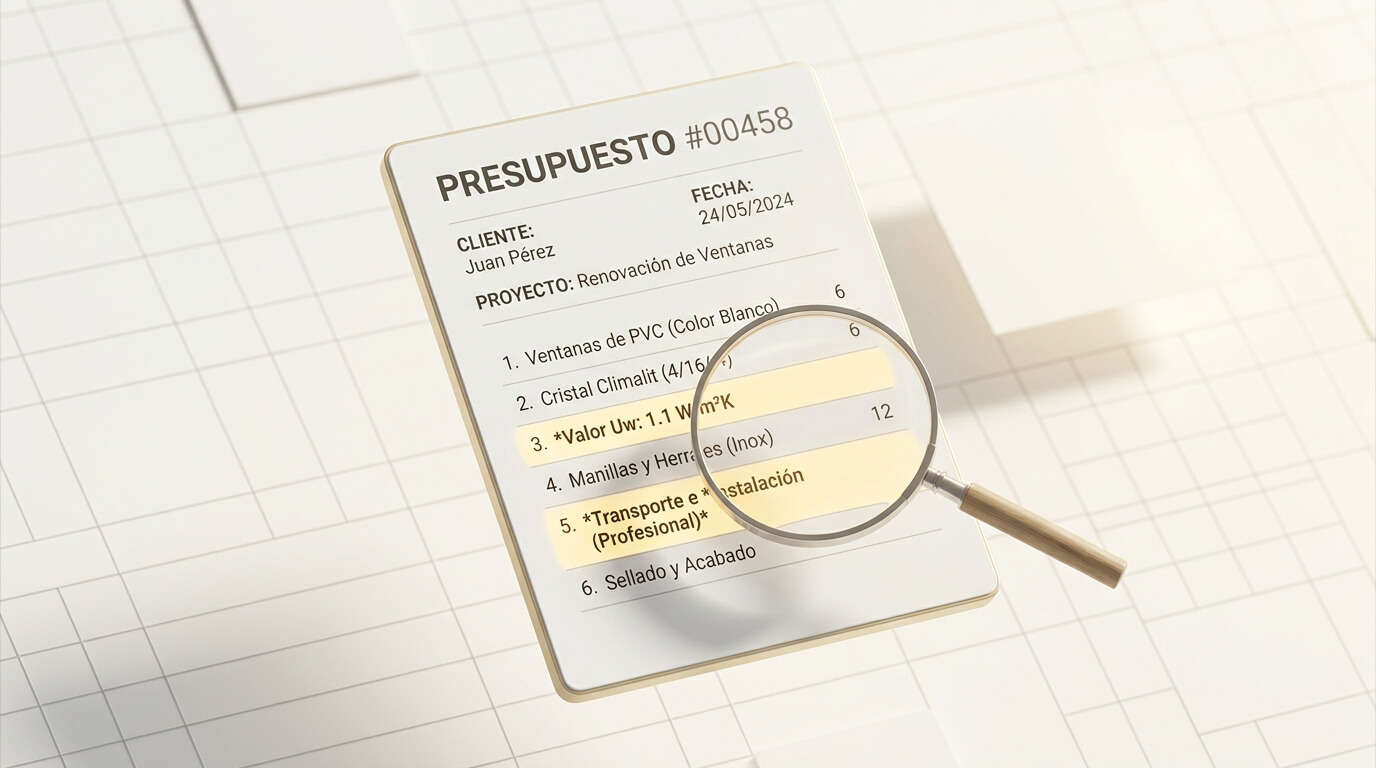
- A properly registered installer and full invoicing. The company must invoice legally, with a valid CIF, itemising the works, the products fitted and their performance. Payment must be traceable.
Step by step: how to claim without losing the money
- Get the “before” energy certificate first. Before any installer touches a window, commission the CEE. This establishes your baseline. Skip it and you forfeit both benefits, no matter how good the new windows are.
- Choose a qualifying, properly documented installer. You need a company that fits high-performance windows and reliably produces the technical and fiscal paperwork — the product datasheets, the Uw figures, the legal invoice. This is precisely where the platform helps: verified companies on Estimia are registered businesses that can supply the documentation a grant or deduction requires.
- Check your region’s open convocatoria. Confirm the grant call is open in your Comunidad Autónoma and read its specific requirements and forms before committing.
- Have the works done and pay traceably. Pay by transfer or card and keep every invoice and proof of payment.
- Get the “after” energy certificate. A new CEE documents the improvement — the percentage reduction in demand or primary energy — that justifies your bracket.
- Submit the grant application through your regional portal, attaching the certificates, invoices, technical project documentation and proof of ownership/residence.
- Claim the IRPF deduction in the corresponding annual tax return, keeping all certificates and invoices on file in case of inspection.
Common mistakes that get claims rejected
- No “before” certificate. The most frequent and most fatal error — you cannot prove improvement against a baseline that was never recorded.
- Paying in cash or using an unregistered installer. Untraceable payments and informal invoicing disqualify you from both benefits and usually from the deduction outright.
- Assuming a like-for-like swap qualifies. If the new windows do not deliver the required demand/energy reduction, neither benefit applies — the spec is what unlocks the money.
- Missing the regional deadline or the funding window. The original NextGenerationEU line closed for execution on 30 June 2026; the successor Plan Estatal de Vivienda 2026–2030 runs through its regional calls, which still open and exhaust on their own timetable. Regional funds run out fast, so latecomers get nothing.
- Double-counting the grant in your tax maths. A frequent planning error: assuming the IRPF deduction applies to the full invoice when a grant must first be subtracted from the deduction base. Budget for the net figure.
- Forgetting the grant may be taxable income. A subvención received can count toward your IRPF for that year — budget for it rather than being surprised.
- Not keeping documents for the inspection period. Tax authorities can review claims for years afterward; bin the paperwork and you risk losing the deduction retroactively.
Putting it together: a realistic example
Imagine a coastal flat in the Comunidad Valenciana replacing old single-glazed aluminium with thermally-broken frames and low-emissivity double glazing, eligible cost €8,000:
- Direct grant (NextGen line if still open, or the new Plan Estatal de Vivienda 2026–2030): up to 40%, capped near €3,000.
- IRPF deduction (20% bracket): applied to the €5,000 you actually paid after the grant (€8,000 − €3,000), so 20% × €5,000 = €1,000 back at tax time.
Net of both, an €8,000 job costs the household around €4,000 — roughly half — while permanently cutting energy bills and noise. The two benefits come from different administrations and stack on the same project; just remember the grant is deducted from the deduction base, so the second saving is calculated on the reduced figure, not the full invoice.
Conclusion
The 2026 window grants are genuinely generous, but they reward homeowners who plan: certificate first, qualifying spec, registered installer, traceable payment, and your application in while your region’s call is open. The calendar matters more than ever this year — the original NextGen line closed for execution on 30 June 2026, but the new Plan Estatal de Vivienda 2026–2030 carries window and envelope grants forward at up to 40% / €7,500 per dwelling, and the IRPF deduction stays open to the end of 2026. Get the sequence right and you can stack a direct grant with an IRPF deduction on the same job — remembering that the grant is netted off the deduction base.
The decisive link in that chain is choosing a company that can deliver both the performance and the paperwork. Compare verified window companies on Estimia, request several quotes side by side, and confirm up front that each can supply the certificates and invoicing your grant and deduction will depend on.
For the deduction side specifically — which tier you qualify for and the certificate trap that disqualifies rushed jobs — see Get Up to 40% Back: The IRPF Deduction for Energy-Efficient Windows. And for why the state is funding all this in the first place, read what the new EU energy rules really require.