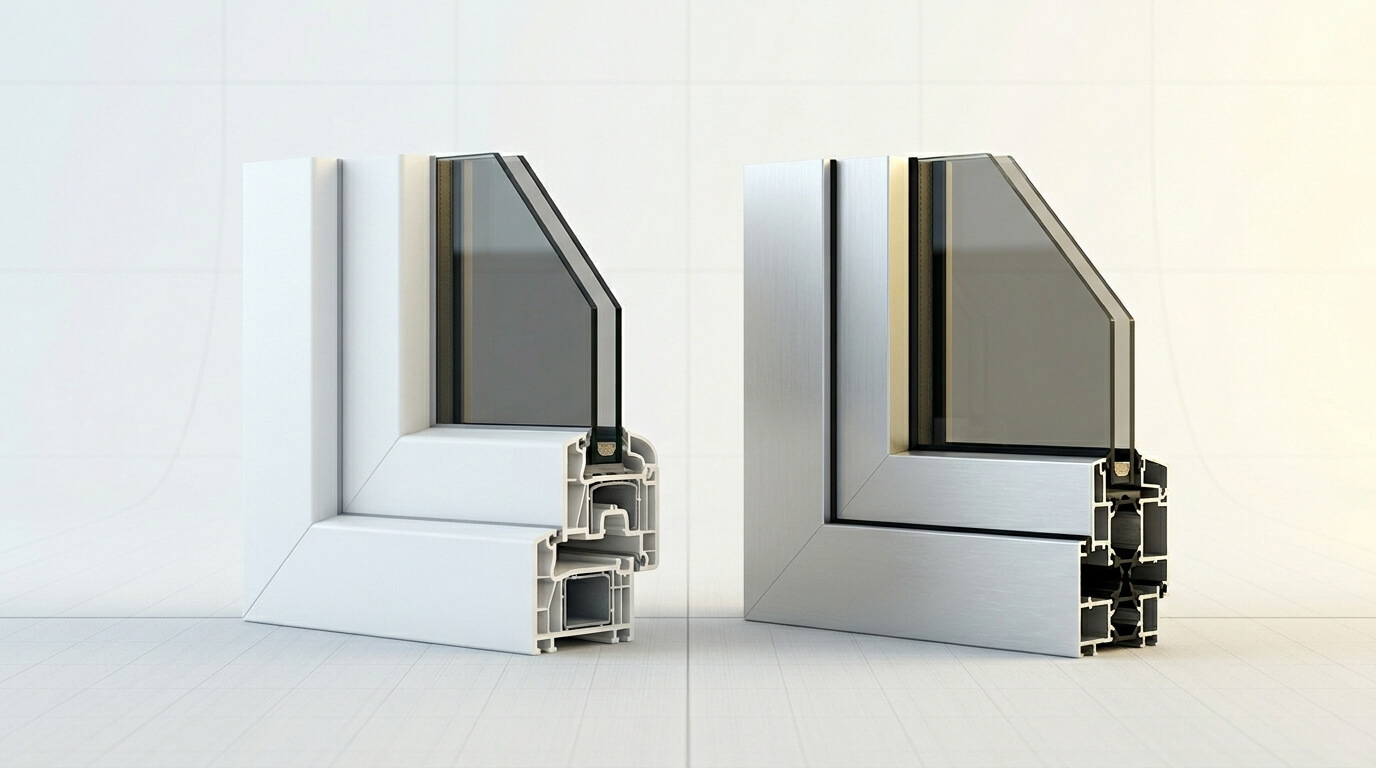
Walk into any window showroom in Spain, or open three quotes from local installers, and you will keep meeting the same fork in the road: PVC or aluminium? Both are excellent, modern frame materials. Both can hit demanding energy targets. And both are sold by companies that, understandably, tend to recommend whatever they make. That last point is exactly why it pays to compare neutrally before you commit thousands of euros to one material for the next 30 years.
This guide does the head-to-head for you — thermal performance, real €/m² ranges, how each survives salt and sun, the sizes and sightlines you can achieve, colours, maintenance and acoustics — and then gives a verdict by scenario and by Spanish region. Wood gets an honourable mention, but in practice the decision in Spain almost always comes down to these two.
The short version
If you want the headline before the detail:
- PVC usually wins on raw thermal insulation and price, and is the default sensible choice for most homes inland and in cooler northern Spain.
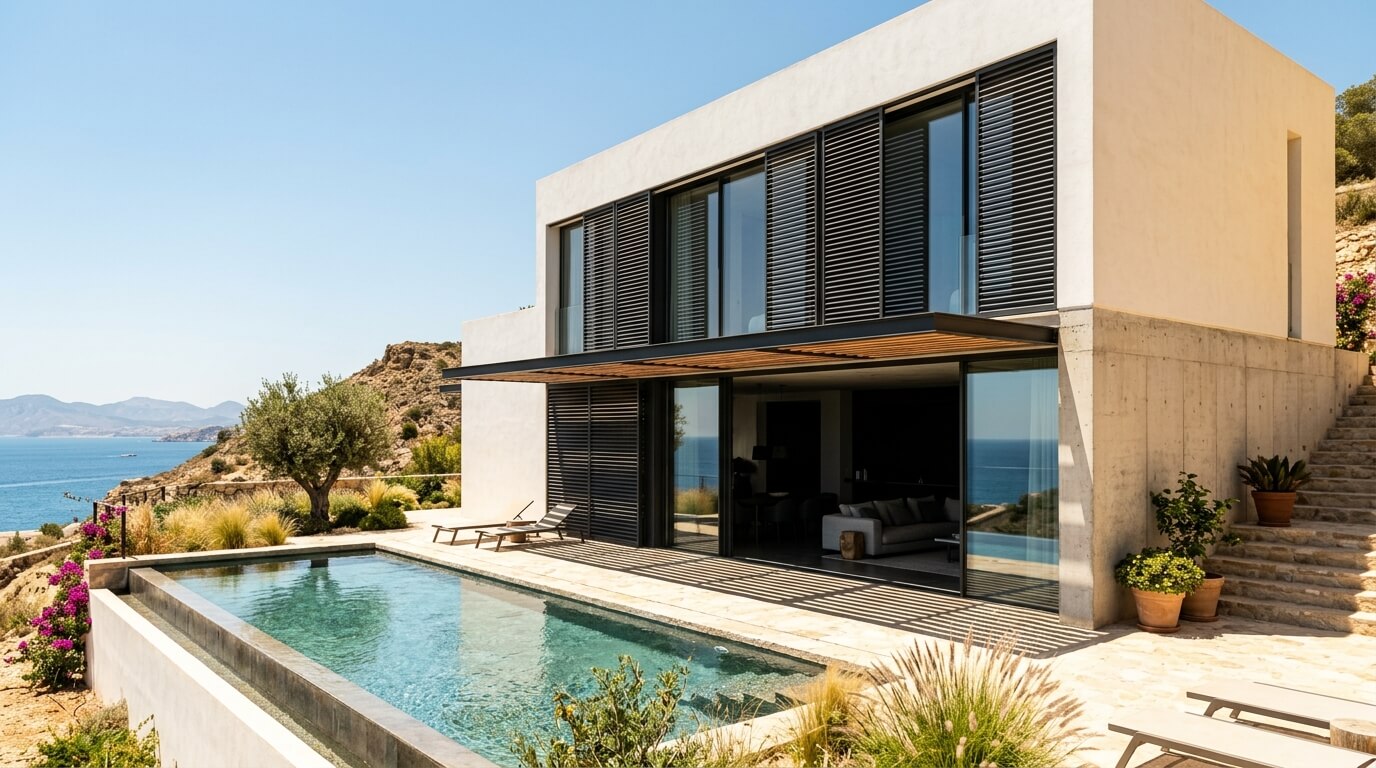
- Aluminium wins on slim sightlines, very large openings, colour/finish range and structural strength — which is why it dominates terrace sliders, big panoramic glazing and contemporary architecture, especially on the coast.
- Neither is “better” in the abstract. The better material is the one that matches your climate zone, your opening sizes, and the look you want — at a price that reflects genuine quality, not just a brand badge.
Thermal performance
This is where reputations are made. The frame’s job is to stop heat crossing it, measured as a U-value in W/m²K (lower = better insulation; see our guide on what the Uw value of a window means).
PVC is naturally a poor heat conductor. Its hollow multi-chamber profiles trap air, so a good PVC frame reaches frame U-values around 1.0–1.3 W/m²K with no special tricks. That is why PVC is the easy route to a low whole-window Uw of roughly 1.1–1.4 W/m²K when paired with decent double glazing and argon gas between the panes.
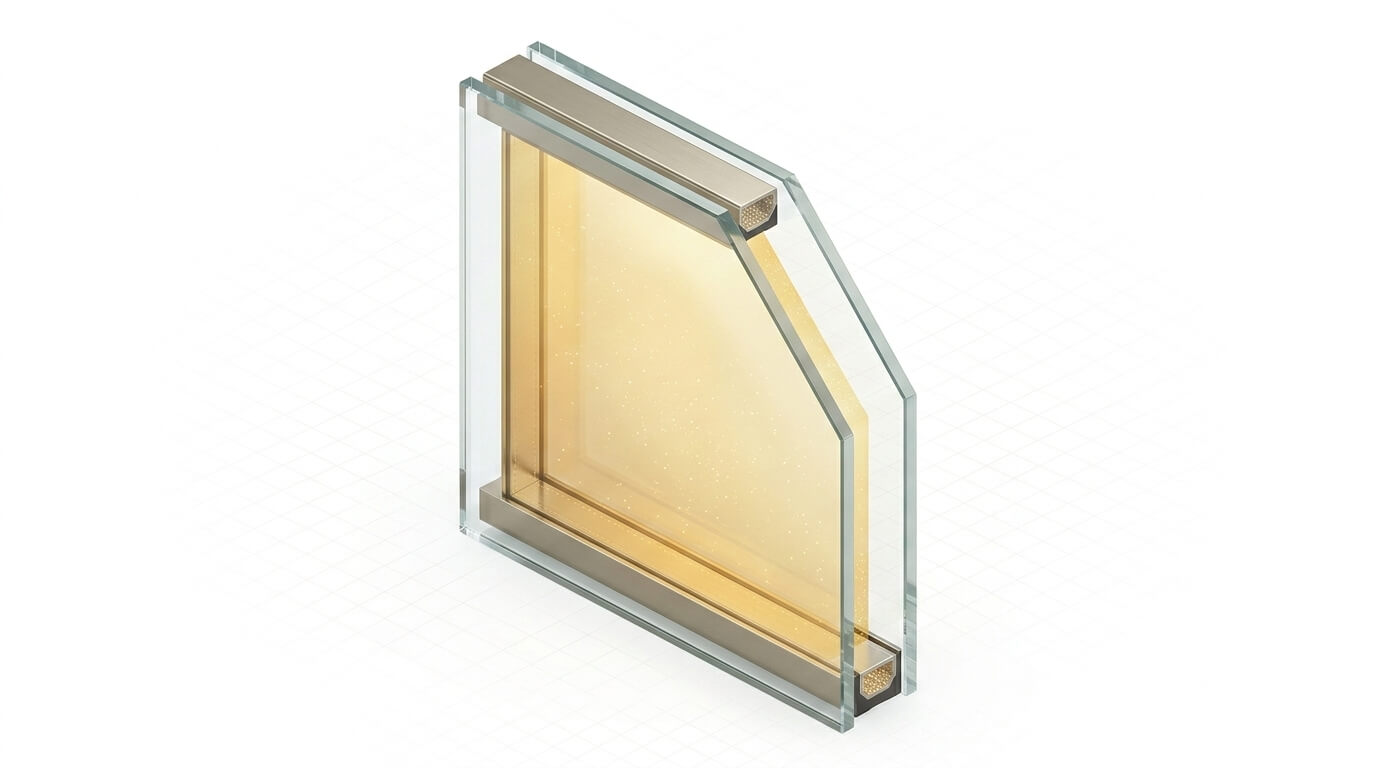
Aluminium, by contrast, is metal — it conducts heat extremely well, which is the opposite of what you want. Plain aluminium frames are thermal disasters and are effectively obsolete for habitable rooms. Modern aluminium solves this with a thermal break (rotura de puente térmico, RPT): a polyamide bar separating the inner and outer halves of the frame. Good RPT aluminium reaches frame U-values around 1.6–2.2 W/m²K — better than ever, but still behind PVC.
Verdict on heat: PVC is the more forgiving insulator. To match a PVC window’s Uw, an aluminium window generally needs a wider thermal break, better glazing, or both — which narrows the price gap.
Price per square metre
Real installed Spanish prices in 2026, supply-and-fit, for a standard tilt-and-turn window with double glazing and argon:
| Frame | Typical installed price (€/m²) | Notes |
|---|---|---|
| Standard PVC | €280–450 | Best value for insulation |
| Premium PVC (more chambers, triple seals) | €400–600 | Diminishing returns unless cold climate |
| RPT aluminium | €350–600 | Pay more for the thermal break |
| Premium / wide-chamber aluminium, large formats | €500–900+ | Big sliders, panoramic, special colours |
PVC is generally the cheaper way to buy a given energy rating. Aluminium tends to cost more for the same Uw, and the premium grows as you add colour, size and slim sightlines. These are ranges — your real number depends on size, opening type, glass spec and your installer. The cleanest way to know is to request several comparable quotes and read what is actually specified, not just the bottom line.
Durability: salt, sun and decades
Spain punishes window frames in two ways — UV from intense sun and salt from coastal air — and the two materials age differently.
- Aluminium is structurally near-immortal. It will not rot, warp or sag, and large frames stay rigid for decades. Its weak spot is salt corrosion: cheaper anodising or thin paint can pit and bubble within metres of the sea. The fix exists and is standard on good products — marine-grade powder coating (Qualicoat Seaside / clase 2) — but you must check it is specified for a beachfront home.
- PVC does not corrode at all, so salt is a non-issue. Its historic weak spot was sun: cheap PVC could yellow or grow brittle under relentless Andalusian or Canary UV. Modern quality PVC is UV-stabilised (with titanium dioxide) and holds up well, but in the harshest sun dark-coloured PVC can absorb a lot of heat and deform if the profile and reinforcement are sub-par. White and light PVC is essentially bulletproof; dark PVC needs a quality profile.
Verdict on durability: Aluminium for raw strength and very large frames; PVC for zero corrosion. On the coast, both are fine if you specify the right grade — marine powder coat for aluminium, a reputable UV-stable profile for PVC.
Maximum sizes and sightlines
If you love light and glass, this section may decide everything.
Aluminium is stronger per millimetre of frame, so it makes slimmer frames, larger panes and bigger sliding doors. Big panoramic windows, minimal-frame terrace sliders and floor-to-ceiling glazing are aluminium’s home turf — PVC simply cannot match the spans without bulky steel-reinforced profiles that eat into the glass area.
PVC frames are visually chunkier and have practical size limits per sash. For standard windows up to roughly 1.5 × 1.5 m it is invisible in daily life; for a 4-metre terrace slider it is the wrong tool.
Verdict on sightlines and size: Aluminium, comfortably, for anything large or minimalist.
Colours and finishes
- Aluminium is the king of finishes: hundreds of RAL colours, matte/textured/metallic, wood-effect, and crucially different colours inside and out. Powder coating is durable and the colour is part of the material.
- PVC comes white as standard. Colours and wood-effect are achieved with laminated foils, which look good and are widely used, but the palette is narrower and dark foils raise the heat-absorption concern noted above.
Verdict on looks: Aluminium for design freedom; PVC perfectly fine if white or a light foil suits the home.
Maintenance
Both are genuinely low-maintenance — wipe the frames, lubricate hinges and locks once a year, keep drainage holes clear. Neither needs sanding, painting or varnishing (the historic curse of wood). Aluminium near the sea benefits from an occasional rinse to remove salt. There is no meaningful winner here; both beat timber for upkeep by a wide margin.
Sound insulation
Acoustic performance is driven far more by the glass (pane thickness, asymmetric laminated glass, the air/argon gap) than by the frame material. That said, PVC’s multi-chamber profile and multiple seals give it a slight edge in damping at the frame, and PVC windows often post marginally higher dB reductions in like-for-like tests. For a busy avenue in Madrid or a flight path, prioritise the glazing spec in either material; if all else is equal, PVC has a small natural advantage.
Where wood fits in
Timber and wood-aluminium hybrids (wood inside, aluminium cladding outside) give beautiful warmth and excellent insulation, and are a fair choice for period homes, historic centres or high-end builds. They cost more (often €700–1,200+/m²) and the all-wood version needs periodic refinishing. For the vast majority of Spanish homes, the practical decision still comes down to PVC vs aluminium — wood is the boutique third option.
Verdict by scenario and region
| Your situation | Better default | Why |
|---|---|---|
| Standard windows, tight budget, want best insulation | PVC | Lowest €/m² for a given Uw |
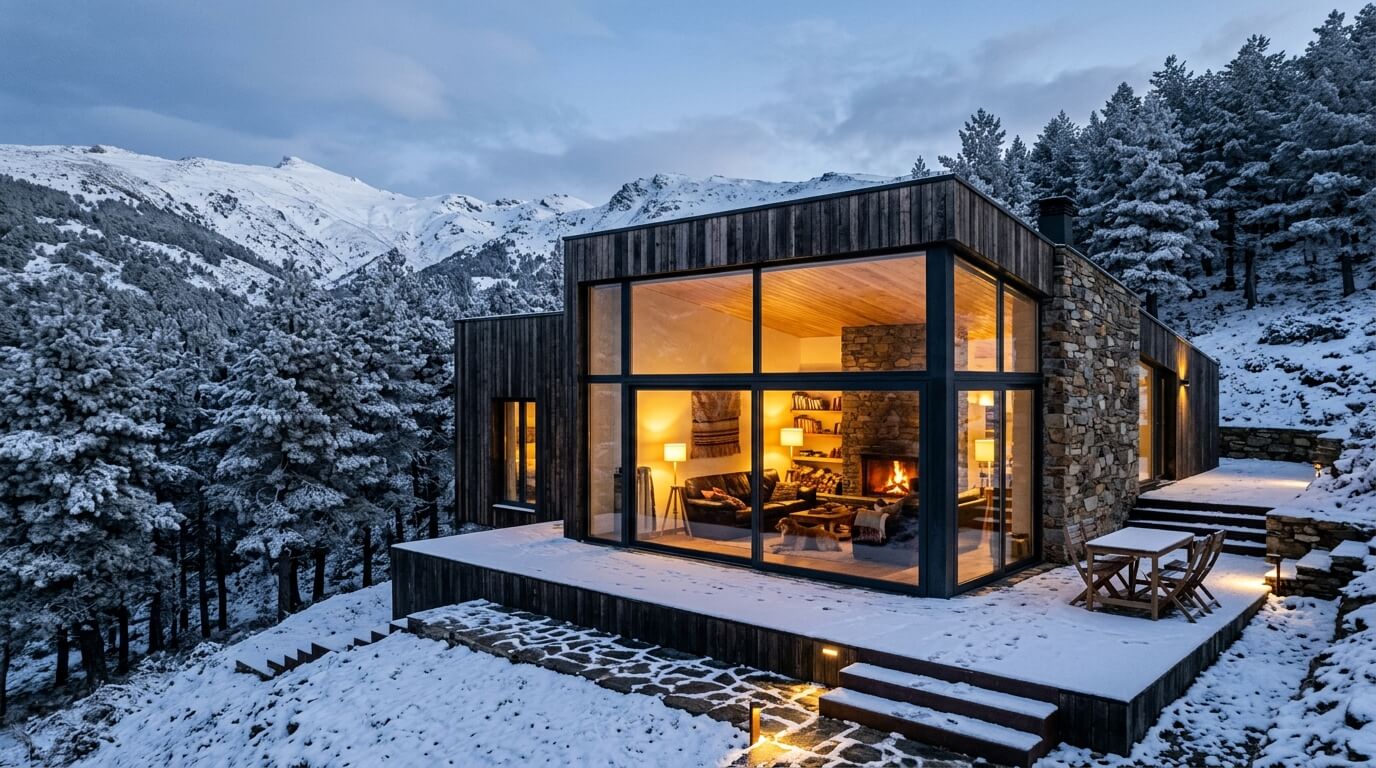
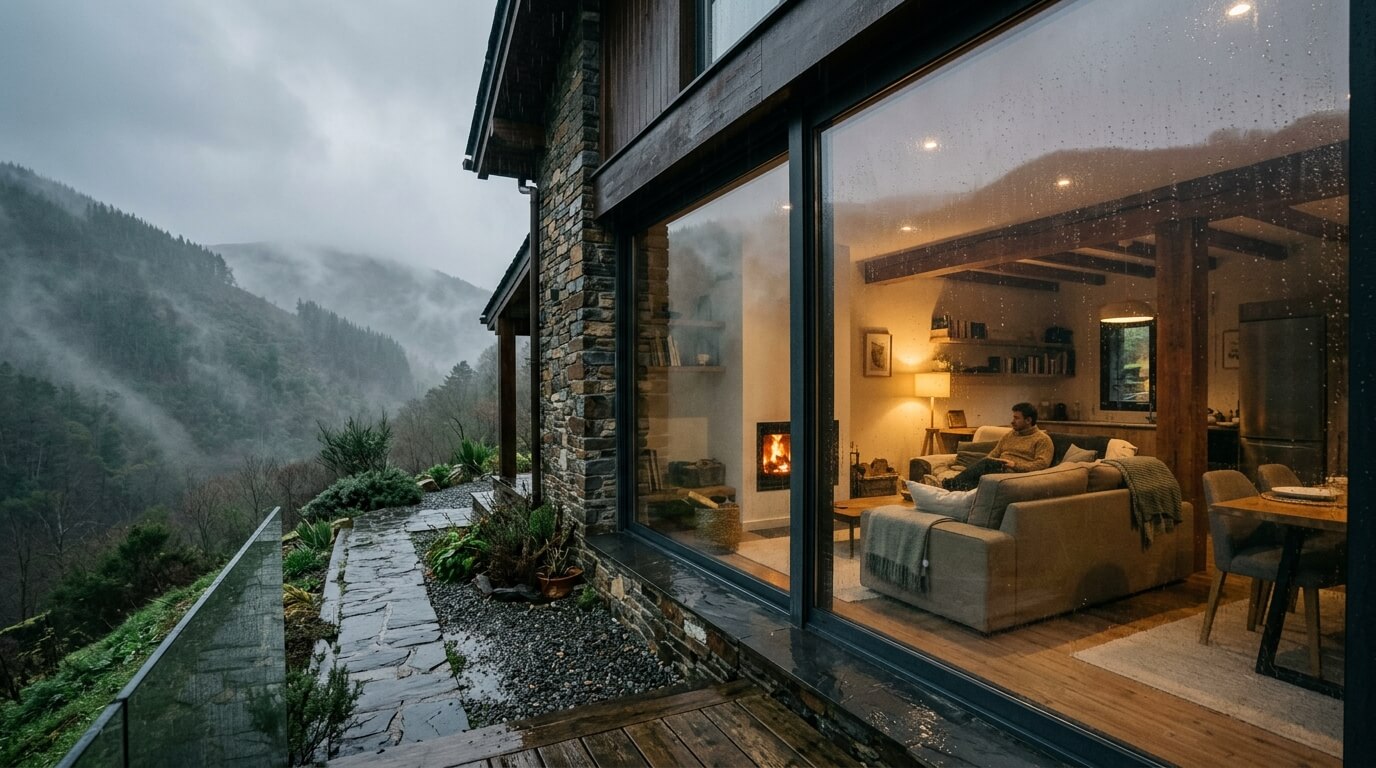
| Cold winters: Galicia, Basque Country, Castilla y León, mountains | PVC | Strongest thermal performance |
| Large terrace slider or panoramic glazing | Aluminium (RPT) | Spans and slim sightlines |
| Beachfront, salt air | Either — PVC (no corrosion) or marine-grade aluminium | Both fine if correctly specified |
| Harsh sun, dark colour wanted | Aluminium | Handles heat/UV better in dark finishes |
| Contemporary design, custom colours, colour inside ≠ outside | Aluminium | Finish range |
| Heritage / wood look on a budget | PVC with wood foil | Cheaper than timber, low upkeep |
By region, as a rough map: the cool, damp north (Galicia, Asturias, Basque Country) leans PVC for heat retention; the Mediterranean coast and Andalusia see far more aluminium because of big terraces, sliders and design-led builds, with marine-grade finishes near the water; the Canary Islands mix both, with sun-resistant specs front of mind; central Spain (Madrid, Castilla) splits by priority — PVC for energy bills, aluminium for large openings.
How to choose with confidence
The honest takeaway: for most ordinary windows, well-made PVC gives the best insulation per euro; for large openings, slim frames and custom design, RPT aluminium is worth the premium. What ruins more window projects than the material choice is buying a cheap version of either — thin aluminium with no real thermal break, or a no-name PVC profile that yellows.
That is the case for comparing. On Estimia you can request and compare quotes from verified window companies near you — every listed company is vetted before it can receive enquiries — so you can line up PVC and aluminium options side by side, check that the glazing, argon and Uw value are actually specified, and pick on real quality rather than a sales pitch.
Compare verified window companies on Estimia and get several quotes for both PVC and aluminium to weigh up side by side.