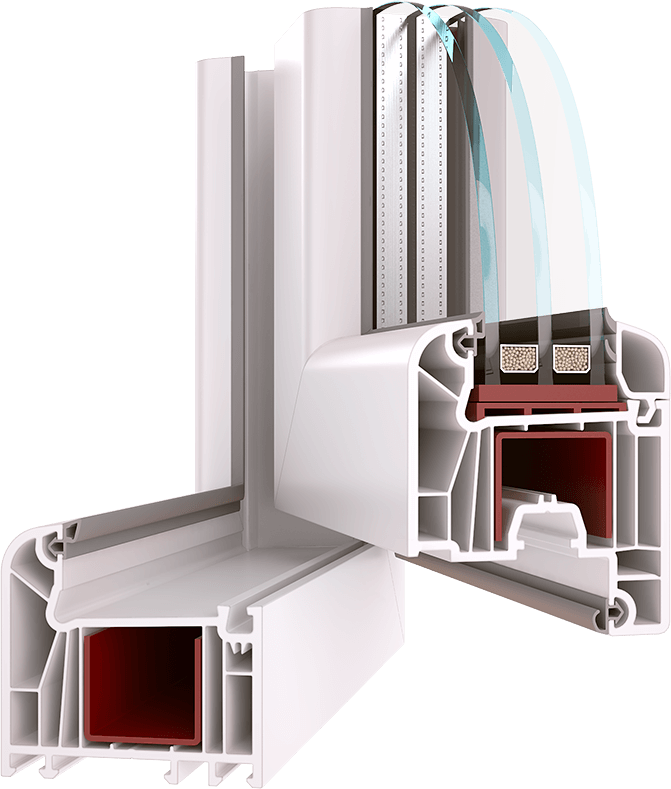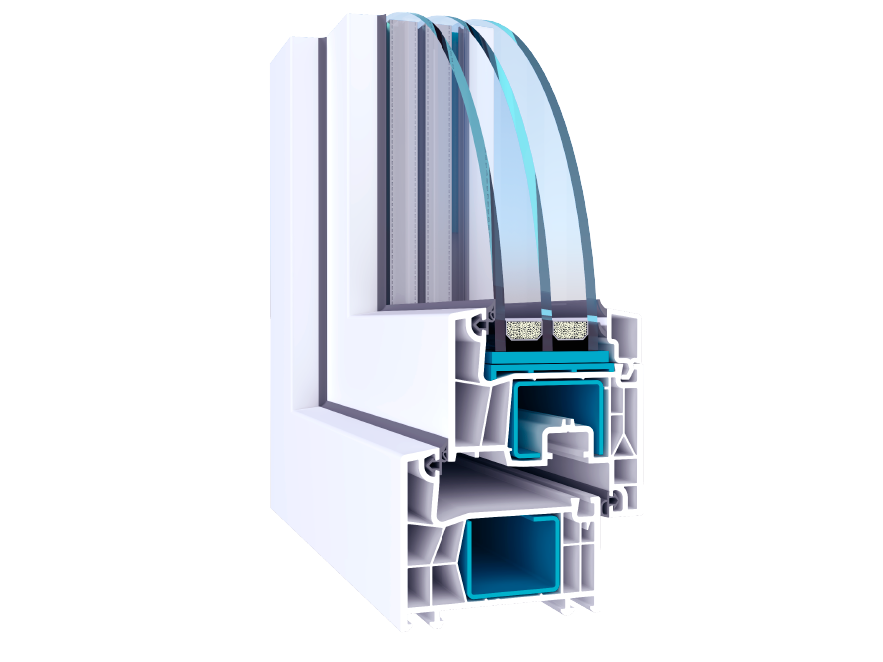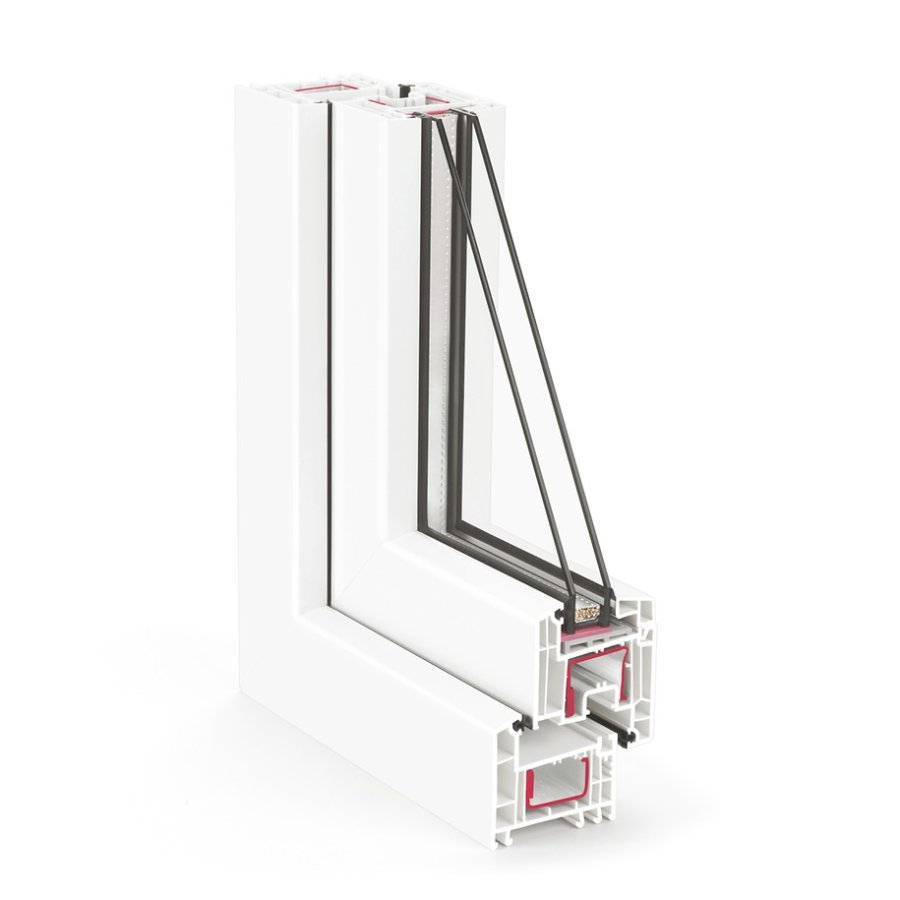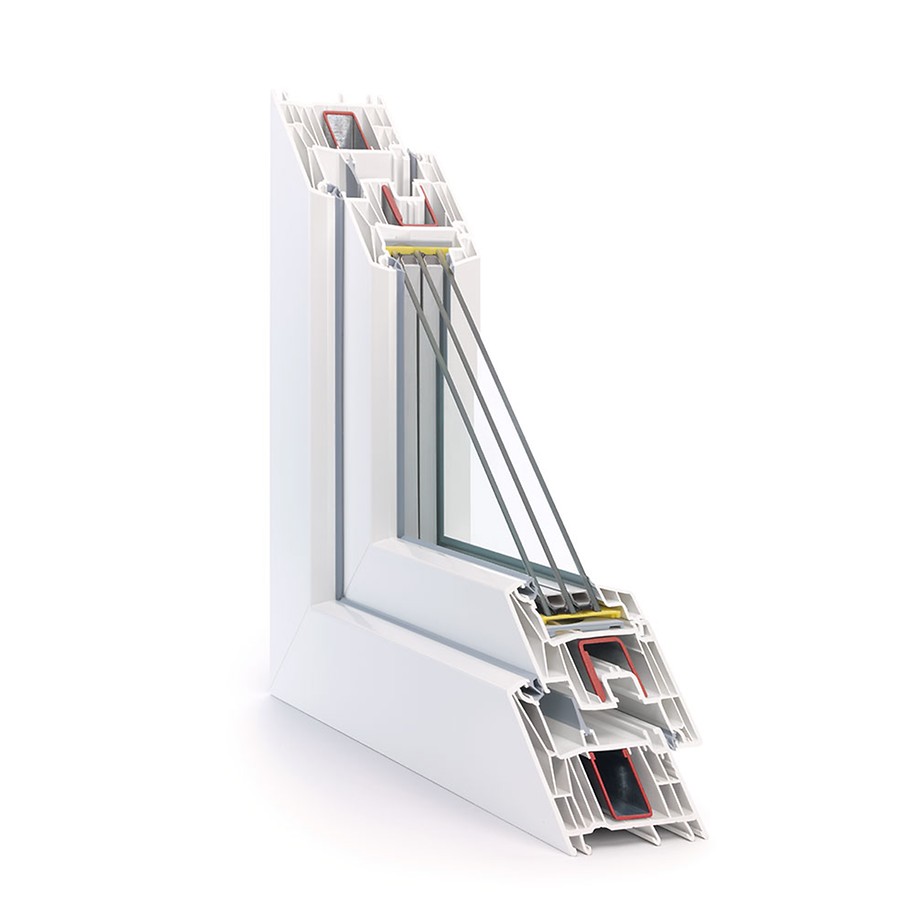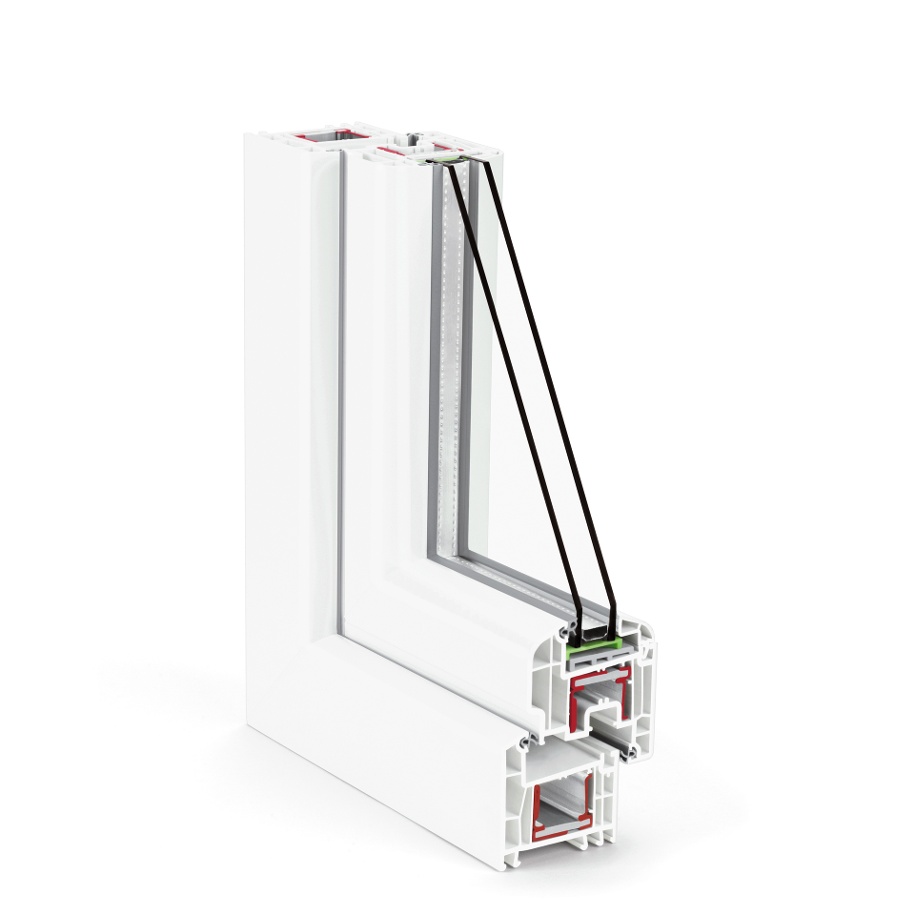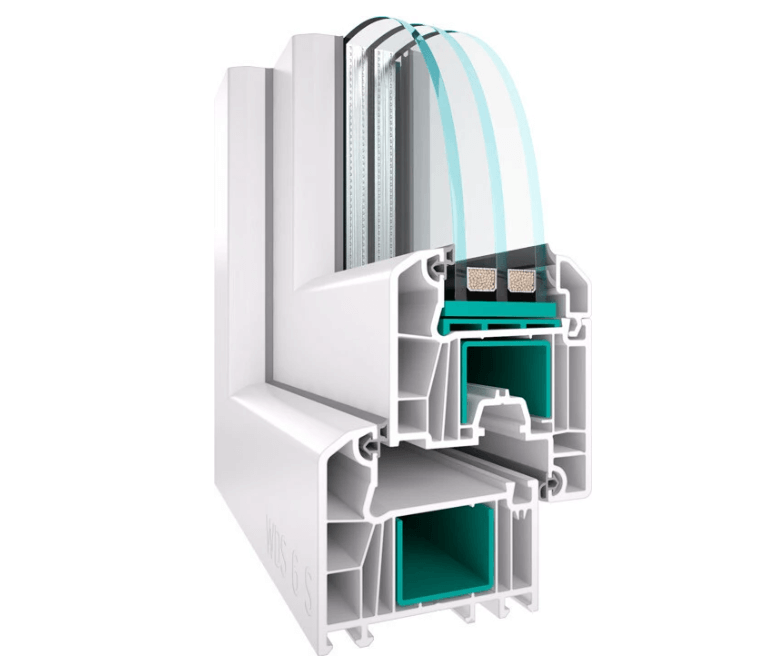
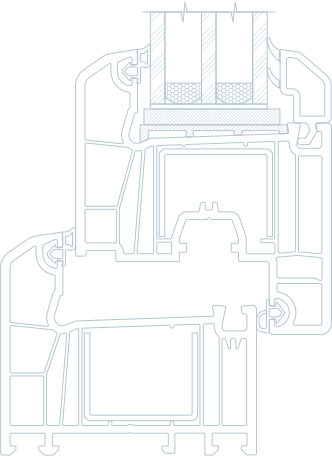
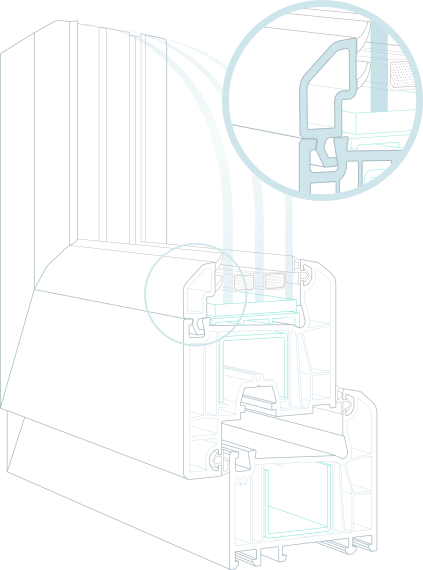


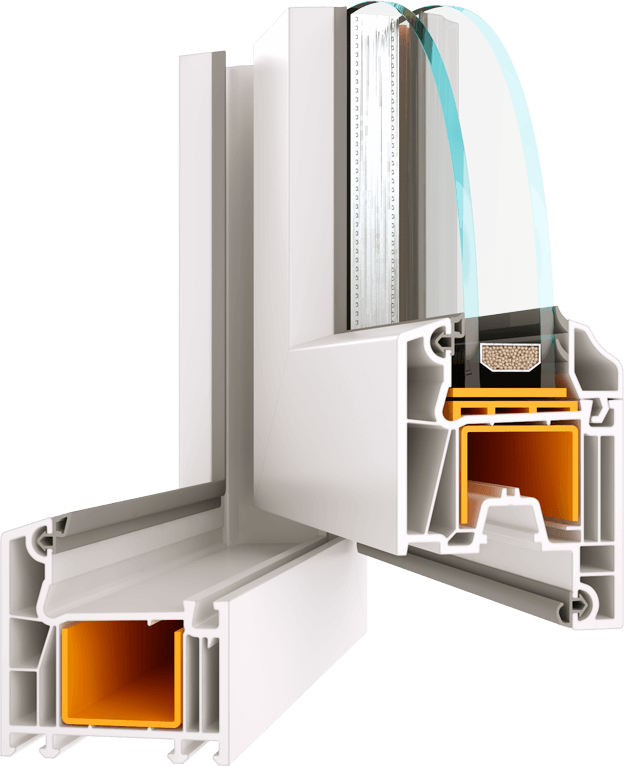
WDS 6S — a step up in comfort that anyone can afford. Where the 5S series is the entry-level option, 6S is an investment in your home's indoor climate. Its 70 mm installation width and 6 air chambers deliver thermal insulation that goes beyond Spanish building codes (CTE) across most climate zones.
Why spend 15-20% more than on basic windows?
- Silence: Room for a wide glass unit (40 mm) means you can fit "triplex" acoustic glass. Highway traffic and late-night city noise become a thing of the past.
- Cool in summer: The 6 chambers act like a thermos, holding cooled air inside. That trims electricity bills by 30%.
- Aesthetics: Refined 30° beveled edges and a glossy finish give the window a modern look that's easy to wipe clean.
This is what level-headed homeowners choose when they want premium-tier features (on par with German brands) without paying a premium for a well-known name.
Brand
WDS — modern window systems combining European quality and affordable prices. The manufacturer uses German technology and strict quality control, offering a wide range of profiles: from economical 5S to flagship 8S at Passivhaus level.
More about WDSTechnical Specifications
Details
The benchmark in glazing. A 6-chamber 70mm system with enhanced sound insulation.
Engineering Specifications:
- Mounting depth: 70 mm.
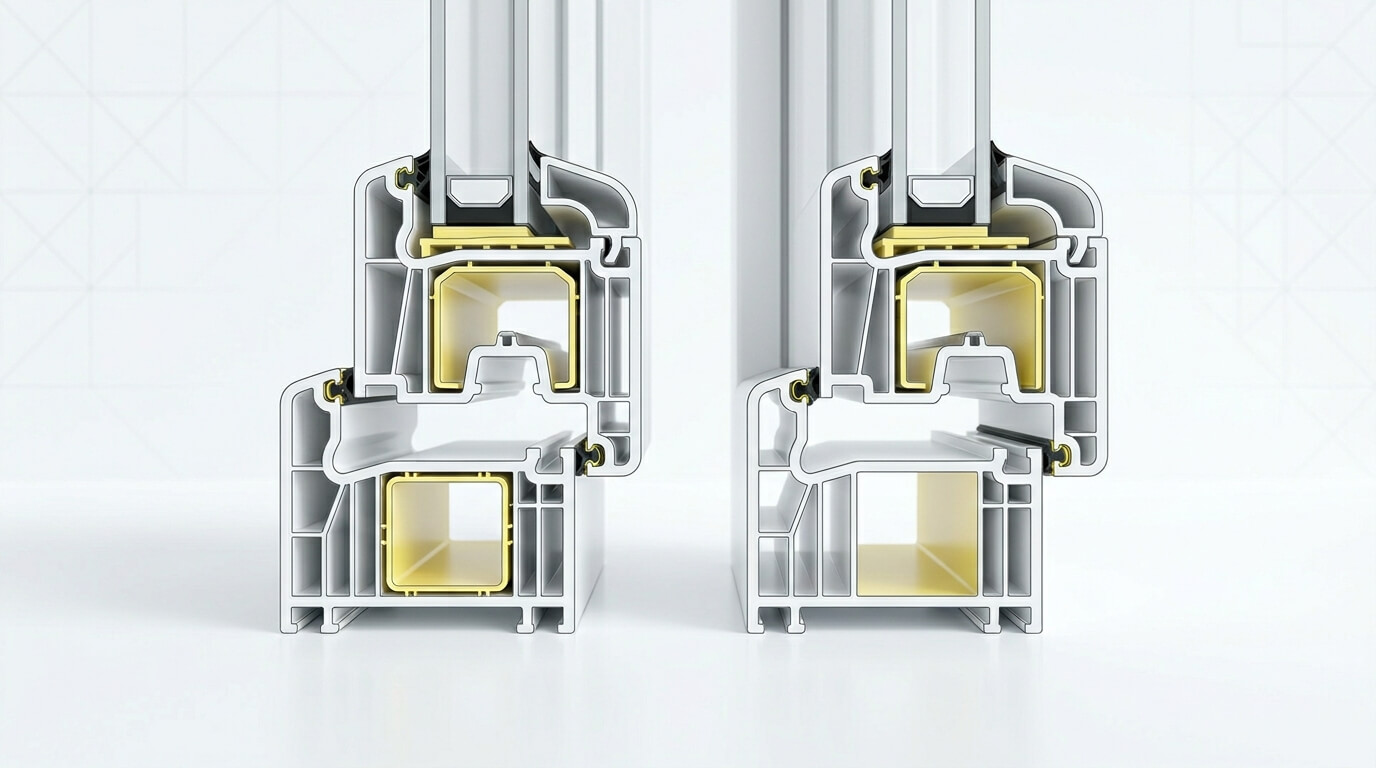
- Chamber layout: 6 chambers (strong thermal performance for a profile of this width).
- External wall gauge: Class B (meets DSTU B V.2.7-130:2007).
- Frame/sash depth: Profile height tuned to widen the light opening.
- Weatherstripping: 2 contours of up-to-date TPV gasket that stay firmly compressed even in the cold.
- Steel insert: Steel profile 1.2–2.0 mm thick (sized to the unit), standing up to wind pressure.
Glass Filling Choices:
- Top filling thickness: up to 40 mm.
- Filling variants: Energy-saving double-chamber glass units (standard 32 mm or 40 mm) using argon and low-E glass.
- Bead profile: Styled beveled bead that lends the window a contemporary feel.
Largest Build Sizes:
- Top sash width: up to 1000 mm (window) / up to 900 mm (balcony door).
- Top sash height: up to 2300 mm (with heavier steel reinforcement).
Tested Performance:
- Heat resistance value (Ro): up to 0.89 m²°C/W (surpasses state norms for the first climate zone).
- Profile heat retention (Uf): ~1.2 W/m²K.
- Noise damping (Rw): up to 34-36 dB (cuts city noise effectively).
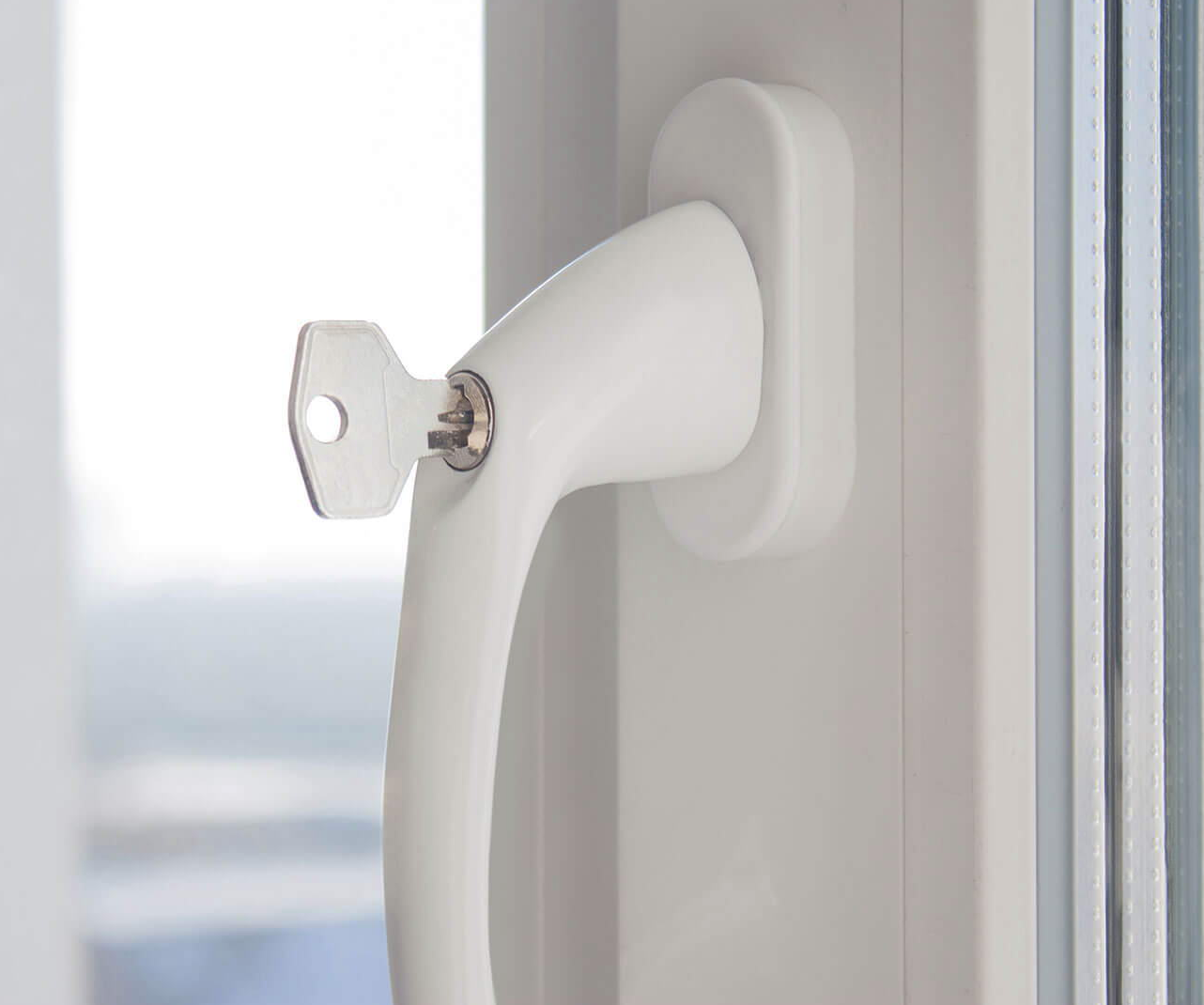
- Break-in resistance: Option to fit anti-burglary hardware and strike plates into the steel reinforcement profile.
WDS 6S (70 mm)
The benchmark in glazing. A 6-chamber 70mm system with enhanced sound insulation.
For a standard 2-sash tilt-and-turn window (1200 × 1400 mm) with basic double-glazed unit.
Compare with Similar Profiles
Alternative solutions from other manufacturers
WDS 7S (70 mm)
WDS 76 AD (76 mm)
Rehau Euro-design 70
Rehau Synego
Rehau Brillant-Design 70
Side by side
Head to Head: Closest Competitors
How WDS 6S (70 mm) stacks up against the closest matches from other brands.
| Specification | WDS 6S (70 mm)This profile | Rehau Euro-design 70 | Veka Softline 70 | Schüco Corona CT 70 |
|---|---|---|---|---|
| Brand | WDS | REHAU | VEKA | Schüco |
| Material | PVC | PVC | PVC | PVC |
| Profile depth | 70mm | 70mm | 70mm | 70mm |
| Chambers | 6 chambers | 5 chambers | 5 chambers | 5 chambers |
| Glass unit, max | up to 40mm | up to 40mm | up to 42mm | up to 52mm |
| Thermal (Uw) | 1.3 | 1.3 | 1.3 | 1.3 |
| Sound (Rw, dB) | ≈40 Rw(dB) | ≈43 Rw(dB) | ≈45 Rw(dB) | ≈48 Rw(dB) |
See all window profiles compared.
Open full comparisonLeave a Review
Customer Reviews
Find out what people are saying about it
No reviews yet. Be the first!
Related Posts

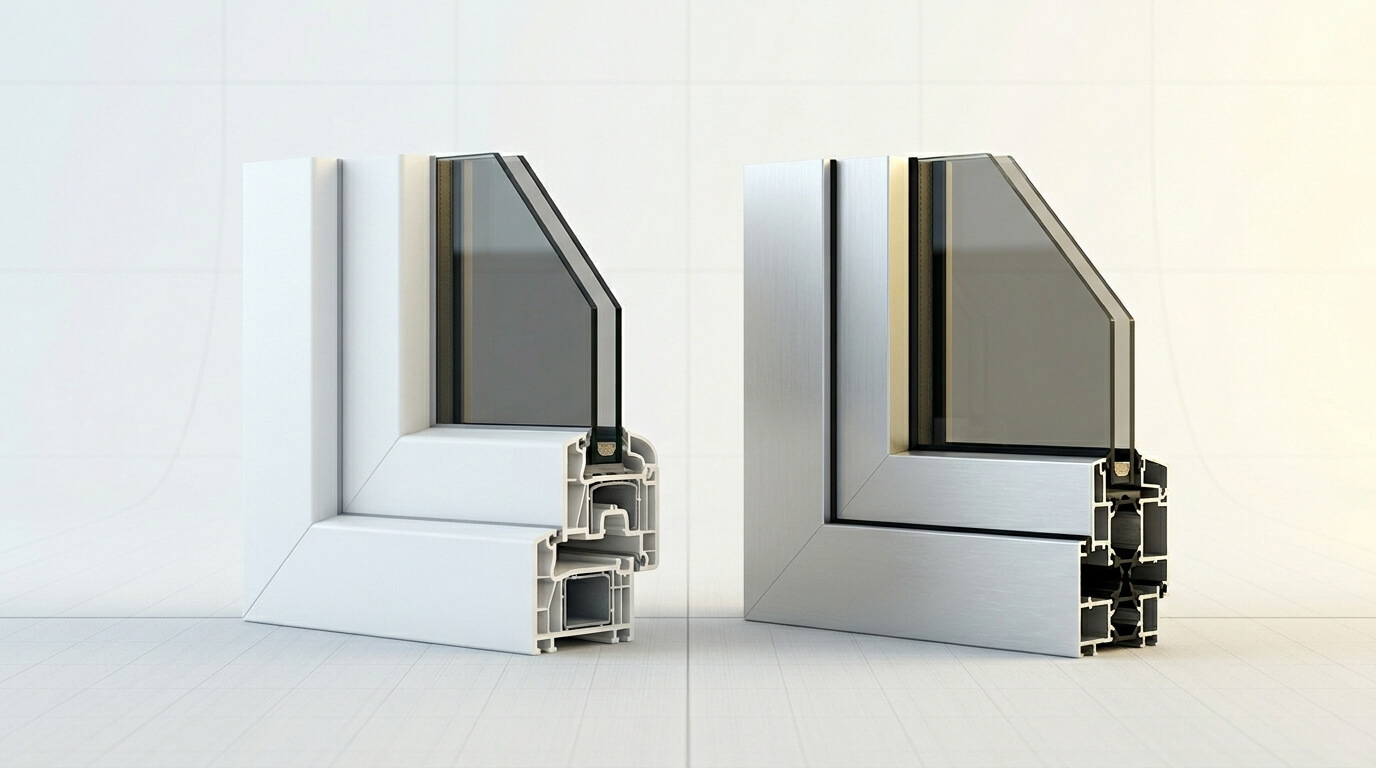
PVC or Aluminium Windows: Which Is Better for Your Spanish Home?
PVC and aluminium are the two frames you will be quoted for almost every window in Spain, and the right answer changes from Valencia to Vigo. This guide compares them head-to-head on insulation, price per m², coastal durability, sizes, colours and noise, then gives a clear verdict by scenario and region.

The Spanish PVC Window & Door Market: 2026 Report
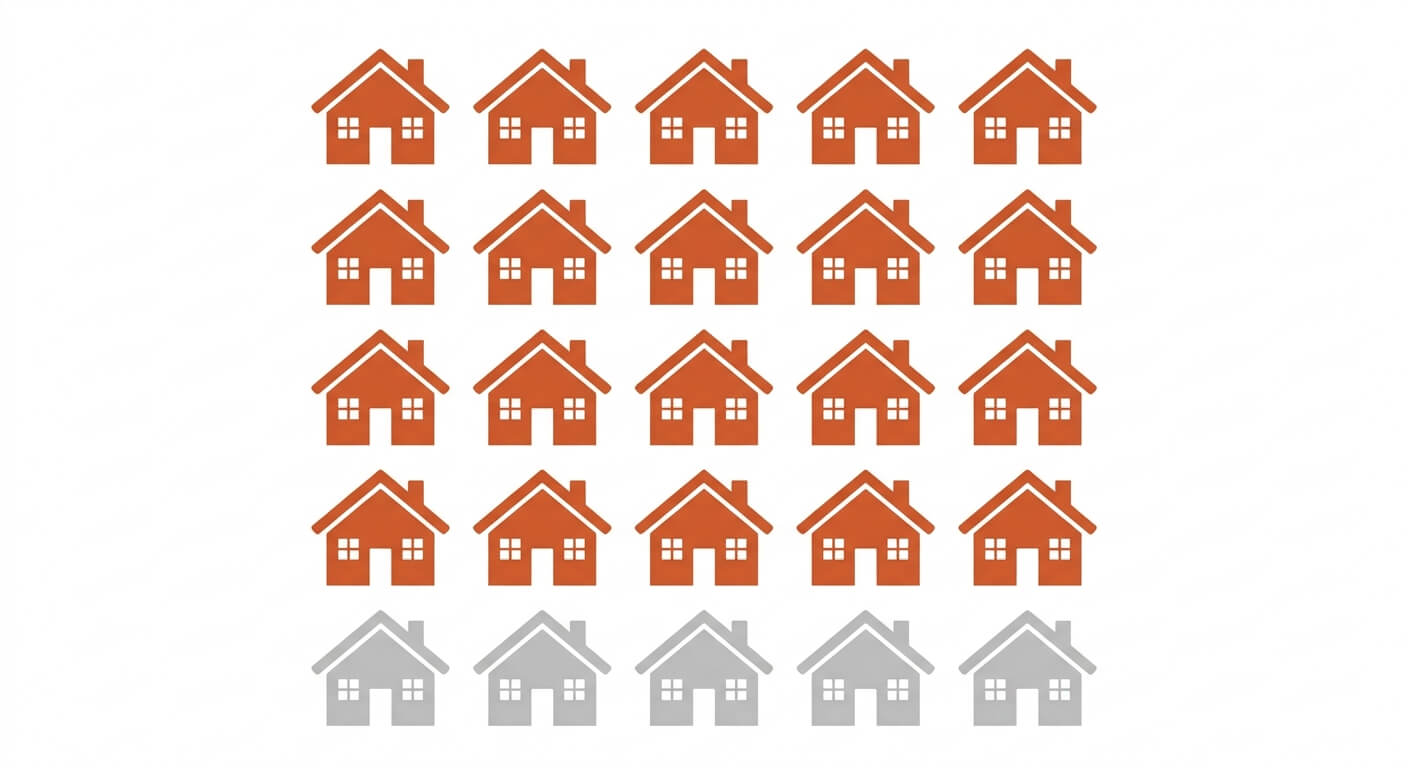
A full data report on windows and doors in Spain: the PVC value chain traced through customs data (resin, profiles, finished units), where Spain buys its profiles and ships its windows, the €4.16-billion domestic sector, the swing from aluminium to PVC, and the subsidy bottleneck holding back a 20-million-home renovation backlog.

Best PVC Window Brands in Spain: An Independent Comparison
A neutral, like-for-like comparison of the PVC profile brands sold in Spain — Kömmerling, Veka, Rehau, Deceuninck, Schüco and the major Spanish systems — by chambers, Uw, reinforcement and price tier. We also explain why the company that fits the window matters at least as much as the brand on the box.

Tilt-and-Turn Windows (Oscilobatiente): What They Are and Why They're So Popular
The oscilobatiente window opens two ways from a single handle: tilt inward for safe ventilation or swing fully open for cleaning. Here's how the mechanism works, how it compares with sliding and casement windows, and what it costs in Spain in 2026.

Choosing the Right Windows for Each Room: Bedroom, Kitchen, Bathroom and More
The best window for a bedroom is not the best window for a kitchen, a bathroom or a living room. This room-by-room guide explains what to prioritise in each space — acoustics and blackout for sleeping, easy-clean ventilation for cooking, privacy and moisture resistance for bathrooms, light and views for living areas, safety for children's rooms — so every window in the house earns its place.

How to Choose Triple-Glazed Windows (and When Double Glazing Is Enough)
Triple glazing is the default in the Alps and Scandinavia, but in Spain it only pays off in the right climate. This guide explains what triple glazing actually does, where in Spain it makes sense (the cold interior and mountains), where it is a waste of money, and exactly what to specify — so you can compare like-for-like quotes from verified companies on Estimia.
FAQs
Frequently Asked Questions about WDS 6S (70 mm)
What are the exact construction specs of the WDS 6S profile?
WDS 6S is a 70 mm, 6-chamber PVC system with a 113 mm profile height. Key figures:
- 2 contours of TPV weatherstripping that stay compressed in the cold
- Steel insert 1.2–2.0 mm thick, sized to the unit against wind load
- Class B external wall gauge (DSTU B V.2.7-130:2007)
What is the maximum glass unit the WDS 6S accepts and why?
The 70 mm depth allows glazing up to 40 mm thick. In practice that means energy-saving double-chamber units (standard 32 mm or 40 mm) filled with argon and low-E glass. The extra width of the cavities and the second glass chamber are what push the assembly to Uw ≤ 1.3 W/(m²·K) and improve sound damping over a thinner unit.
What sash sizes is the WDS 6S not suitable for?
It is a 70 mm class, not a panoramic system. The maximum single sash is 1000 mm wide for a window (900 mm for a balcony door) and 2300 mm high, and the full height only with heavier steel reinforcement. For larger openings or very heavy panes you should step up to a deeper profile such as WDS 76 MD or WDS 8S rather than oversize a 6S sash.
How does the WDS 6S compare to the 7S, 76 and 8S systems?
WDS 6S sits in the mid-tier. Moving up the range narrows the U-value:
- WDS 7S — same 70 mm, but Uw ≤ 1.2 and ≈42 dB
- WDS 76 MD — 76 mm, Uw ≤ 0.92, A++ rating
- WDS 8S — 82 mm, Uw ≤ 0.88, glazing to 52 mm
Can the WDS 6S be fitted with burglar-resistant hardware?
Yes. The steel reinforcement profile inside the frame is designed to accept anti-burglary hardware and strike plates fixed directly into the steel. This lets the window be upgraded beyond standard fittings for ground-floor or accessible openings, using the same reinforcement that already carries the wind load and the heavier sash sizes.
Does the WDS 6S meet first-climate-zone energy requirements?
Yes. Tested performance gives a heat resistance value (Ro) of up to 0.89 m²°C/W, which surpasses state norms for the first climate zone, and the profile heat retention is Uf ≈ 1.2 W/m²K. Combined with energy-saving argon and low-E glazing the window is rated energy class A with Uw ≤ 1.3 W/(m²·K).