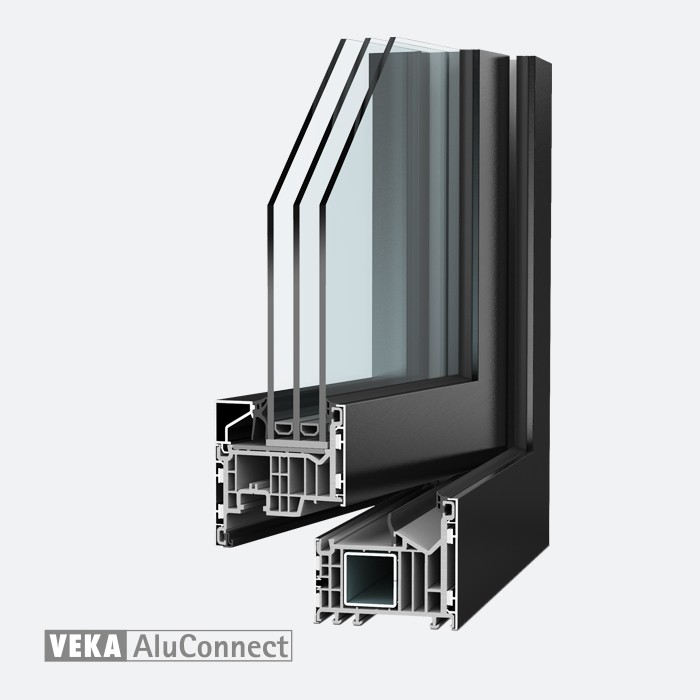
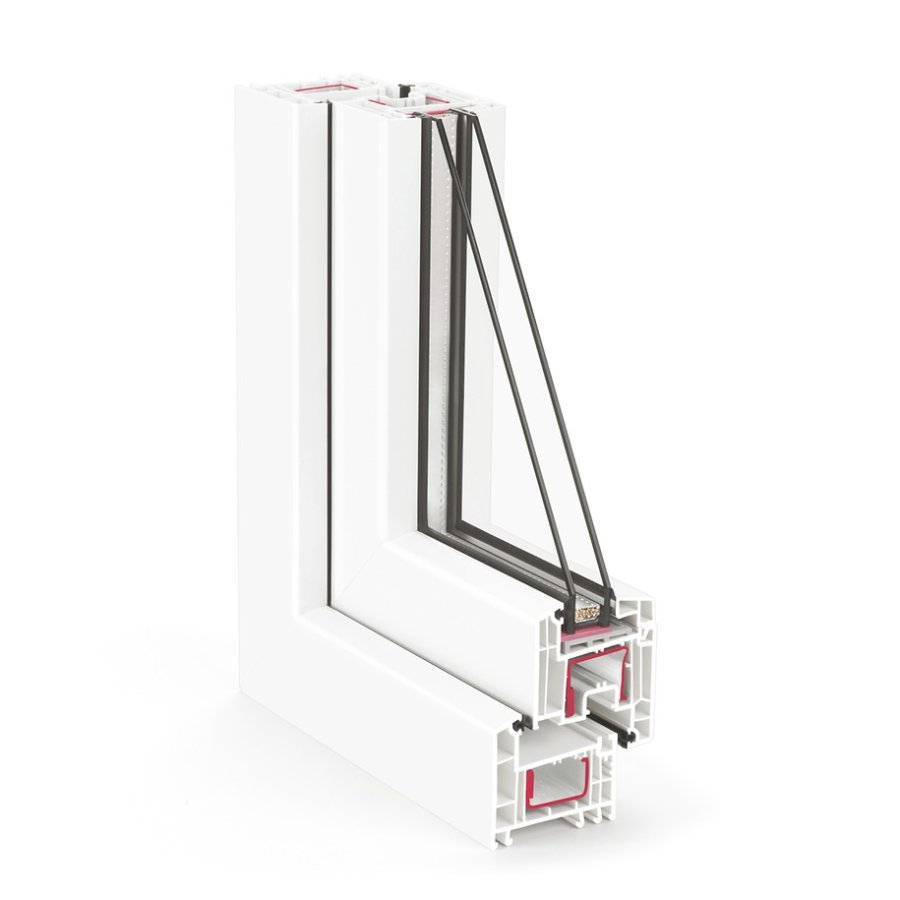
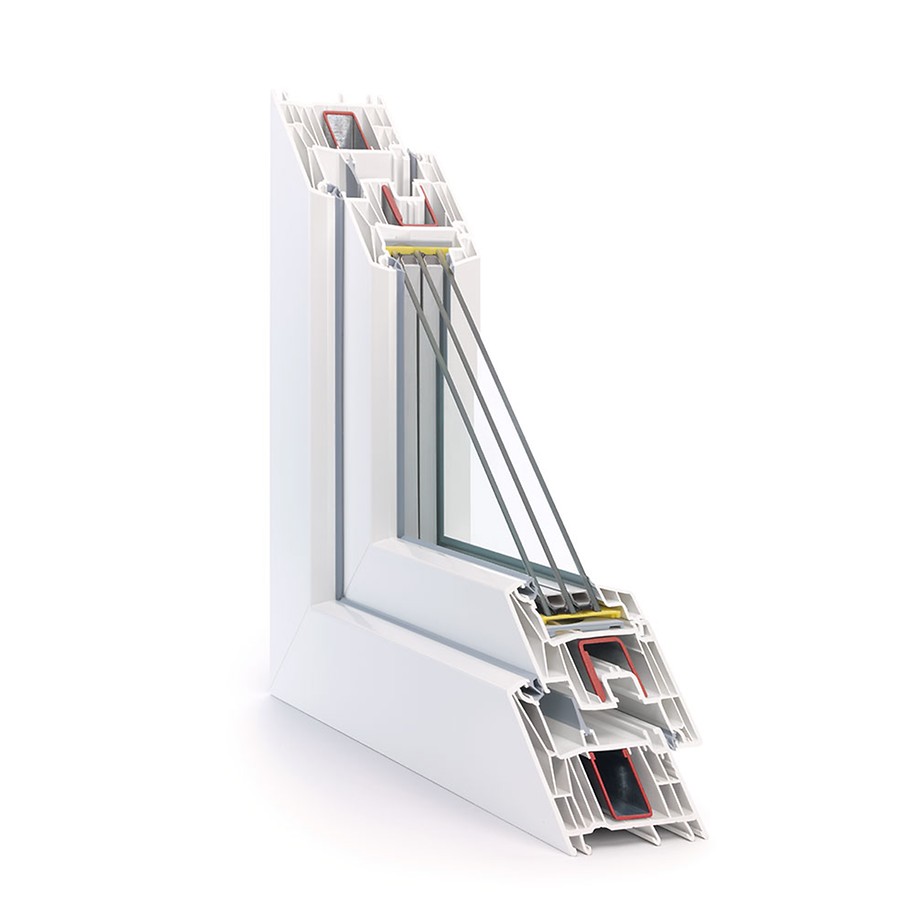
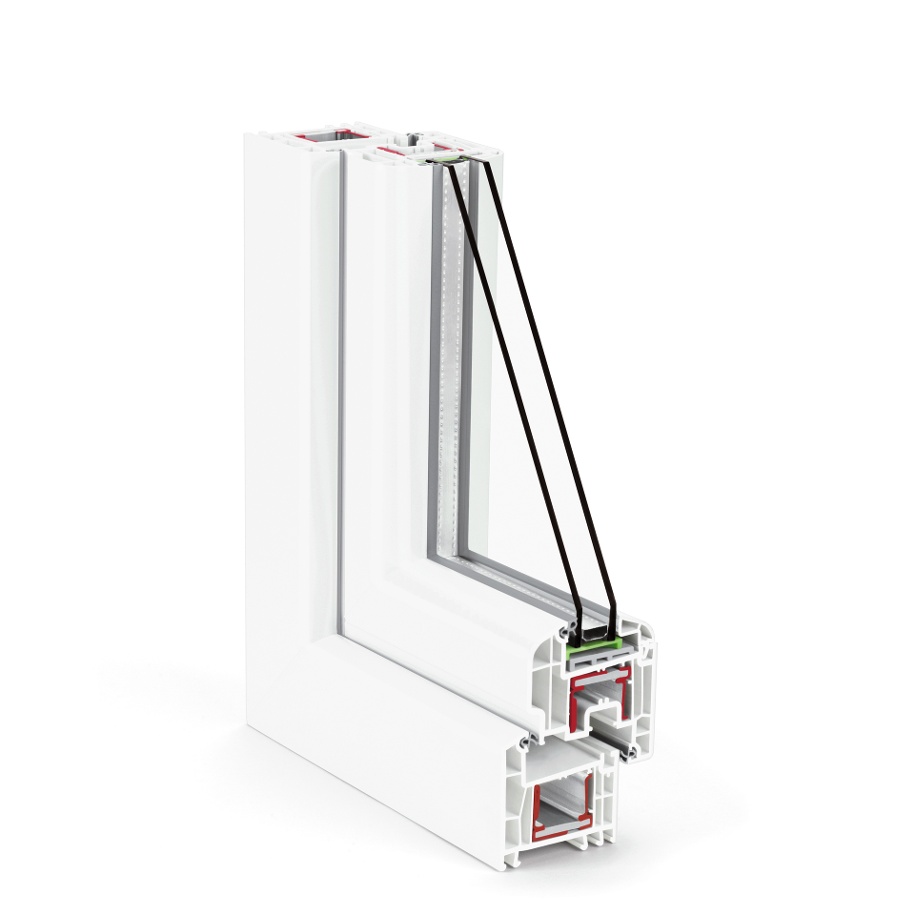
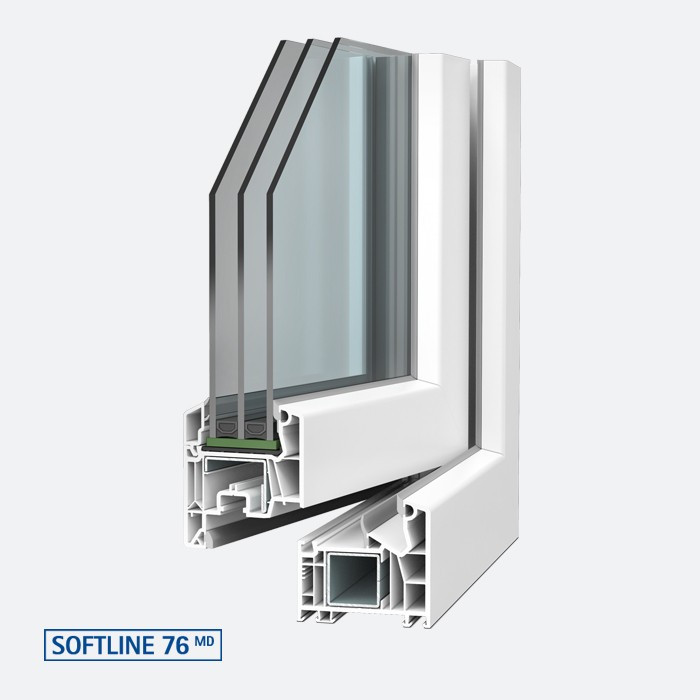
Veka Softline 76 is the evolutionary next step beyond classic window systems, delivering better thermal performance without a steep jump in price. With a 76 mm installation depth, it occupies the "happy medium" between entry-level 70 mm profiles and premium 82 mm systems. Its 3 mm outer walls (Class "A" per DIN EN 12608) ensure outstanding dimensional stability and long-lasting weld seams.
The wider build accommodates broader, warmer glass units up to 48 mm thick, markedly boosting acoustic insulation and heat retention in the home. Slim visible profile sections (mullions) let in as much daylight as possible, making rooms feel more open and spacious. It is the perfect solution for glazing modern cottages and apartments that demand high energy efficiency.
Brand

Veka — one of the oldest and largest PVC profile manufacturers in the world. The company is known for its signature Softline design with rounded edges and consistently high quality. If you're looking for reliable windows with a classic look — Veka is an excellent choice.
More about VEKATechnical Specifications
Details
Today's energy-efficiency benchmark. At 76 mm and Class "A", it strikes an ideal balance between thermal insulation and the amount of daylight it lets through.
Engineering Specifications:
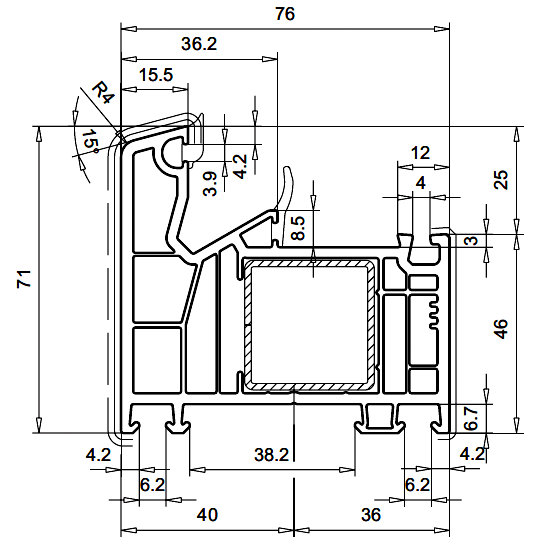
- Build depth: 76 mm (a wider section for better heat retention).
- Profile grade: Class "A" (DIN EN 12608) — 3 mm outer walls.
- Chamber layout: 5 chambers with refined geometry.
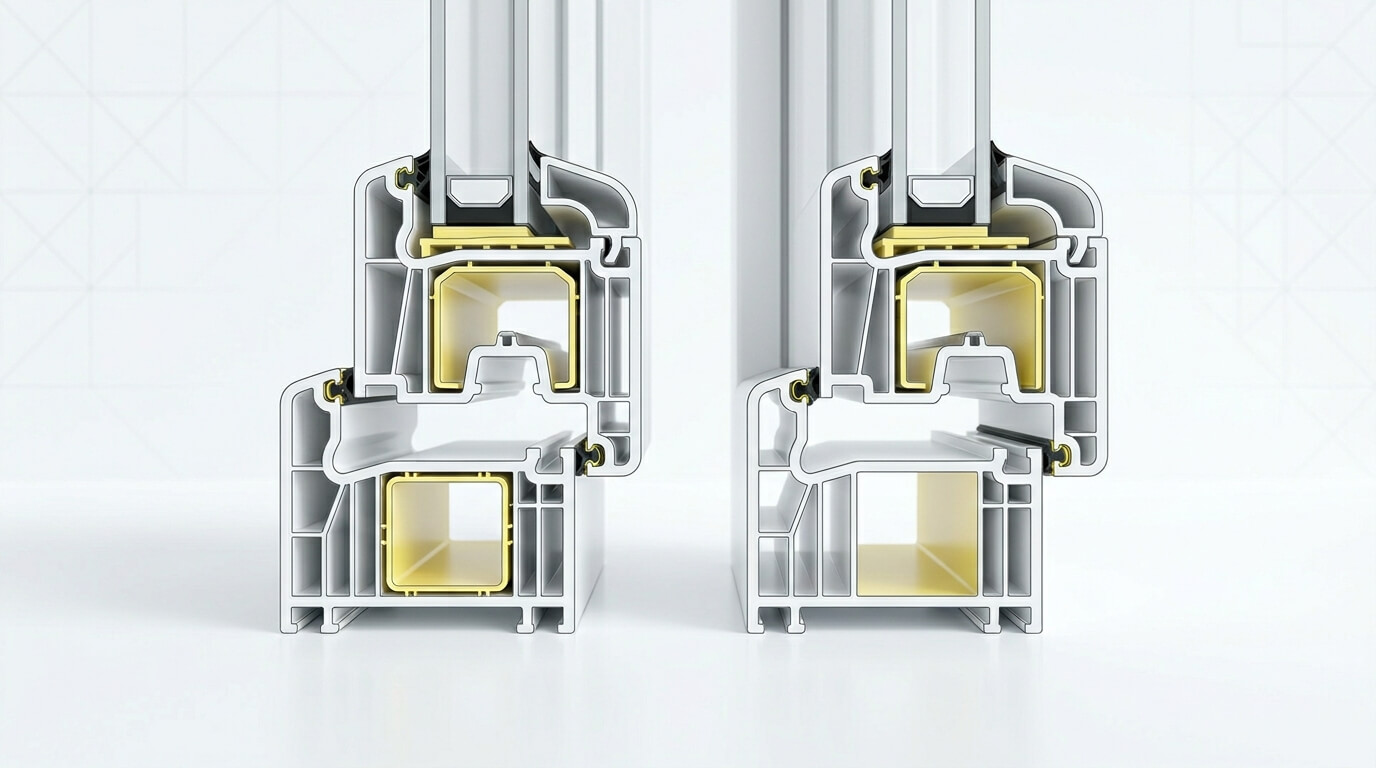
- Stiffening: Galvanized steel insert. The frame relies on a closed square section that delivers high sectional inertia.
- Weatherstripping: Two-line gasket setup (AD) or three-line (MD) according to the article. The gaskets are swappable and made of premium material.
Glazing and Infill Choices:
- Peak infill thickness: up to 48 mm.
- Glass unit rebate depth: 25 mm (A standout benefit! The market norm sits at 18-20 mm). This gives the glass unit a "warm edge".
- Glass unit retention: Glazing beads in assorted shapes (rounded, decorative) to suit the interior.
Profile Geometry and Sizes (Window):
- Combined profile height: 112 mm — slim mullions for a contemporary look.
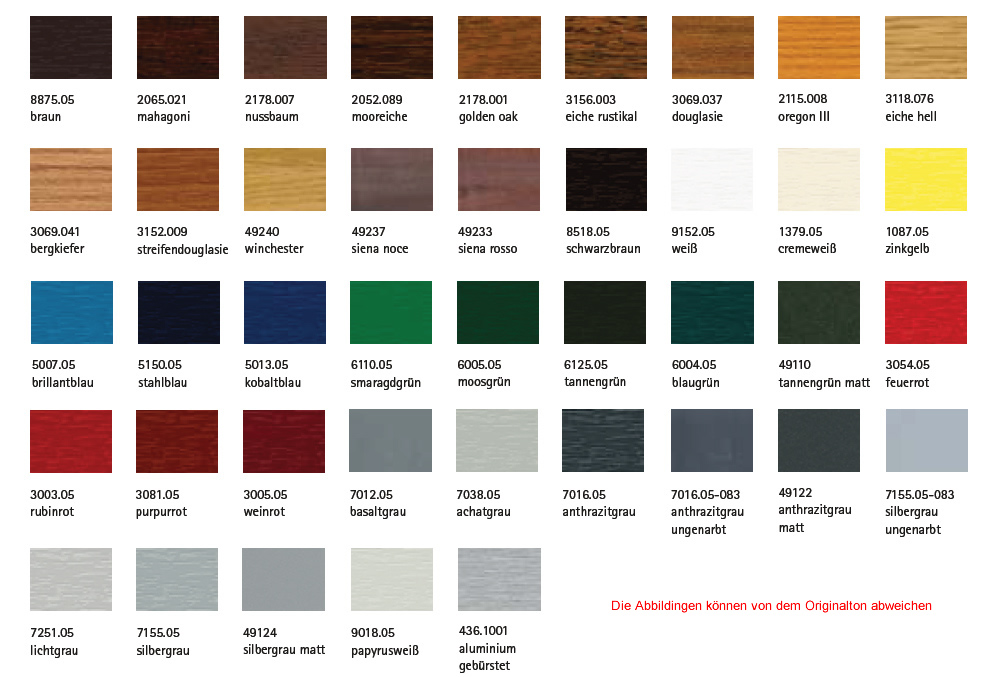
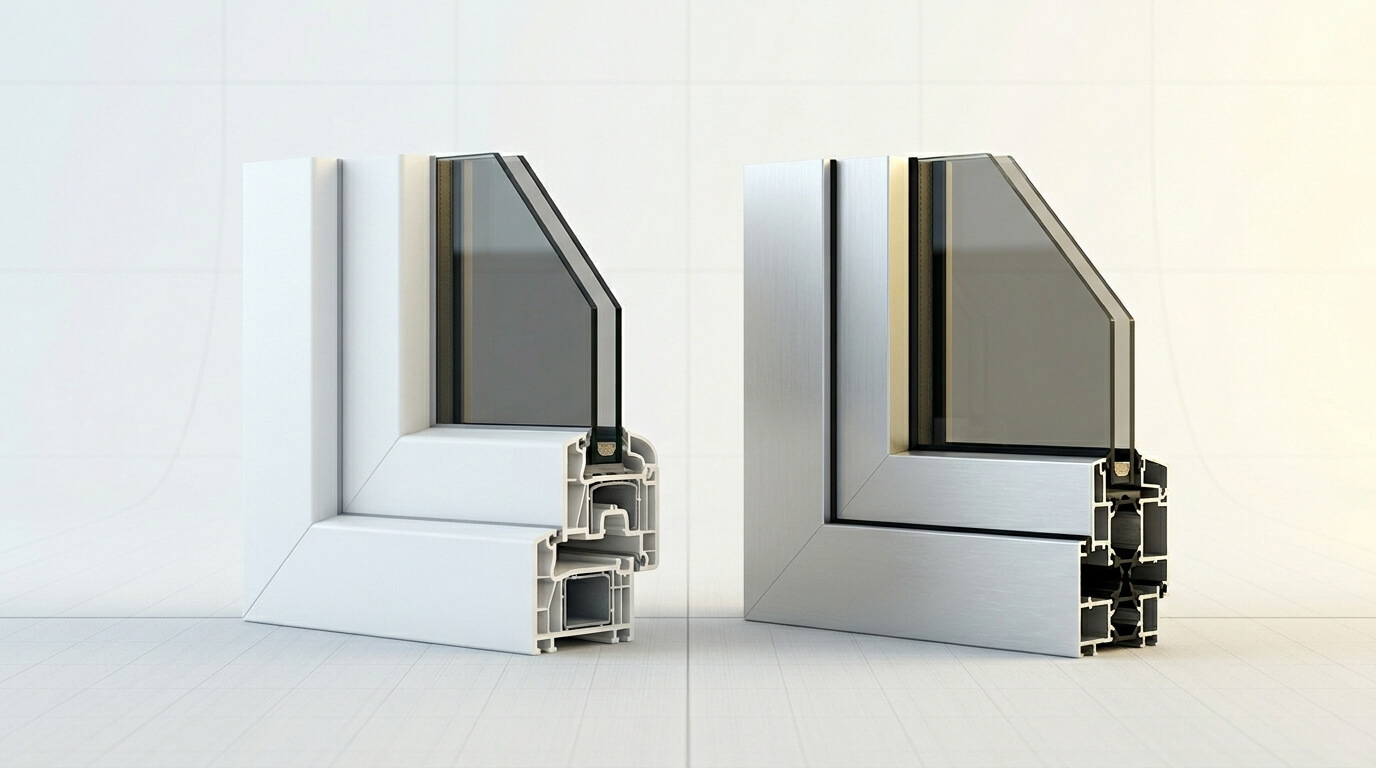
- Styling: Flowing Softline contours that blend with any facade. Aluminum cladding available.
- Sash sizes: Larger permitted dimensions than the 70 series owing to the stiffer profile section.
Tested Performance (according to DIN EN 14351-1):
- Frame thermal value (Uf): 1.1 W/m²K (in the center-seal variant).
- Heat resistance (R0): 0.85–0.95 m²°C/W.
- Acoustic rating (Rw): up to 47 dB (with the option of thick acoustic laminated glass).
- Intrusion resistance: RC2 and RC3 classes. Hardware striker plates anchor into the metal reinforcement.
- Watertightness: Class 9A.
- Expected lifespan: Over 50 years.
Veka Softline 76
Today's energy-efficiency benchmark. At 76 mm and Class "A", it strikes an ideal balance between thermal insulation and the amount of daylight it lets through.
For a standard 2-sash tilt-and-turn window (1200 × 1400 mm) with basic double-glazed unit.
Compare with Similar Profiles
Alternative solutions from other manufacturers
Veka Softline 82
Veka AluConnect
Rehau Euro-design 70
Rehau Synego
Rehau Brillant-Design 70
Side by side
Head to Head: Closest Competitors
How Veka Softline 76 stacks up against the closest matches from other brands.
| Specification | Veka Softline 76This profile | WDS 76 AD (76 mm) | Rehau Brillant-Design 80 | Kömmerling EuroFutur Elegance |
|---|---|---|---|---|
| Brand | VEKA | WDS | REHAU | Kömmerling |
| Material | PVC | PVC | PVC | PVC |
| Profile depth | 76mm | 76mm | 80mm | 70 mm |
| Chambers | 5 chambers | 5 chambers | 6 chambers | — |
| Glass unit, max | up to 48mm | up to 48mm | up to 44mm | up to 39 mm |
| Thermal (Uw) | 1.1 | 1.1 | 1.1 | ≤ 1.1 |
| Sound (Rw, dB) | ≈47 Rw(dB) | ≈46 Rw(dB) | ≈45 Rw(dB) | ≈ 40 Rw(dB) |
See all window profiles compared.
Open full comparisonLeave a Review
Customer Reviews
Find out what people are saying about it
No reviews yet. Be the first!
Related Posts

PVC or Aluminium Windows: Which Is Better for Your Spanish Home?
PVC and aluminium are the two frames you will be quoted for almost every window in Spain, and the right answer changes from Valencia to Vigo. This guide compares them head-to-head on insulation, price per m², coastal durability, sizes, colours and noise, then gives a clear verdict by scenario and region.

The Spanish PVC Window & Door Market: 2026 Report
A full data report on windows and doors in Spain: the PVC value chain traced through customs data (resin, profiles, finished units), where Spain buys its profiles and ships its windows, the €4.16-billion domestic sector, the swing from aluminium to PVC, and the subsidy bottleneck holding back a 20-million-home renovation backlog.

Best PVC Window Brands in Spain: An Independent Comparison
A neutral, like-for-like comparison of the PVC profile brands sold in Spain — Kömmerling, Veka, Rehau, Deceuninck, Schüco and the major Spanish systems — by chambers, Uw, reinforcement and price tier. We also explain why the company that fits the window matters at least as much as the brand on the box.

Tilt-and-Turn Windows (Oscilobatiente): What They Are and Why They're So Popular
The oscilobatiente window opens two ways from a single handle: tilt inward for safe ventilation or swing fully open for cleaning. Here's how the mechanism works, how it compares with sliding and casement windows, and what it costs in Spain in 2026.

Choosing the Right Windows for Each Room: Bedroom, Kitchen, Bathroom and More
The best window for a bedroom is not the best window for a kitchen, a bathroom or a living room. This room-by-room guide explains what to prioritise in each space — acoustics and blackout for sleeping, easy-clean ventilation for cooking, privacy and moisture resistance for bathrooms, light and views for living areas, safety for children's rooms — so every window in the house earns its place.

Soundproof Windows: How to Cut Outside Noise in Spain
Traffic, terraces, airports and nightlife — Spanish streets are loud, and your windows are the weakest link. This guide explains acoustic ratings (dB and Rw), exactly what makes a window quiet, the realistic noise reduction you can expect, and precisely what to specify in a quote so you can compare verified companies on equal terms.
FAQs
Frequently Asked Questions about Veka Softline 76
What exactly is inside the Softline 76 profile?
It is a 76 mm, 5-chamber Class "A" section (DIN EN 12608) with 3 mm outer walls and a 112 mm combined height. A galvanized steel insert in a closed square chamber gives high sectional inertia, and the two- (AD) or three-line (MD) swappable gasket sealing brings the frame to Uf 1.1 W/m²K and a window Uw ≤ 1.1 W/(m²·K).
How thick a glass unit fits, and why does the 25 mm rebate matter?
The system takes infills up to 48 mm seated in a 25 mm glazing rebate, versus the market-typical 18–20 mm. That extra depth tucks the spacer bar fully behind the profile plastic, creating a "warm edge" that removes the cold bridge along the glass edge and cuts the risk of edge condensation in freezing weather.
Where does Softline 76 sit between the 70 and 82 systems?
It is the mid-tier energy benchmark:
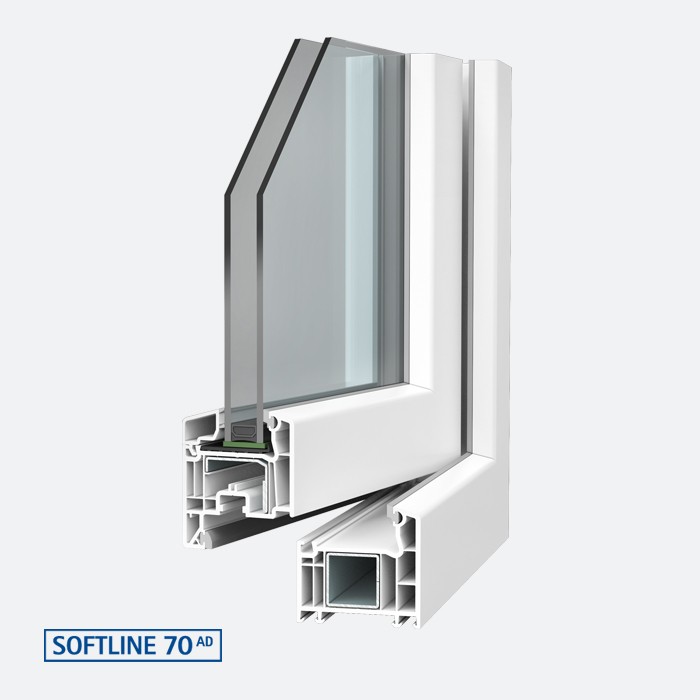
- vs Softline 70: deeper (76 vs 70 mm), 48 vs 42 mm glass, Uw 1.1 vs 1.3, A+ vs A
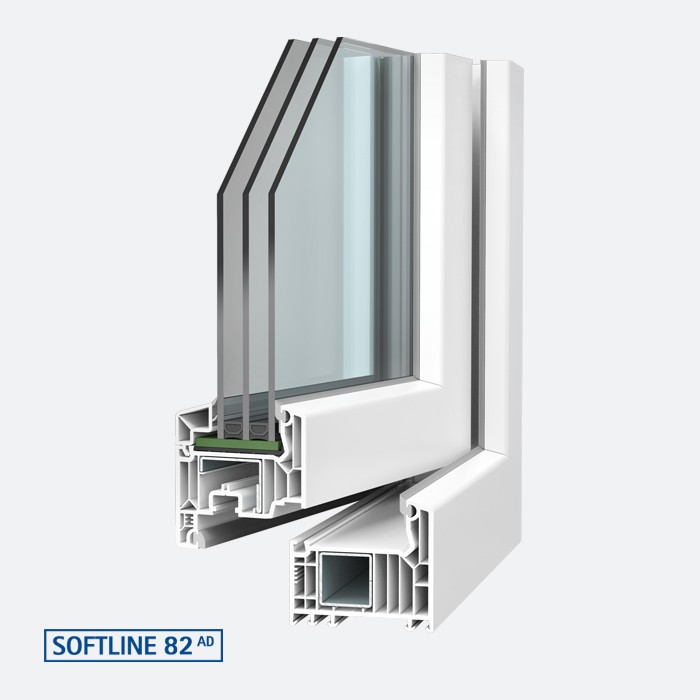
- vs Softline 82: shallower (76 vs 82 mm), 5 vs 7 chambers, 48 vs 52 mm glass, Uw 1.1 vs 0.80, A+ vs A++
What security, watertightness and lifespan can I count on?
Tested to DIN EN 14351-1, it reaches intrusion classes RC2 and RC3, with hardware striker plates anchored into the steel reinforcement and the thick Class "A" walls giving screws a firmer grip. Watertightness is rated Class 9A, and the expected service life is over 50 years.
How quiet is Softline 76 and what is the limit?
With thick acoustic laminated glass the system reaches an acoustic rating of up to 47 dB (Rw) — matching the deeper Softline 82 and ahead of the Softline 70's ≈45 dB. That figure is the ceiling for this profile; the 47 dB depends on specifying the right laminated acoustic glazing, not the frame alone.
What sash sizes does the stiffer 76 section allow?
Thanks to the higher sectional inertia of its closed steel-reinforced square chamber, Softline 76 permits larger sash dimensions than the 70 series. Reinforcement articles are shaped to the chamber geometry with minimal plastic-to-metal clearance for maximum rigidity. Heat resistance R0 is 0.85–0.95 m²°C/W, and aluminium cladding is available for the facade.