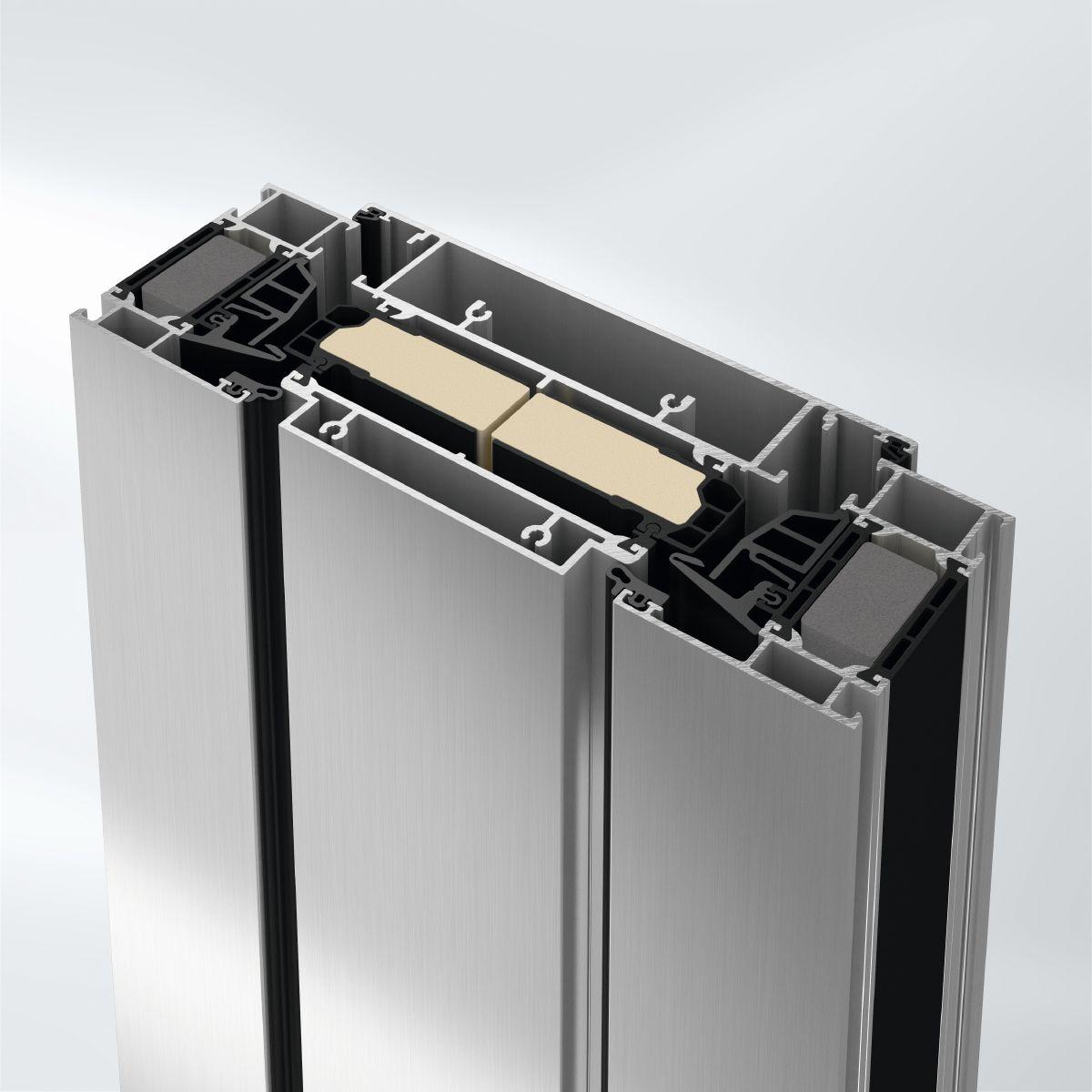
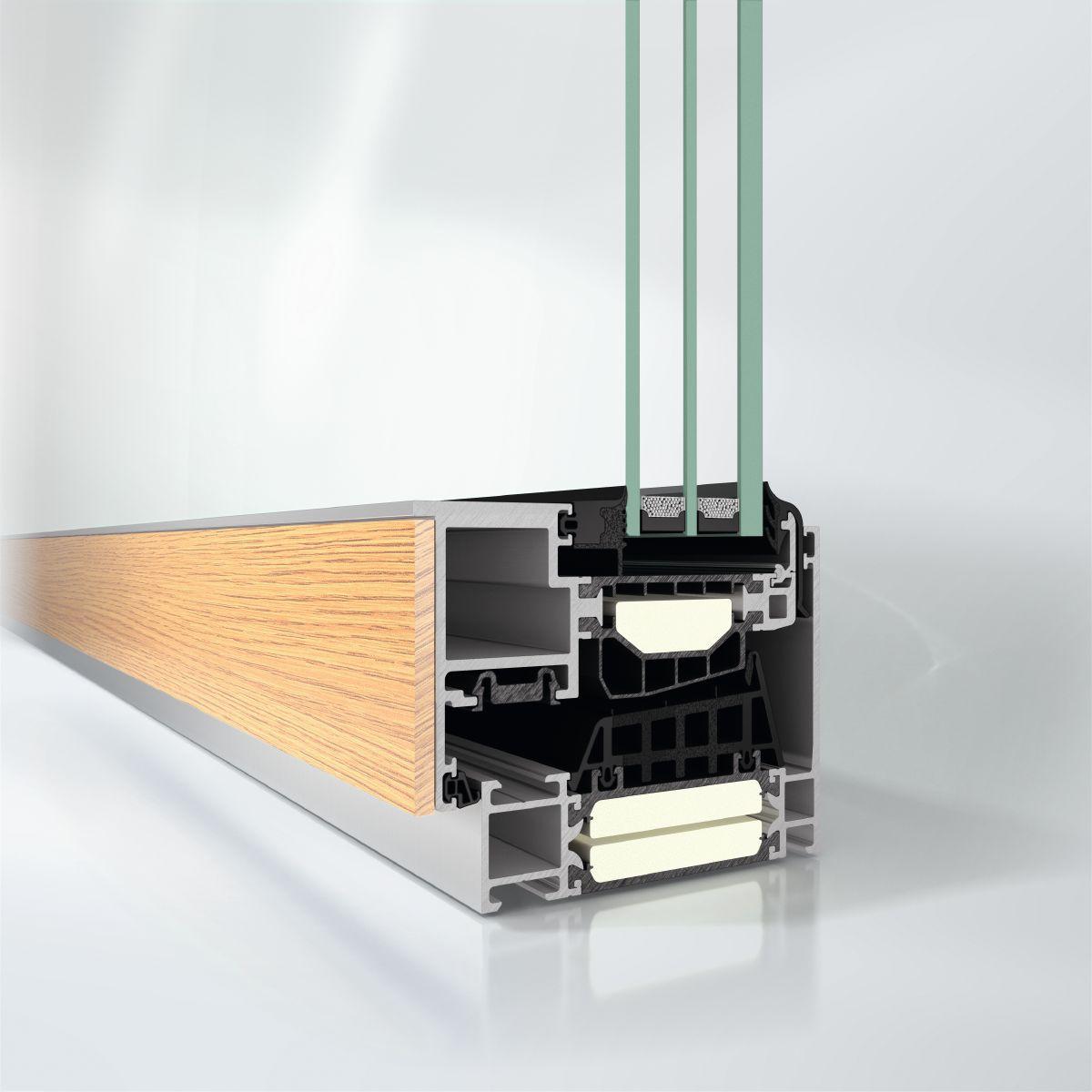
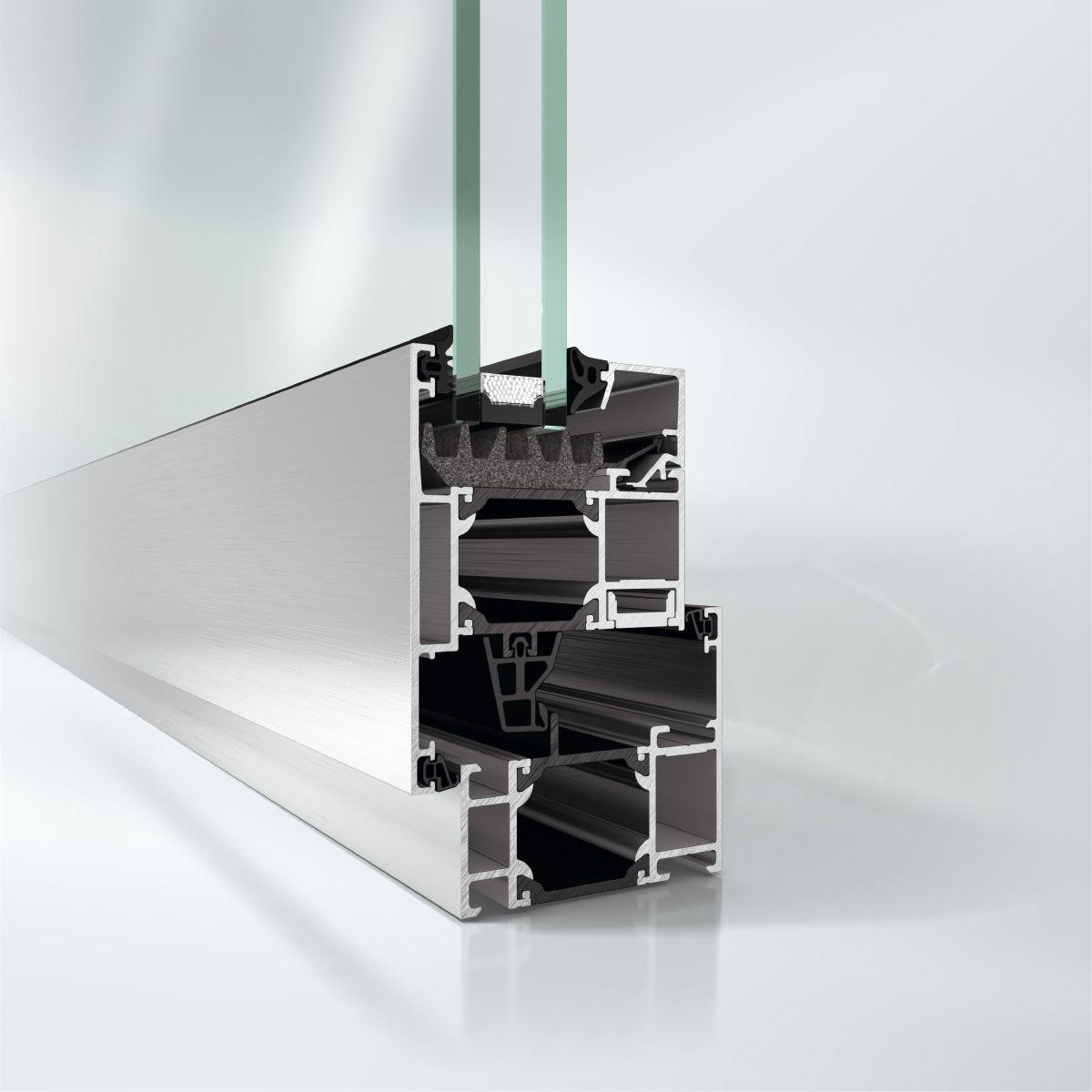
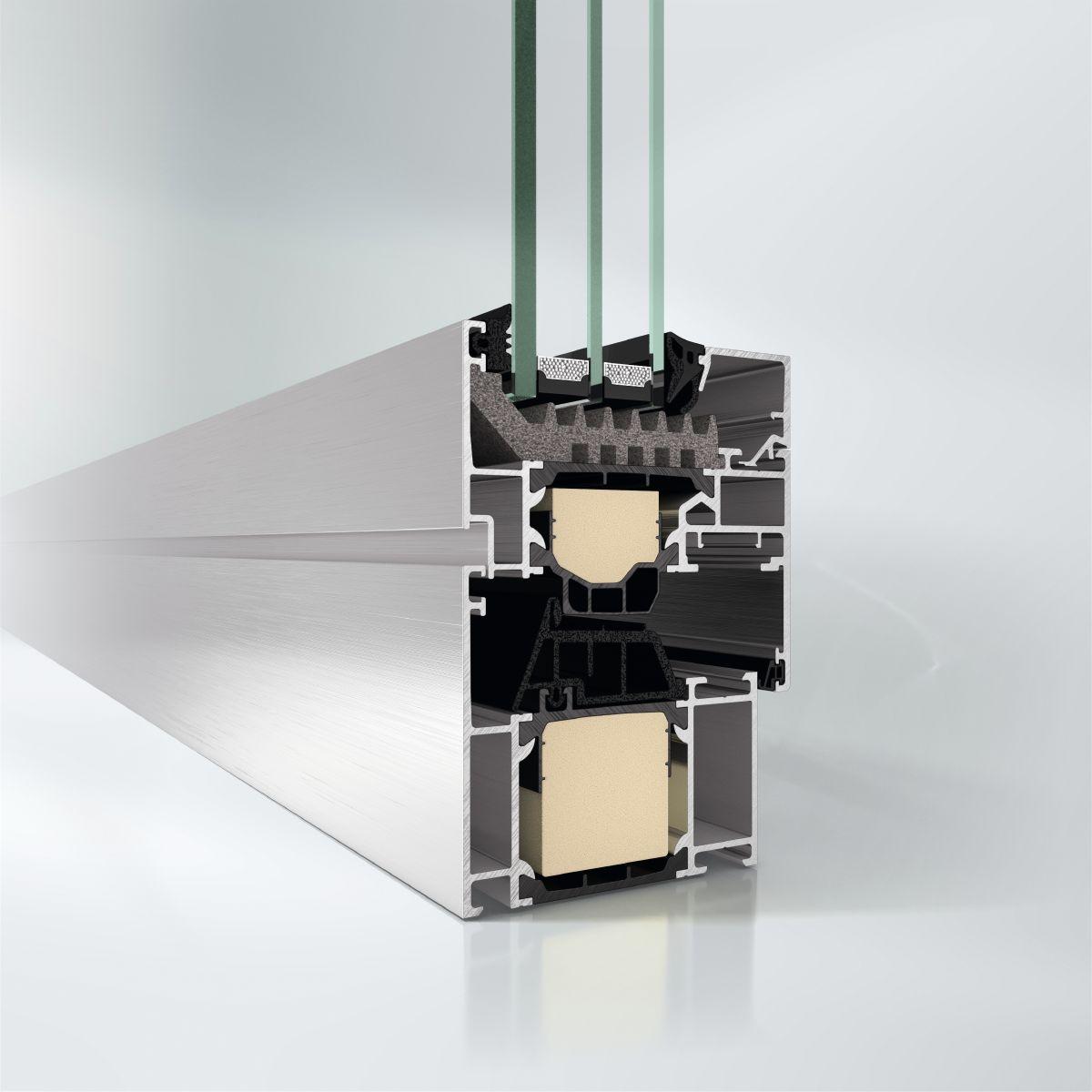
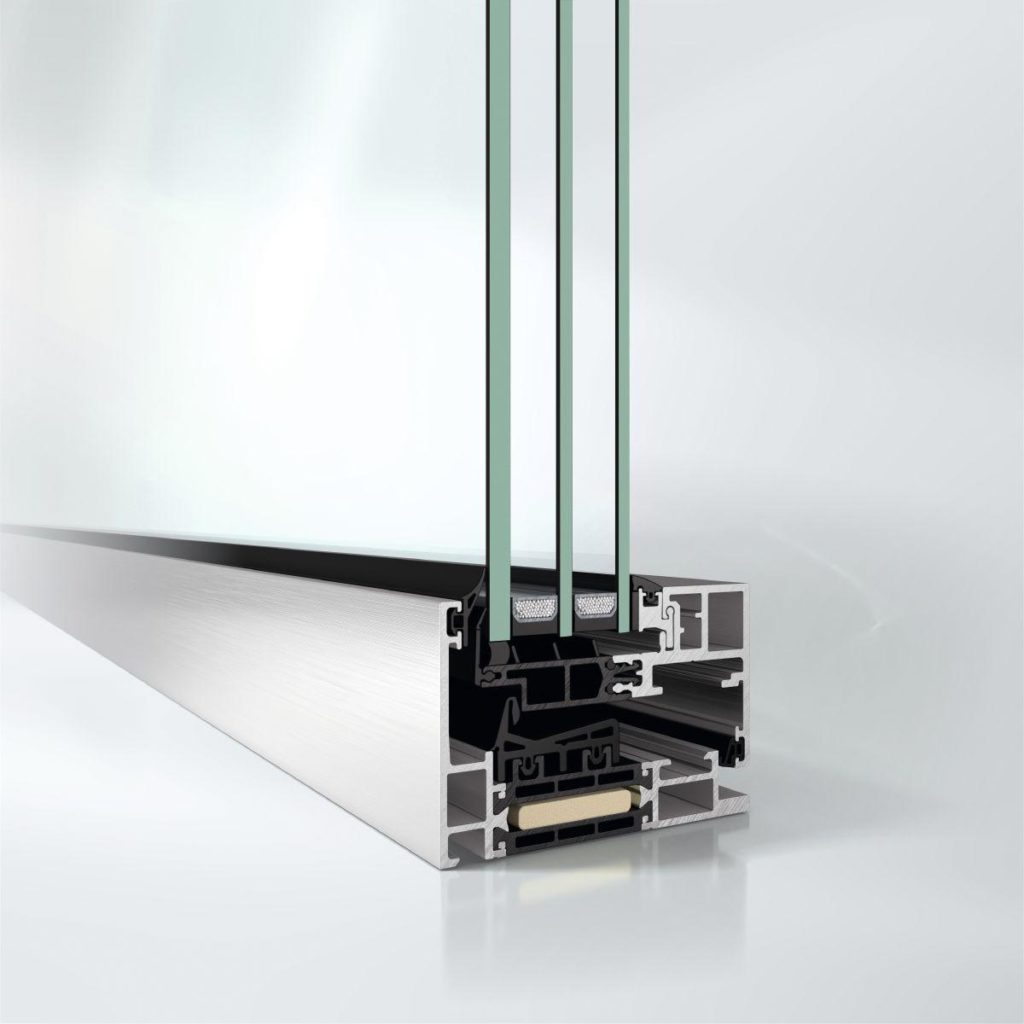
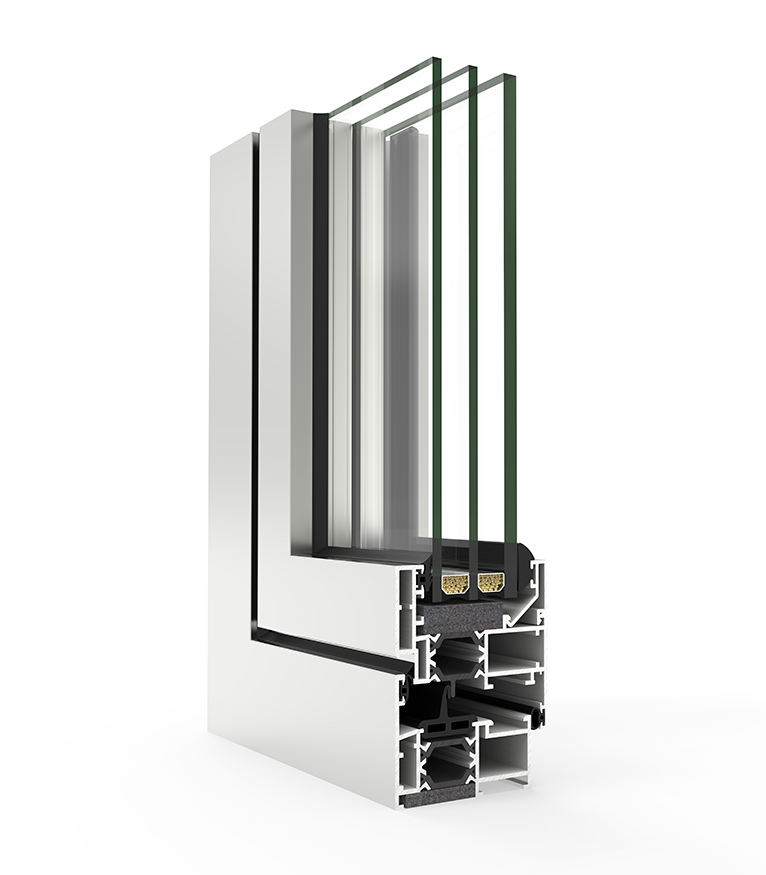
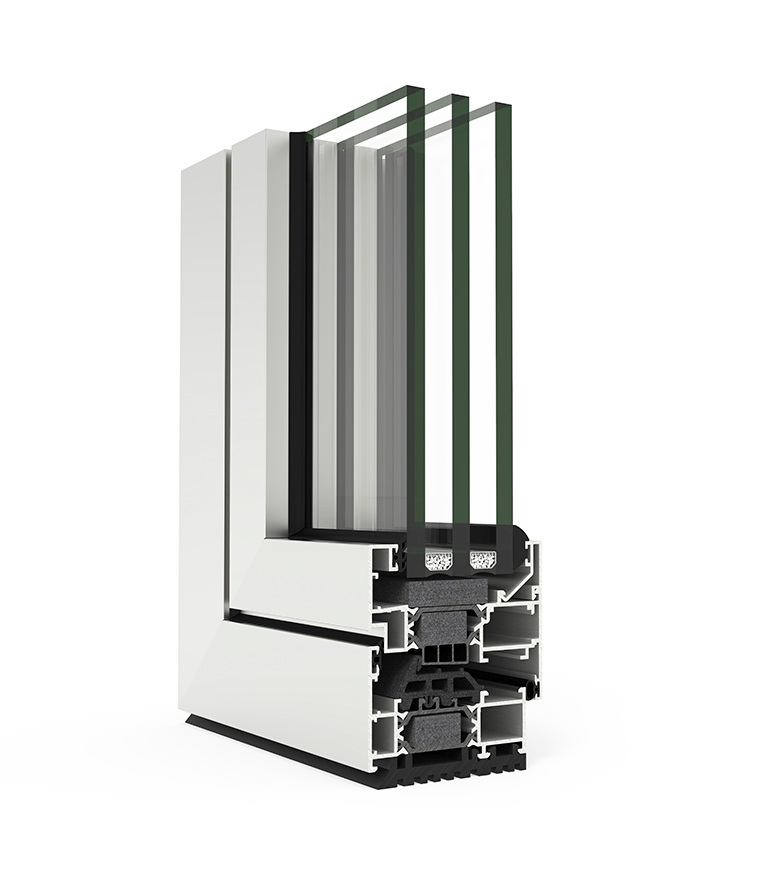
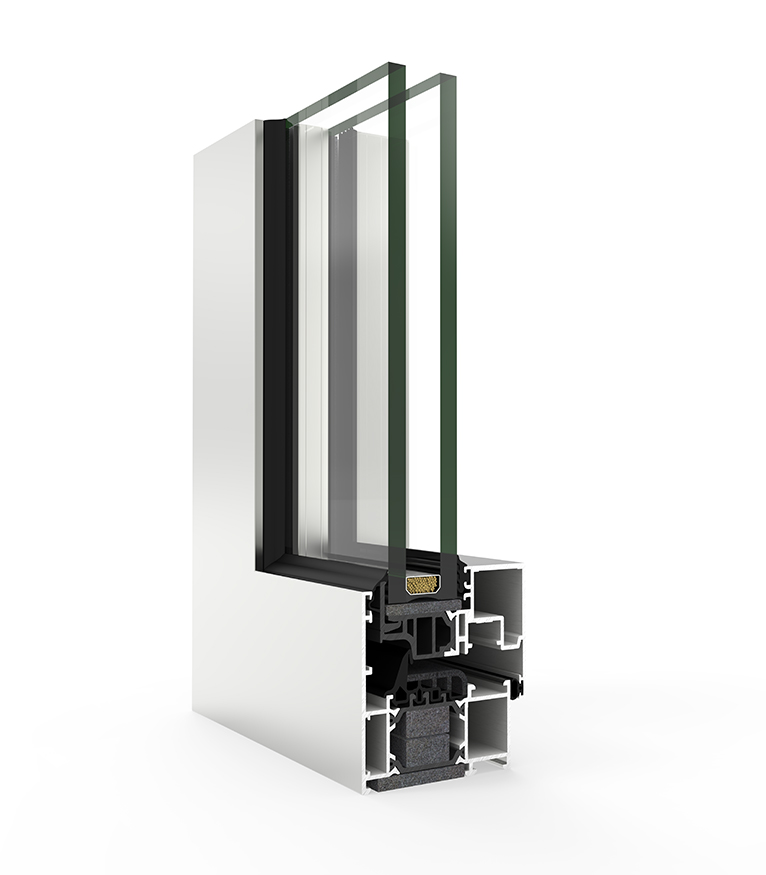
Schüco AWS 90.SI+ is a feat of engineering that unites two seemingly opposite qualities: cold metal and insulation rivaling that of wood or premium PVC. The Passive House Institute (PHI Darmstadt) has officially certified this system as a component for energy-efficient construction.
It is the ideal choice for anyone building a future-proof, zero-energy home who refuses to give up the elegance of aluminum, slim frames, and panoramic formats.
Brand

Schüco is the choice of architects who don't compromise. The German corporation is famous for aluminum facade systems that adorn skyscrapers worldwide. For private clients, Schüco offers the same technologies in premium window and sliding system formats.
More about SchücoTechnical Specifications
Details
The ultimate ceiling. A Passive House-certified aluminium system built to a 90 mm depth.
Core system specifications:
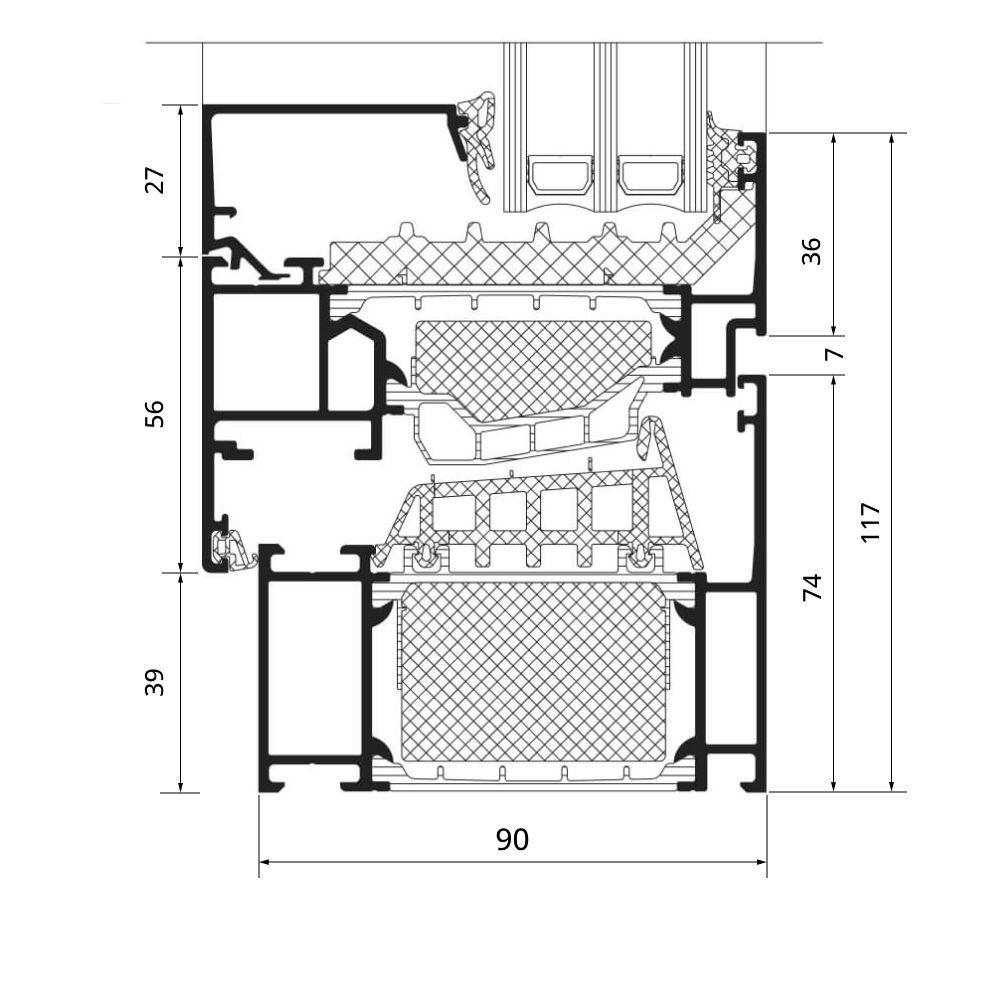
- Build-in depth: 90 mm.
- Insulation technology: A refined thermal break zone with long polyamide bridges and foam inserts that rule out freezing entirely.
- Weatherseals: Triple sealing with a bulky central gasket that stays airtight even in hurricane-strength winds.
- Styling: Visible frame face from 117 mm. Concealed hardware can be specified for a pared-back look.
- Eco-credentials: The system carries Cradle to Cradle certification (silver level), attesting to material safety and complete recyclability.
Glass and infill choices:
- Infill depth: up to 68 mm.
- Glazing choices: Built for heavy triple-chamber glass units (4 panes) or double-chamber with thick laminated glass.
Tested performance values:
- Frame thermal value (Uf): from 0.71 W/m²K (frame).
- Whole-window thermal value (Uw): ≤ 0.8 W/m²K (with appropriate glass unit).
- Acoustic rating (Rw): up to 47 dB.
- Intrusion resistance: up to RC3 class (formerly WK3).
- Air infiltration: Class 4.
- Watertightness rating: Class 9A.
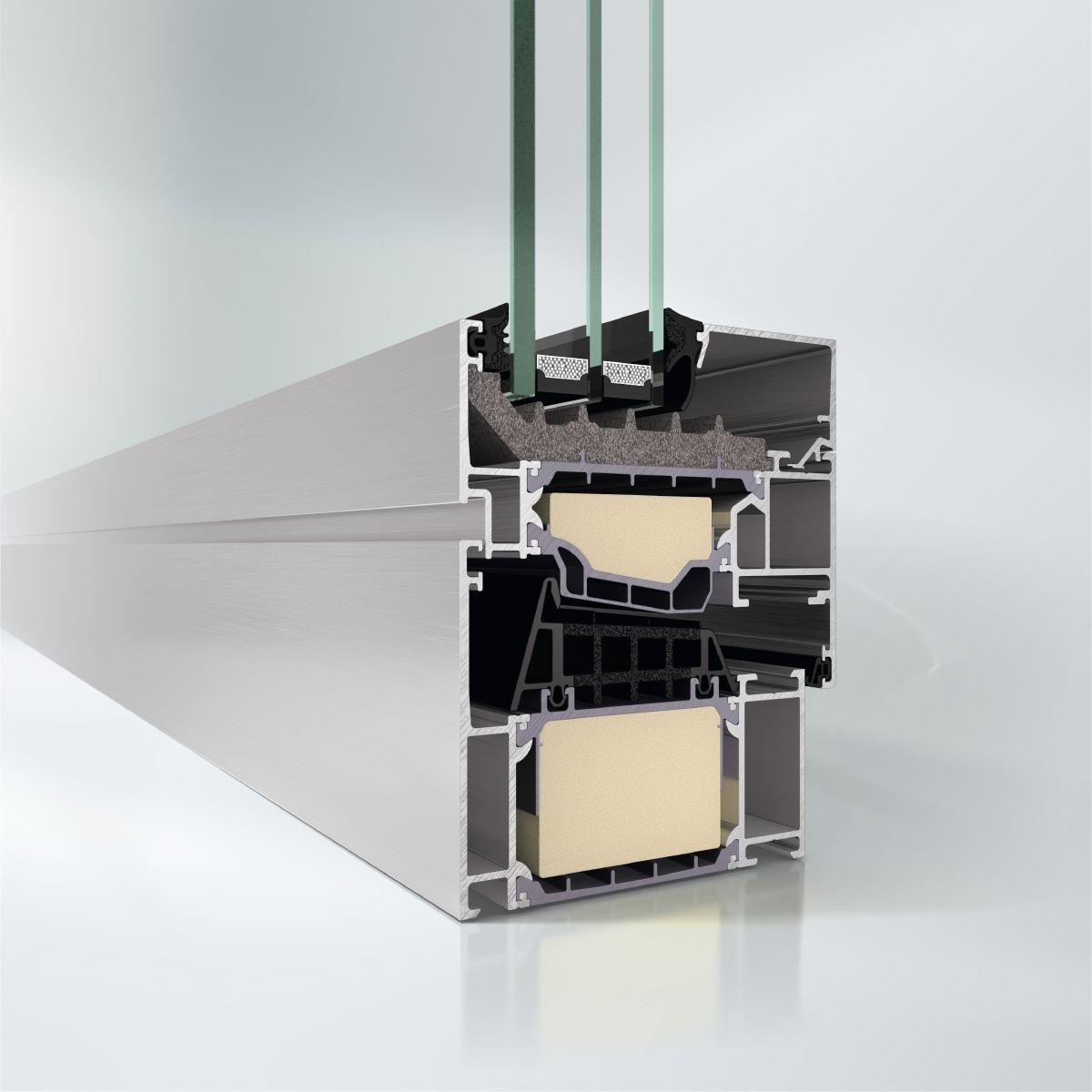
Schüco AWS 90.SI+
The ultimate ceiling. A Passive House-certified aluminium system built to a 90 mm depth.
For a standard 2-sash tilt-and-turn window (1200 × 1400 mm) with basic double-glazed unit.
Compare with Similar Profiles
Alternative solutions from other manufacturers
Schüco AWS 75.SI+
Schüco AWS 75 PD.SI
Cortizo COR 60
Cortizo COR 70 Industrial
Cortizo COR 70 Hoja Oculta
Side by side
Head to Head: Closest Competitors
How Schüco AWS 90.SI+ stacks up against the closest matches from other brands.
| Specification | Schüco AWS 90.SI+This profile | Cortizo COR 80 Industrial | Rehau Geneo | Kömmerling AluNext MD |
|---|---|---|---|---|
| Brand | Schüco | Cortizo | REHAU | Kömmerling |
| Material | Aluminium | Aluminium | PVC | PVC |
| Profile depth | 90mm | 80 mm | 86mm | 80 mm |
| Chambers | — | — | 6 chambers | — |
| Glass unit, max | up to 68mm | up to 65 mm | up to 53mm | up to 56 mm |
| Thermal (Uw) | 0.8 | ≤ 0.8 | 0.85 | ≤ 0.8 |
| Sound (Rw, dB) | ≈47 Rw(dB) | ≈ 46 Rw(dB) | ≈50 Rw(dB) | ≈ 45 Rw(dB) |
See all window profiles compared.
Open full comparisonLeave a Review
Customer Reviews
Find out what people are saying about it
No reviews yet. Be the first!
Related Posts

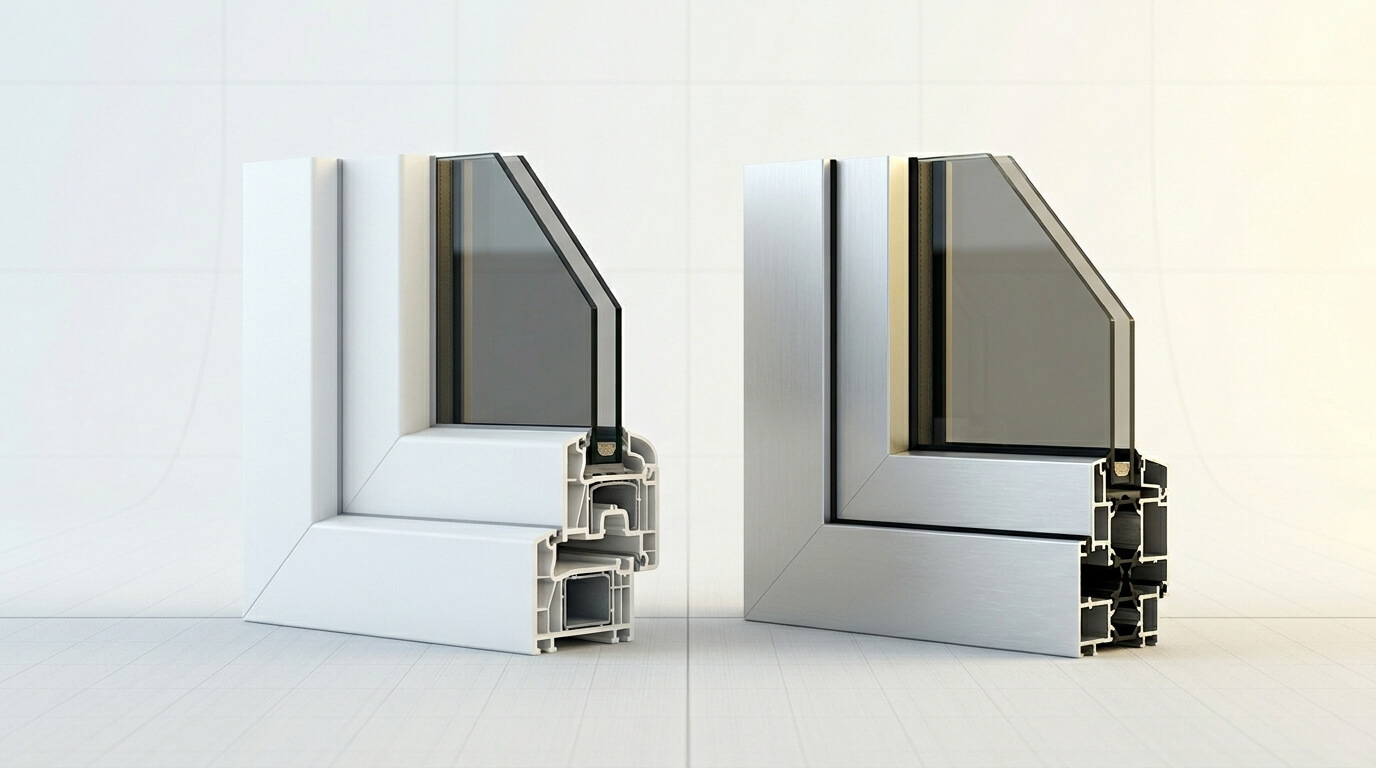
PVC or Aluminium Windows: Which Is Better for Your Spanish Home?
PVC and aluminium are the two frames you will be quoted for almost every window in Spain, and the right answer changes from Valencia to Vigo. This guide compares them head-to-head on insulation, price per m², coastal durability, sizes, colours and noise, then gives a clear verdict by scenario and region.

The Spanish Aluminium Window & Door Market: 2026 Report
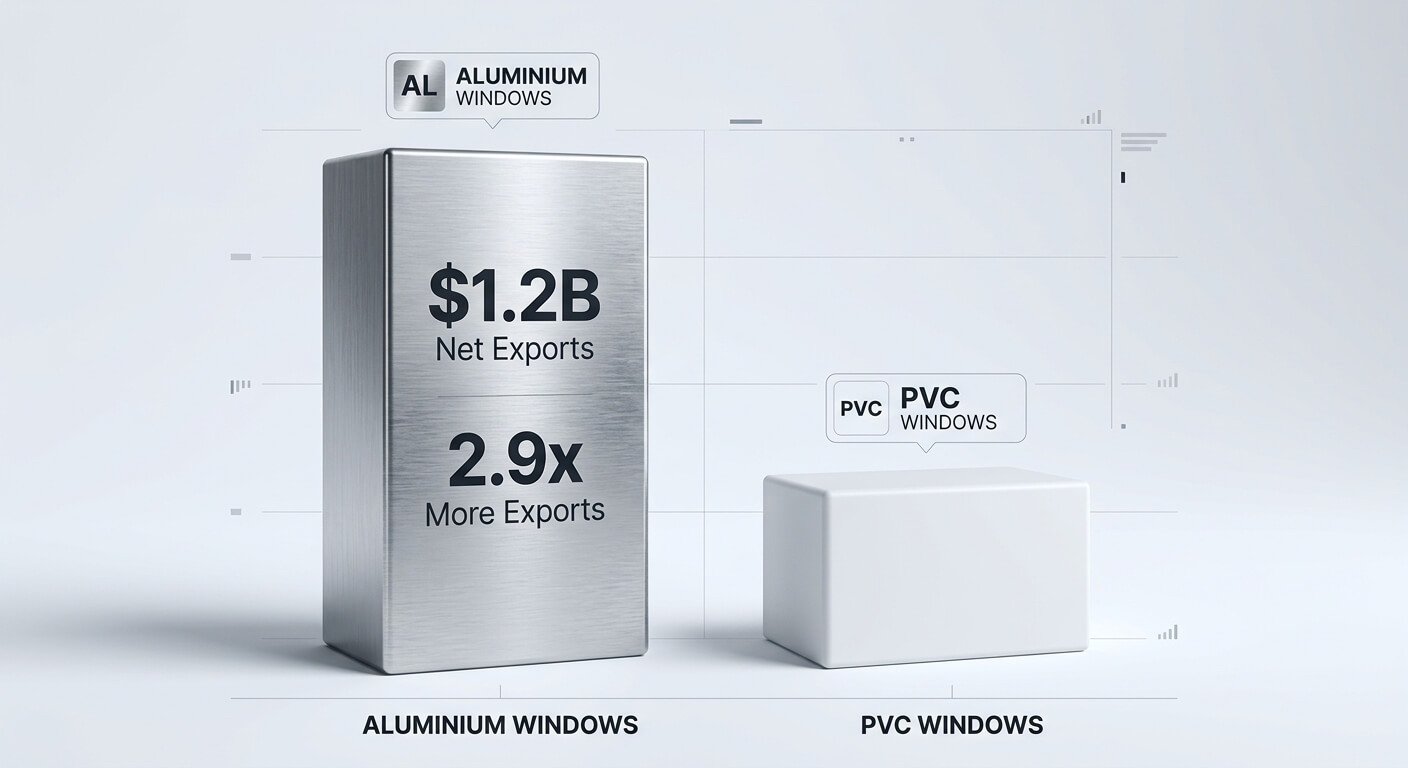
Aluminium is Spain's home-team window material — and the customs data shows why. Spain net-exports roughly $1.2 billion of aluminium extrusions and finished windows a year, shipping to France, the UK and Latin America, led by Galician giants like Cortizo. A full data report on the aluminium value chain, who makes it, the thermal-break problem, and where PVC is eating in.

Tilt-and-Turn Windows (Oscilobatiente): What They Are and Why They're So Popular
The oscilobatiente window opens two ways from a single handle: tilt inward for safe ventilation or swing fully open for cleaning. Here's how the mechanism works, how it compares with sliding and casement windows, and what it costs in Spain in 2026.

Choosing the Right Windows for Each Room: Bedroom, Kitchen, Bathroom and More
The best window for a bedroom is not the best window for a kitchen, a bathroom or a living room. This room-by-room guide explains what to prioritise in each space — acoustics and blackout for sleeping, easy-clean ventilation for cooking, privacy and moisture resistance for bathrooms, light and views for living areas, safety for children's rooms — so every window in the house earns its place.

How to Choose Triple-Glazed Windows (and When Double Glazing Is Enough)
Triple glazing is the default in the Alps and Scandinavia, but in Spain it only pays off in the right climate. This guide explains what triple glazing actually does, where in Spain it makes sense (the cold interior and mountains), where it is a waste of money, and exactly what to specify — so you can compare like-for-like quotes from verified companies on Estimia.

Soundproof Windows: How to Cut Outside Noise in Spain
Traffic, terraces, airports and nightlife — Spanish streets are loud, and your windows are the weakest link. This guide explains acoustic ratings (dB and Rw), exactly what makes a window quiet, the realistic noise reduction you can expect, and precisely what to specify in a quote so you can compare verified companies on equal terms.
FAQs
Frequently Asked Questions about Schüco AWS 90.SI+
What thermal performance does the Schüco AWS 90.SI+ achieve at its 90 mm depth?
The full 90 mm build-in depth houses a refined thermal-break zone with long polyamide bridges and foam inserts. It delivers a frame value Uf from 0.71 W/m²K and a whole-window Uw ≤ 0.80 W/(m²·K) with the right glass unit, earning an A+++ energy rating. Air infiltration is Class 4 and watertightness reaches Class 9A.
How thick a glass unit can the AWS 90.SI+ hold, and why does that matter?
The frame accepts an infill depth of up to 68 mm — enough for heavy triple-chamber units (4 panes) or double-chamber builds with thick laminated glass. This extra capacity is the physical reason the system can pair top insulation with high mass, pushing acoustic ratings to up to 47 dB Rw for calm even near an airport.
When is the AWS 90.SI+ not the right choice?
It is the flagship system, priced from €1,400–1,900 — well above siblings like the AWS 75.SI+. In a mild climate the 90 mm thermal-break zone is engineering you will not feel the benefit of, so a shallower system can match comfort for less. Choose it for Passive House targets or extreme cold, not as a default.
- Passive House / cold-climate projects
- Not for budget-led or mild-climate jobs
How does the AWS 90.SI+ compare to the AWS 75.SI+ and AWS 65?
All three are aluminium thermal-break windows, but the gap is real. The AWS 90.SI+ reaches Uw ≤ 0.80 (A+++) and takes glass up to 68 mm. The AWS 75.SI+ sits at Uw ≤ 0.90 (A++, glass to 61 mm), and the AWS 65 at Uw ≤ 1.40 (B, glass to 55 mm). Deeper profile, thicker glass, better insulation as you move up.
Is the AWS 90.SI+ genuinely a Passive House window?
Yes — it is a Passive House-certified aluminium system built to a 90 mm depth, described as "the ultimate ceiling" for performance. Its foam thermal-break technology was created for extreme conditions and keeps the inner profile surface above the dew point, ruling out freezing even in bitter frost.
What sustainability and security credentials does the AWS 90.SI+ carry?
The system holds Cradle to Cradle certification (silver level), attesting to material safety and complete recyclability. Weatherproofing comes from triple sealing with a bulky central gasket that stays airtight in hurricane-strength winds, and intrusion resistance reaches RC3 class (formerly WK3). The visible frame face is held to 117 mm.